THE ADVENTURE COLLECTIVE® · Independent discovery and booking for outdoor travel

A private day trek from Hanoi into Cuc Phuong National Park visiting the Endangered Primate Rescue Center and hiking to a giant ancient tree through grass-jungle valleys.
A private day trek from Hanoi into Cuc Phuong National Park visiting the Endangered Primate Rescue Center and hiking to a giant ancient tree through grass-jungle valleys.
The morning road from Hanoi unwinds through rice fields until the forest rises, dark and cool. By arrival at Cuc Phuong National Park the air smells of wet leaves and earth; the guide points down a trail that drops into a grass-jungle valley where shafts of sunlight pick out ferns and orchids. The walk leads to a giant, ancient tree whose roots have worked the soil into a maze — a living anchor in a forest that has stood since the Pleistocene.
Verified experiences and guided adventures in the surrounding area.
Operated by Asia Tour Booking · Ninh Binh, Ninh Binh Province
The morning road from Hanoi unwinds through rice fields until the forest rises, dark and cool. By arrival at Cuc Phuong National Park the air smells of wet leaves and earth; the guide points down a trail that drops into a grass-jungle valley where shafts of sunlight pick out ferns and orchids. The walk leads to a giant, ancient tree whose roots have worked the soil into a maze — a living anchor in a forest that has stood since the Pleistocene.
Cuc Phuong is Vietnam’s oldest national park, established in 1962 to protect lowland tropical forest and its rare wildlife. Geologically, the park sits on limestone karst and red lateritic soils; caves and sinkholes are common, and the terrain alternates between packed earth trails and root-strewn slopes. Culturally, local villages have long used the fringe forest for medicinal plants and small-scale agroforestry, and park researchers run a prominent Endangered Primate Rescue Center that rehabilitates langurs and gibbons.
On a private day trip, expect a guided 4–6 hour trek that includes the primate rescue center, a riverside grotto, and the ancient tree stop, plus a simple local lunch. Practical notes: bring stout shoes for wet roots, a rain layer, at least 1–2 liters of water, insect repellent and some cash; the trail can be muddy after rain and phone signal is intermittent. Follow your guide’s directions around wildlife and caves. Time your visit for morning light and cooler temperatures; the forest rewards patient observers with bird song, orchids, and primates that sometimes perform for the trail.
The transfer is about 2.5–3 hours each way (roughly 140 km), so the full day trip runs around 8 hours including transport.
This private excursion includes site admission and a local lunch; confirm any additional fees with the operator before travel.
Children can join but must be supervised; the trip requires moderate stamina and some uneven trail sections may be challenging for young kids.
The Endangered Primate Rescue Center allows safe viewing and photography of rescued species; wild primate sightings on trails are possible but not guaranteed.
Asia Tour Booking operates guided outdoor trips and adventures with an emphasis on safety, stewardship, and memorable experiences.
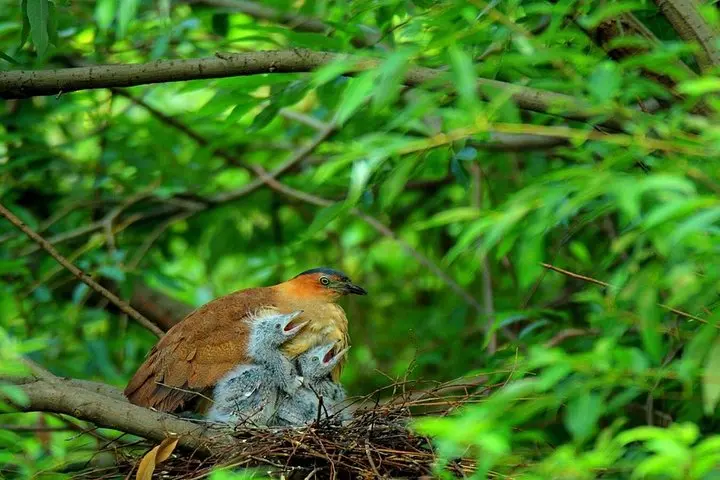
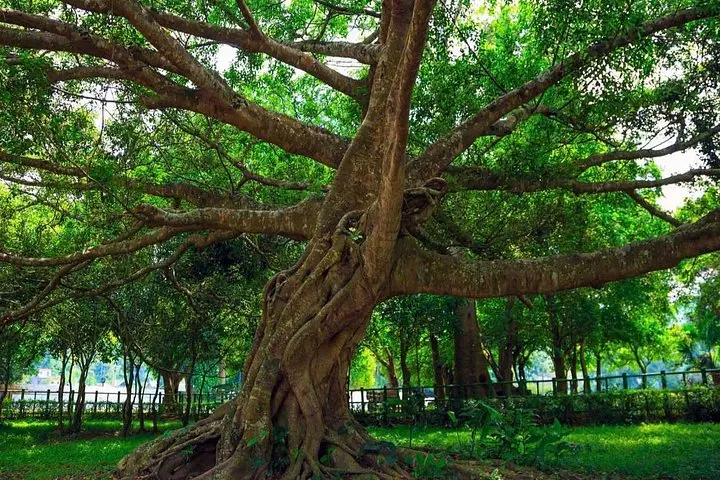
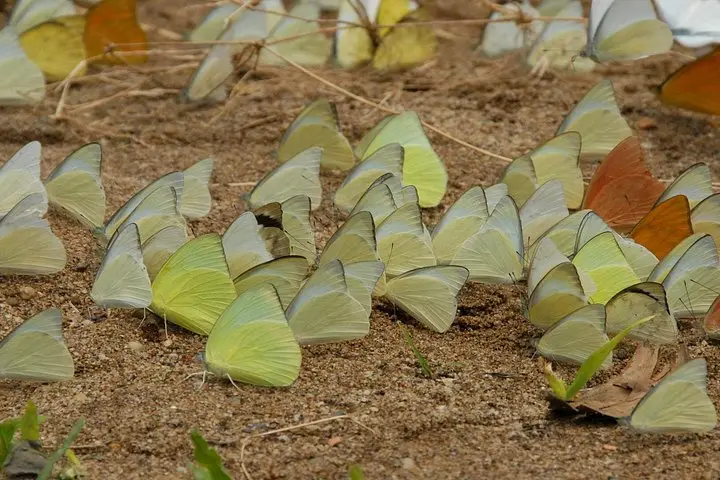
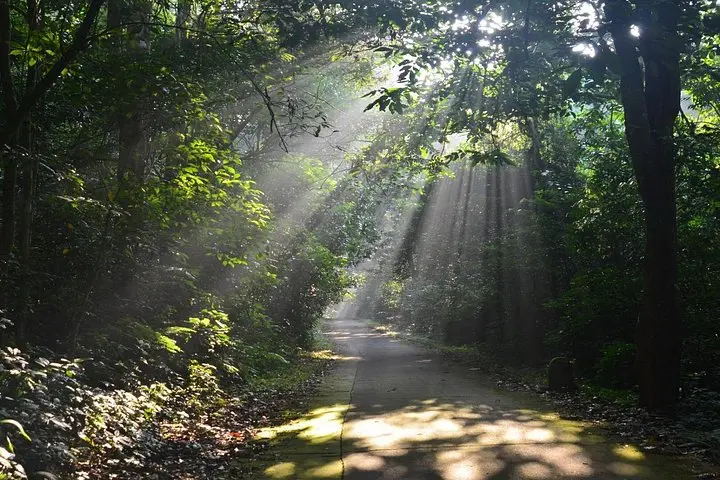
The morning road from Hanoi unwinds through rice fields until the forest rises, dark and cool. By arrival at Cuc Phuong National Park the air smells of wet leaves and earth; the guide points down a trail that drops into a grass-jungle valley where shafts of sunlight pick out ferns and orchids. The walk leads to a giant, ancient tree whose roots have worked the soil into a maze — a living anchor in a forest that has stood since the Pleistocene.
The morning road from Hanoi unwinds through rice fields until the forest rises, dark and cool. By arrival at Cuc Phuong National Park the air smells of wet leaves and earth; the guide points down a trail that drops into a grass-jungle valley where shafts of sunlight pick out ferns and orchids. The walk leads to a giant, ancient tree whose roots have worked the soil into a maze — a living anchor in a forest that has stood since the Pleistocene.
Cuc Phuong is Vietnam’s oldest national park, established in 1962 to protect lowland tropical forest and its rare wildlife. Geologically, the park sits on limestone karst and red lateritic soils; caves and sinkholes are common, and the terrain alternates between packed earth trails and root-strewn slopes. Culturally, local villages have long used the fringe forest for medicinal plants and small-scale agroforestry, and park researchers run a prominent Endangered Primate Rescue Center that rehabilitates langurs and gibbons.
On a private day trip, expect a guided 4–6 hour trek that includes the primate rescue center, a riverside grotto, and the ancient tree stop, plus a simple local lunch. Practical notes: bring stout shoes for wet roots, a rain layer, at least 1–2 liters of water, insect repellent and some cash; the trail can be muddy after rain and phone signal is intermittent. Follow your guide’s directions around wildlife and caves. Time your visit for morning light and cooler temperatures; the forest rewards patient observers with bird song, orchids, and primates that sometimes perform for the trail.