THE ADVENTURE COLLECTIVE® · Independent discovery and booking for outdoor travel

Watch hundreds of thousands of bats exit Cueva Culebrones at dusk and observe endangered Puerto Rican boas hunting at the cave mouth. This guided night tour in Mata de Plátano blends field biology, karst geology and conservation-minded wildlife viewing.
Watch hundreds of thousands of bats exit Cueva Culebrones at dusk and observe endangered Puerto Rican boas hunting at the cave mouth. This guided night tour in Mata de Plátano blends field biology, karst geology and conservation-minded wildlife viewing.
Dusk drops like a curtain over the limestone hills of Mata de Plátano and the cave mouth darkens into an expectant throat. Guides count headlights and clip on helmets; conversation quiets as the first thin trickle of wings swells into a river of bats pouring from the cave, a living column that cleaves the dusk sky.
Verified experiences and guided adventures in the surrounding area.
Operated by NaturHabitat Ecotours · Arecibo, Puerto Rico
Dusk drops like a curtain over the limestone hills of Mata de Plátano and the cave mouth darkens into an expectant throat. Guides count headlights and clip on helmets; conversation quiets as the first thin trickle of wings swells into a river of bats pouring from the cave, a living column that cleaves the dusk sky.
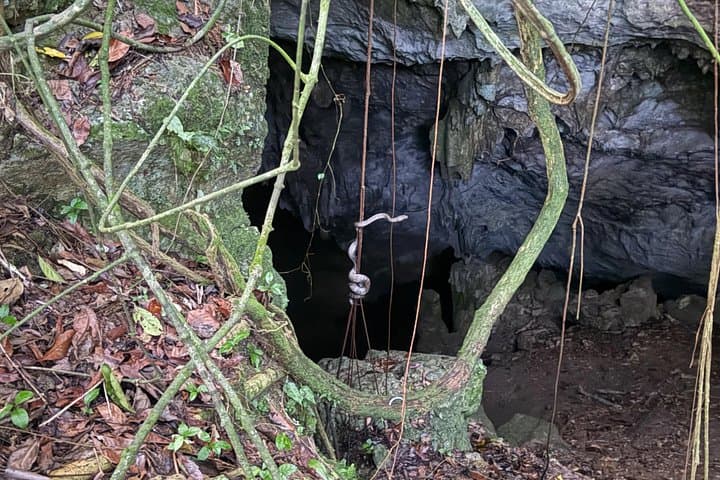
Cueva Culebrones sits in a classic Puerto Rico karst landscape — jagged limestone, sinkholes and underground chambers carved by rain over millennia. The cave's emergence on natural-history broadcasts speaks to its scientific value: it hosts an estimated 300,000 bats and is one of the few documented sites where the endangered Puerto Rican boa, Chilabothrus inornatus, opportunistically hunts at the cave mouth. Local guides and biologists weave stories of geology, colonial-era land use and ongoing conservation as they lead a 30-minute walk into the reserve.
Practical details matter here. The tour is about seven hours including hotel pickup from the San Juan area, a 30-minute walk to the cave approach, and an extended observation window at sunset. Helmets and lamps are provided; expect low ceilings, uneven steps and damp rock. Moderate fitness is required; organizers advise against participation for pregnant travelers or those with serious heart or back conditions.
To get the most: arrive rested, set your camera to low-light settings, follow the guide's distances for wildlife safety and keep flash off. The experience is both spectacle and field biology—come ready to learn, carry out what you carry in, and leave space for the wildlife that makes this place extraordinary.
Expect about a 30-minute walk over uneven karst terrain from the parking/pickup point to the cave approach; paths can be slippery after rain.
No—flash disrupts the bats and wildlife; guides will advise on low-light photo techniques and when still photography is permitted from a safe distance.
Children are allowed but must be supervised; the tour requires steady footing and close attention to guide instructions—check age restrictions with the operator.
The tour offers hotel pickup from the San Juan metropolitan area; confirm your pickup point at booking and expect several hours of round-trip transit and the time in the reserve.
NaturHabitat Ecotours operates guided outdoor trips and adventures with an emphasis on safety, stewardship, and memorable experiences.
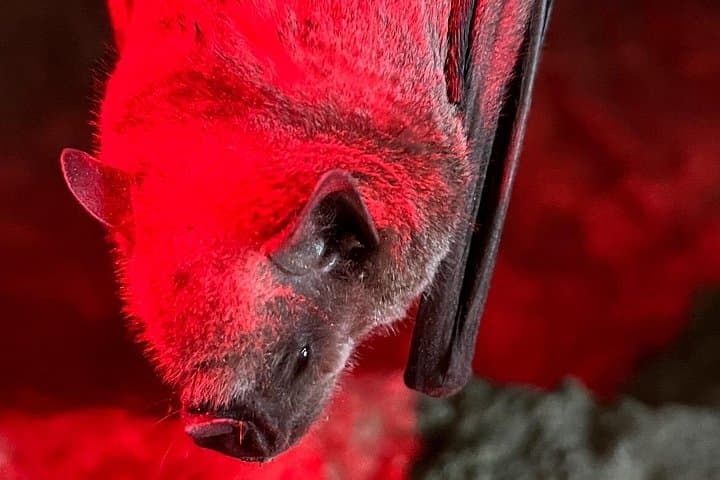

Dusk drops like a curtain over the limestone hills of Mata de Plátano and the cave mouth darkens into an expectant throat. Guides count headlights and clip on helmets; conversation quiets as the first thin trickle of wings swells into a river of bats pouring from the cave, a living column that cleaves the dusk sky.
Dusk drops like a curtain over the limestone hills of Mata de Plátano and the cave mouth darkens into an expectant throat. Guides count headlights and clip on helmets; conversation quiets as the first thin trickle of wings swells into a river of bats pouring from the cave, a living column that cleaves the dusk sky.
Cueva Culebrones sits in a classic Puerto Rico karst landscape — jagged limestone, sinkholes and underground chambers carved by rain over millennia. The cave's emergence on natural-history broadcasts speaks to its scientific value: it hosts an estimated 300,000 bats and is one of the few documented sites where the endangered Puerto Rican boa, Chilabothrus inornatus, opportunistically hunts at the cave mouth. Local guides and biologists weave stories of geology, colonial-era land use and ongoing conservation as they lead a 30-minute walk into the reserve.
Practical details matter here. The tour is about seven hours including hotel pickup from the San Juan area, a 30-minute walk to the cave approach, and an extended observation window at sunset. Helmets and lamps are provided; expect low ceilings, uneven steps and damp rock. Moderate fitness is required; organizers advise against participation for pregnant travelers or those with serious heart or back conditions.
To get the most: arrive rested, set your camera to low-light settings, follow the guide's distances for wildlife safety and keep flash off. The experience is both spectacle and field biology—come ready to learn, carry out what you carry in, and leave space for the wildlife that makes this place extraordinary.