THE ADVENTURE COLLECTIVE® · Independent discovery and booking for outdoor travel

Stand on Arecibo’s wind-cut limestone and walk into a chapter of Puerto Rico’s past. Cueva del Indio combines sea-sculpted cliffs, tidal blowholes and Taíno petroglyphs for a coastal hike that marries geology with living history.
Stand on Arecibo’s wind-cut limestone and walk into a chapter of Puerto Rico’s past. Cueva del Indio combines sea-sculpted cliffs, tidal blowholes and Taíno petroglyphs for a coastal hike that marries geology with living history.
You arrive to the Atlantic edge of Arecibo with salt on your lips and the constant percussion of waves in your ears. The path opens across bedrock scarred by the sea—limestone slabs polished smooth in places, jagged in others—and the cliffs rise like an old conversation between wind and water. Out on a coastal terrace, a natural arch frames a blue so bright it seems to push the horizon farther away; blowholes punctuate the shore like exclamation points.
Verified experiences and guided adventures in the surrounding area.
Operated by I Heart PR Tours · Arecibo, Puerto Rico
You arrive to the Atlantic edge of Arecibo with salt on your lips and the constant percussion of waves in your ears. The path opens across bedrock scarred by the sea—limestone slabs polished smooth in places, jagged in others—and the cliffs rise like an old conversation between wind and water. Out on a coastal terrace, a natural arch frames a blue so bright it seems to push the horizon farther away; blowholes punctuate the shore like exclamation points.
This is Cueva del Indio, a stretch of coastline where geology and human history press close together. Centuries of pounding surf have hollowed the cliffs into caves and channels, while the island’s indigenous Taíno people left petroglyphs in sheltered recesses, simple yet deliberate carvings that speak across generations. Guides interpret those marks not as static relics but as stories—ocean currents, seasons, and gods written into stone. Spanish colonial maps later noted these promontories for their dramatic terrain and the treacherous shoals below.
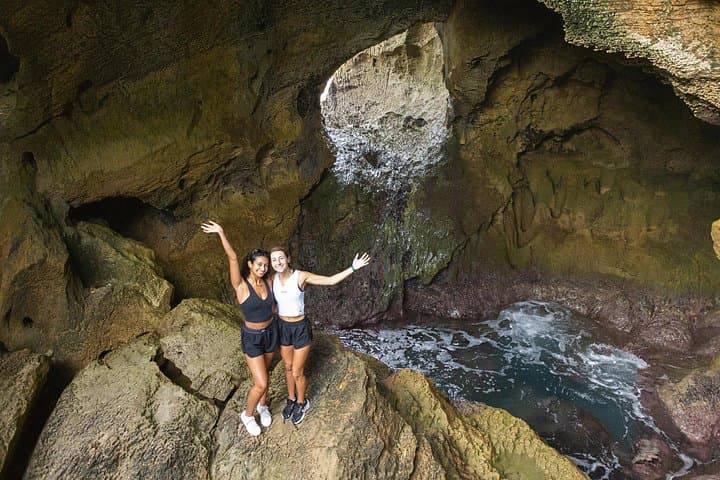
Walk slowly. The limestone underfoot is alive with texture: sharp ridges, fossilized shells, and tidal pools that cradle tiny ecosystems. Brown pelicans glide offshore and iguanas sun themselves on the rocks; gulls are the constant commentators, wheeling and keen. The cave interior cools dramatically, and the petroglyphs reveal themselves only after your eyes adjust. Your guide will point out motifs—spirals, faces, lines—tracing connections to Taíno cosmology and to the sea that sustained them.
Practicalities are straightforward but important. The full experience runs about six hours from central Arecibo pickup: a one-hour drive each way and a 60–120 minute guided hike and cave visit. Terrain is uneven and can be slippery when wet; sturdy, closed-toe shoes with good grip are non-negotiable. Bring at least one liter of water, sun protection, and a light wind- or rain-layer—the coast can change in minutes. Photography is best at low-angle light: morning or late afternoon when the cliffs glow and tide pools mirror the sky.
Local food follows the hike: your guide will stop at a nearby eatery where you can try mofongo, fresh fish, and coffee from the mountains behind the coast. Respect the site—don’t climb on the petroglyphs or remove stones. Cueva del Indio is both a natural theatre and a cultural archive; preserving its voice means staying on marked paths and leaving nothing behind.
For travelers who want dramatic coastal scenery grounded in human story, this Arecibo hike delivers: the sea dares you to watch, the cave invites you in, and the carvings remind you that this place has been observed—and honored—long before tourism arrived.
The guided hike and cave visit run roughly 60–120 minutes inside the 4–6 hour tour, with the remainder accounting for transport and a meal stop.
No. The petroglyphs are fragile—guides will point them out and explain their meanings, but touching or climbing on them is prohibited.
Yes for older children who can handle uneven terrain; families should supervise children near cliffs and tidal edges.
Closed-toe shoes with traction, sun protection, and a light jacket for wind or spray; avoid flip-flops on the limestone.
Tours can be canceled for heavy rain or unsafe surf due to slippery surfaces and strong currents—check cancellation policy and weather before traveling.
The tour includes a stop at a local restaurant after the hike; meals are typically not included in the base price, but bottled water and private transport are provided.
I Heart PR Tours operates guided outdoor trips and adventures with an emphasis on safety, stewardship, and memorable experiences.
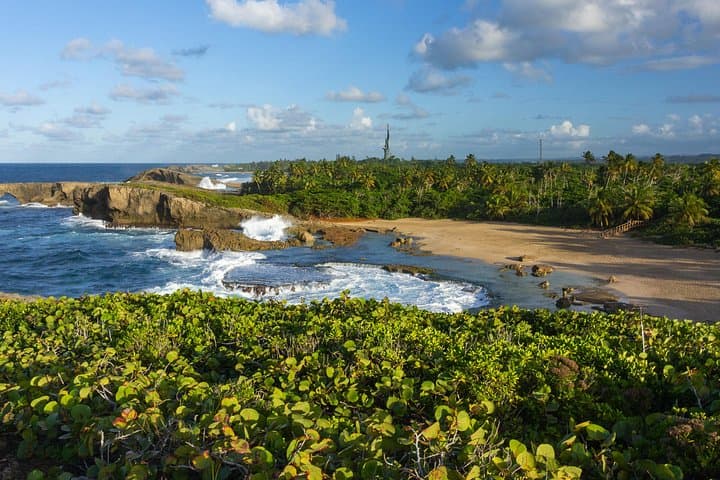
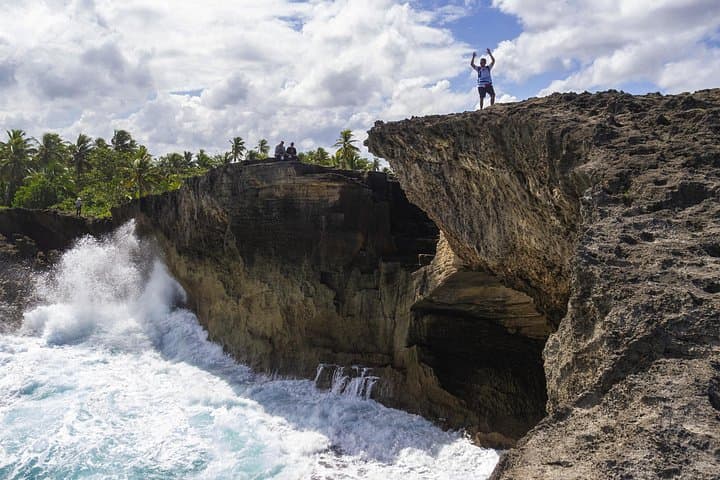
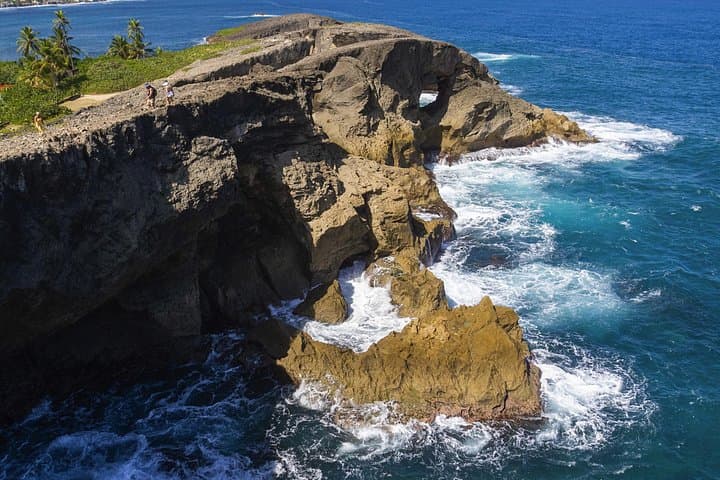
You arrive to the Atlantic edge of Arecibo with salt on your lips and the constant percussion of waves in your ears. The path opens across bedrock scarred by the sea—limestone slabs polished smooth in places, jagged in others—and the cliffs rise like an old conversation between wind and water. Out on a coastal terrace, a natural arch frames a blue so bright it seems to push the horizon farther away; blowholes punctuate the shore like exclamation points.
You arrive to the Atlantic edge of Arecibo with salt on your lips and the constant percussion of waves in your ears. The path opens across bedrock scarred by the sea—limestone slabs polished smooth in places, jagged in others—and the cliffs rise like an old conversation between wind and water. Out on a coastal terrace, a natural arch frames a blue so bright it seems to push the horizon farther away; blowholes punctuate the shore like exclamation points.
This is Cueva del Indio, a stretch of coastline where geology and human history press close together. Centuries of pounding surf have hollowed the cliffs into caves and channels, while the island’s indigenous Taíno people left petroglyphs in sheltered recesses, simple yet deliberate carvings that speak across generations. Guides interpret those marks not as static relics but as stories—ocean currents, seasons, and gods written into stone. Spanish colonial maps later noted these promontories for their dramatic terrain and the treacherous shoals below.
Walk slowly. The limestone underfoot is alive with texture: sharp ridges, fossilized shells, and tidal pools that cradle tiny ecosystems. Brown pelicans glide offshore and iguanas sun themselves on the rocks; gulls are the constant commentators, wheeling and keen. The cave interior cools dramatically, and the petroglyphs reveal themselves only after your eyes adjust. Your guide will point out motifs—spirals, faces, lines—tracing connections to Taíno cosmology and to the sea that sustained them.
Practicalities are straightforward but important. The full experience runs about six hours from central Arecibo pickup: a one-hour drive each way and a 60–120 minute guided hike and cave visit. Terrain is uneven and can be slippery when wet; sturdy, closed-toe shoes with good grip are non-negotiable. Bring at least one liter of water, sun protection, and a light wind- or rain-layer—the coast can change in minutes. Photography is best at low-angle light: morning or late afternoon when the cliffs glow and tide pools mirror the sky.
Local food follows the hike: your guide will stop at a nearby eatery where you can try mofongo, fresh fish, and coffee from the mountains behind the coast. Respect the site—don’t climb on the petroglyphs or remove stones. Cueva del Indio is both a natural theatre and a cultural archive; preserving its voice means staying on marked paths and leaving nothing behind.
For travelers who want dramatic coastal scenery grounded in human story, this Arecibo hike delivers: the sea dares you to watch, the cave invites you in, and the carvings remind you that this place has been observed—and honored—long before tourism arrived.