THE ADVENTURE COLLECTIVE® · Independent discovery and booking for outdoor travel

Walk across seven ocean-carved arches to a Taino petroglyph cave, then hike, swim and optional cliff-jump in the turquoise pools of Charco Azul Canyon. This full‑day Arecibo adventure blends coastal history, river caves and a serious dose of adrenaline.
Walk across seven ocean-carved arches to a Taino petroglyph cave, then hike, swim and optional cliff-jump in the turquoise pools of Charco Azul Canyon. This full‑day Arecibo adventure blends coastal history, river caves and a serious dose of adrenaline.
You step off the shaded coastal road and the Atlantic wind immediately rearranges your hair and your plans. Ahead, the 7 arches — a battered limestone bridge scored by waves — curve like a natural colonnade framing the sea. Beneath your boots the rock smells of salt and age; above, gulls wheel and claim the skyline. This is Cueva del Indio, where you begin the day tracing the shoreline to a Taino cave whose walls still hold hand-carved petroglyphs that point back to a pre‑Columbian Puerto Rico.
Verified experiences and guided adventures in the surrounding area.
Operated by I Work Where You Vacation · Arecibo, Puerto Rico
You step off the shaded coastal road and the Atlantic wind immediately rearranges your hair and your plans. Ahead, the 7 arches — a battered limestone bridge scored by waves — curve like a natural colonnade framing the sea. Beneath your boots the rock smells of salt and age; above, gulls wheel and claim the skyline. This is Cueva del Indio, where you begin the day tracing the shoreline to a Taino cave whose walls still hold hand-carved petroglyphs that point back to a pre‑Columbian Puerto Rico.
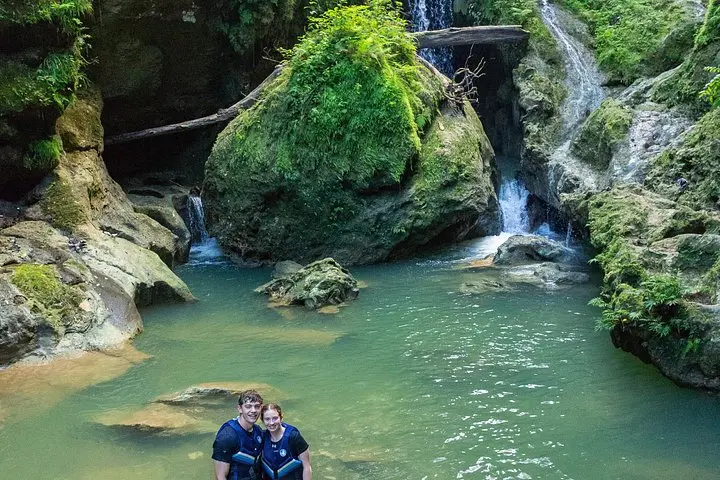
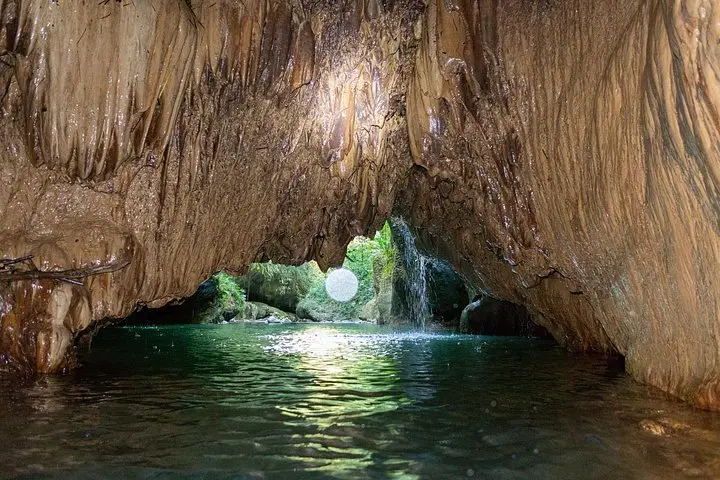
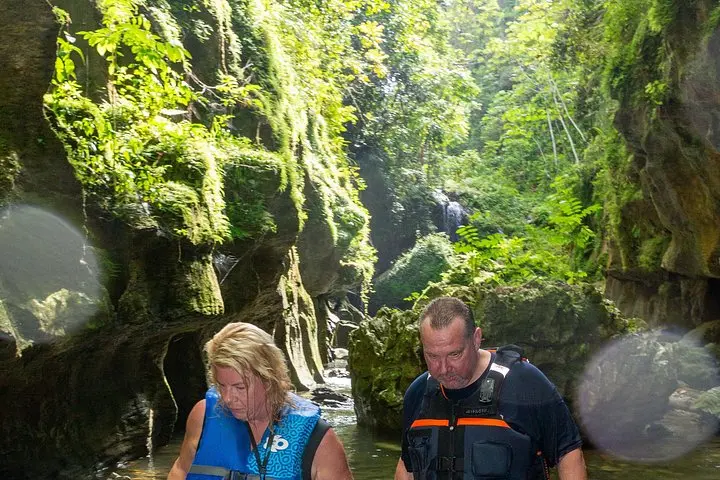
The tour pivots inland after the cave: a drive through low, lichen-splattered hills sends you into Charco Azul Canyon, a green cleft where a river has been patient and precise for millennia. The water there is a clear, pale turquoise — the sort of color that dares you to swim through a cave or test yourself on a cliff jump. You’ll cross braided streams, duck into river-formed caverns and, with a guide in front and life vest strapped on, swim passages that were carved by water and time.
Geology here reads like a slow-motion film: coastal limestones heaved and eroded into arches, while the canyon’s bedrock — a denser volcanic and metamorphic mix — wears channels that funnel waterfalls and plunge pools. Historically the coastline caves served as canvases and sanctuaries for Taino peoples; the petroglyphs at Cueva del Indio are unusually well preserved because salt, shade and the cave’s microclimate slowed weathering.
Culturally the route threads small-town Arecibo life with rainforest edge traditions: you’ll pass roadside kiosks selling freshly squeezed juices and hear Spanish and the island’s relaxed rhythms. Guides emphasize stewardship — these are fragile records of human presence and rare freshwater ecosystems.
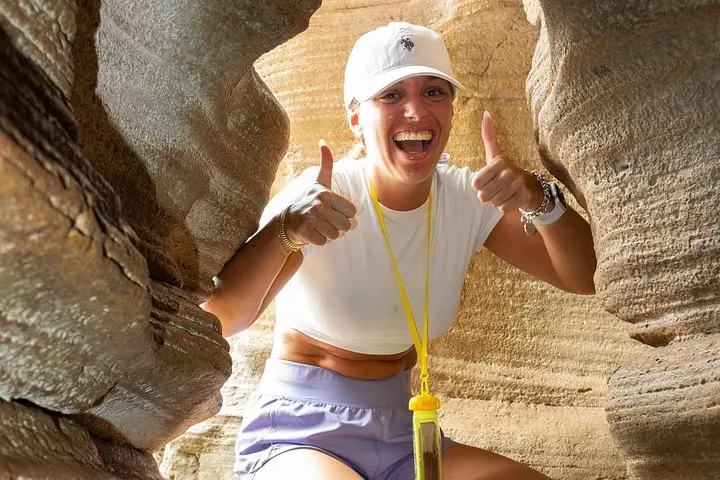
Practical edge: this is a full-day, physically demanding trip (expect roughly 8 hours). Footing alternates between slick coastal rock, uneven trails and wet boulder-hopping in the canyon. You’ll swim through at least one cave and have options to cliff jump at Charco Azul; life vests and a guide are provided. Bring footwear that drains and grips, a dry bag for your phone and a lightweight wetshell for cooler water or wind.
Timing matters — arrive hydrated and with sunscreen you can rinse off before entering freshwater pools (reef-safe on the coast; biodegradable for inland). If you’re not confident in the water, tell your guide: alternate routes are available though some sections require basic swimming and scrambling. By dusk you’ll be back on the coast, boots muddied, with salt on your jacket and a clearer sense of how water sculpts a place — a day that pairs history, geology and plain, wet joy.
Expect uneven terrain, river crossings and at least one cave swim; a high fitness level and comfort in open water are required for the full experience.
No — cliff jumps at Charco Azul are optional and guides offer lower alternatives for anyone who prefers not to jump.
Yes — life vests are supplied and required for certain river and cave swims.
Parts of the tour are possible for non-swimmers, but some cave passages and routes require swimming; discuss options with the operator before booking.
Bottled water and snacks are included, but bring extra water and high‑energy snacks if you tend to burn calories quickly.
Yes — guides maintain distance rules and requests that visitors do not touch or mark the petroglyphs to preserve them.
I Work Where You Vacation operates guided outdoor trips and adventures with an emphasis on safety, stewardship, and memorable experiences.
You step off the shaded coastal road and the Atlantic wind immediately rearranges your hair and your plans. Ahead, the 7 arches — a battered limestone bridge scored by waves — curve like a natural colonnade framing the sea. Beneath your boots the rock smells of salt and age; above, gulls wheel and claim the skyline. This is Cueva del Indio, where you begin the day tracing the shoreline to a Taino cave whose walls still hold hand-carved petroglyphs that point back to a pre‑Columbian Puerto Rico.
You step off the shaded coastal road and the Atlantic wind immediately rearranges your hair and your plans. Ahead, the 7 arches — a battered limestone bridge scored by waves — curve like a natural colonnade framing the sea. Beneath your boots the rock smells of salt and age; above, gulls wheel and claim the skyline. This is Cueva del Indio, where you begin the day tracing the shoreline to a Taino cave whose walls still hold hand-carved petroglyphs that point back to a pre‑Columbian Puerto Rico.
The tour pivots inland after the cave: a drive through low, lichen-splattered hills sends you into Charco Azul Canyon, a green cleft where a river has been patient and precise for millennia. The water there is a clear, pale turquoise — the sort of color that dares you to swim through a cave or test yourself on a cliff jump. You’ll cross braided streams, duck into river-formed caverns and, with a guide in front and life vest strapped on, swim passages that were carved by water and time.
Geology here reads like a slow-motion film: coastal limestones heaved and eroded into arches, while the canyon’s bedrock — a denser volcanic and metamorphic mix — wears channels that funnel waterfalls and plunge pools. Historically the coastline caves served as canvases and sanctuaries for Taino peoples; the petroglyphs at Cueva del Indio are unusually well preserved because salt, shade and the cave’s microclimate slowed weathering.
Culturally the route threads small-town Arecibo life with rainforest edge traditions: you’ll pass roadside kiosks selling freshly squeezed juices and hear Spanish and the island’s relaxed rhythms. Guides emphasize stewardship — these are fragile records of human presence and rare freshwater ecosystems.
Practical edge: this is a full-day, physically demanding trip (expect roughly 8 hours). Footing alternates between slick coastal rock, uneven trails and wet boulder-hopping in the canyon. You’ll swim through at least one cave and have options to cliff jump at Charco Azul; life vests and a guide are provided. Bring footwear that drains and grips, a dry bag for your phone and a lightweight wetshell for cooler water or wind.
Timing matters — arrive hydrated and with sunscreen you can rinse off before entering freshwater pools (reef-safe on the coast; biodegradable for inland). If you’re not confident in the water, tell your guide: alternate routes are available though some sections require basic swimming and scrambling. By dusk you’ll be back on the coast, boots muddied, with salt on your jacket and a clearer sense of how water sculpts a place — a day that pairs history, geology and plain, wet joy.