THE ADVENTURE COLLECTIVE® · Independent discovery and booking for outdoor travel

A full-day private drive from Vilnius to the Curonian Spit combines migrating sand dunes, carved folk art at the Hill of Witches, and cormorant colonies near Nida. Expect ferry transfers, sandy walks, and smoked-fish lunches with an English-speaking guide.
A full-day private drive from Vilnius to the Curonian Spit combines migrating sand dunes, carved folk art at the Hill of Witches, and cormorant colonies near Nida. Expect ferry transfers, sandy walks, and smoked-fish lunches with an English-speaking guide.
You leave Vilnius before dawn and the highway unspools like a map toward the coast. After roughly 300 km and about three hours of driving, the forested sand plains of the Curonian Spit begin to breathe differently — pines scent the air, wind tugs at jackets, and the first white crest of a dune pokes above the treeline. The ferry ride across a narrow throat of water feels like a punctuation mark: the mainland recedes and the spit, narrow and persistent, draws you forward.
Verified experiences and guided adventures in the surrounding area.
Operated by Different Lithuania · Nida, Klaipėda County
You leave Vilnius before dawn and the highway unspools like a map toward the coast. After roughly 300 km and about three hours of driving, the forested sand plains of the Curonian Spit begin to breathe differently — pines scent the air, wind tugs at jackets, and the first white crest of a dune pokes above the treeline. The ferry ride across a narrow throat of water feels like a punctuation mark: the mainland recedes and the spit, narrow and persistent, draws you forward.
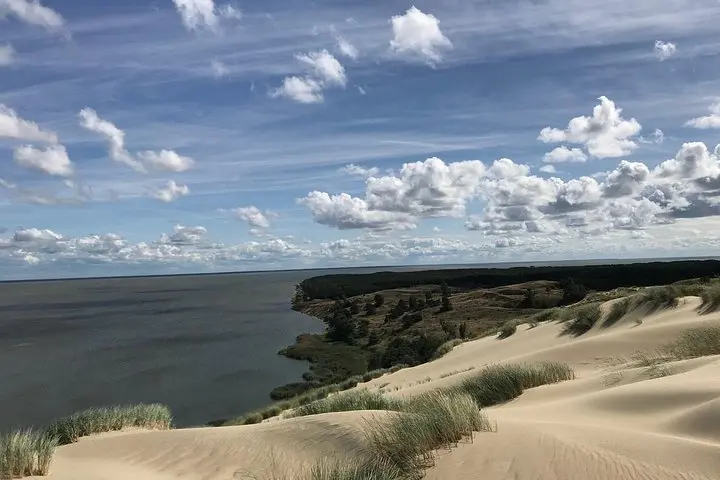
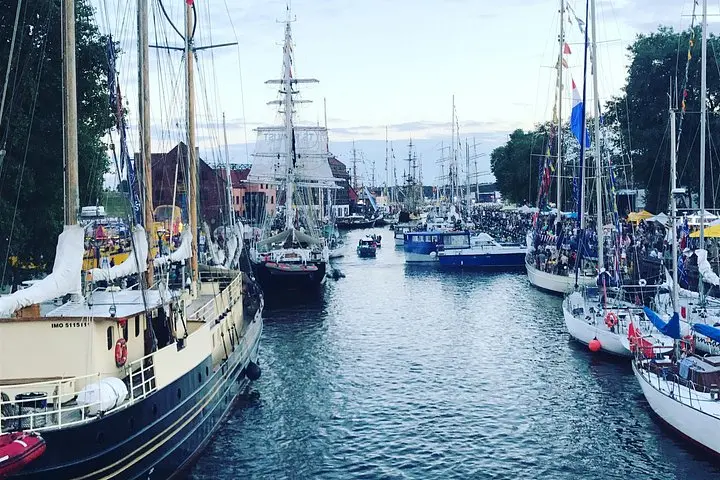
Geology here is active: glacial sediments and relentless Baltic wind form migrating dunes that push and shift each year. Human history is layered on top — from the Curonians who fished these waters to the wooden architecture of Nida and the carved figures of Juodkrantė’s Hill of Witches, a local archive of myth and woodwork. Bird colonies of cormorants and herons stake out the lagoon side; seals loaf on shoals when the tide allows.
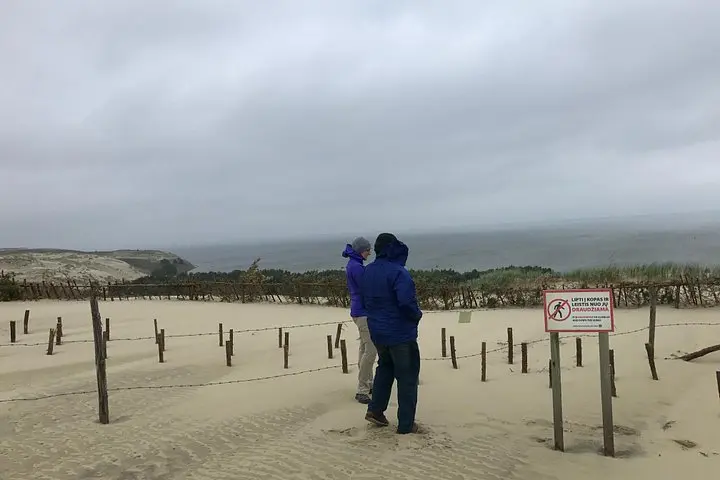
Practical guidance is straightforward. This is a long, full-day private tour (about 14 hours) that mixes short sandy hikes, short walks through villages, and time for photos and a smoked-fish lunch. Expect uneven sand underfoot, wind exposure, and ferry transfers included. The guide provides bottled water, an English commentary, and an air-conditioned vehicle for the long drive; an ecological fee is covered for most dates. Wear wind-resistant layers, shoes you don’t mind filling with sand, and carry binoculars for birdlife. Stay on marked paths over dunes to protect the fragile moving landscape and maximize wildlife sightings.
For travelers who want dramatic coastal vistas without technical climbing, the Curonian Spit delivers wide horizons, close wildlife encounters, and a portrait of Baltic coastal life — all rolled into one extended, accessible day trip.
The drive is about 300 km and typically takes around three hours each way to the Klaipėda/Nida area, depending on traffic and ferry schedules.
Yes — the tour includes the necessary ferry tickets to access the Curonian Spit from the mainland.
Yes; infants can ride in strollers and special infant seats are available, though infants must sit on laps during transport as noted by the operator.
Bring binoculars, a telephoto lens if you plan to photograph birds, and quiet patience; early or late parts of the day increase wildlife activity.
Different Lithuania operates guided outdoor trips and adventures with an emphasis on safety, stewardship, and memorable experiences.

You leave Vilnius before dawn and the highway unspools like a map toward the coast. After roughly 300 km and about three hours of driving, the forested sand plains of the Curonian Spit begin to breathe differently — pines scent the air, wind tugs at jackets, and the first white crest of a dune pokes above the treeline. The ferry ride across a narrow throat of water feels like a punctuation mark: the mainland recedes and the spit, narrow and persistent, draws you forward.
You leave Vilnius before dawn and the highway unspools like a map toward the coast. After roughly 300 km and about three hours of driving, the forested sand plains of the Curonian Spit begin to breathe differently — pines scent the air, wind tugs at jackets, and the first white crest of a dune pokes above the treeline. The ferry ride across a narrow throat of water feels like a punctuation mark: the mainland recedes and the spit, narrow and persistent, draws you forward.
Geology here is active: glacial sediments and relentless Baltic wind form migrating dunes that push and shift each year. Human history is layered on top — from the Curonians who fished these waters to the wooden architecture of Nida and the carved figures of Juodkrantė’s Hill of Witches, a local archive of myth and woodwork. Bird colonies of cormorants and herons stake out the lagoon side; seals loaf on shoals when the tide allows.
Practical guidance is straightforward. This is a long, full-day private tour (about 14 hours) that mixes short sandy hikes, short walks through villages, and time for photos and a smoked-fish lunch. Expect uneven sand underfoot, wind exposure, and ferry transfers included. The guide provides bottled water, an English commentary, and an air-conditioned vehicle for the long drive; an ecological fee is covered for most dates. Wear wind-resistant layers, shoes you don’t mind filling with sand, and carry binoculars for birdlife. Stay on marked paths over dunes to protect the fragile moving landscape and maximize wildlife sightings.
For travelers who want dramatic coastal vistas without technical climbing, the Curonian Spit delivers wide horizons, close wildlife encounters, and a portrait of Baltic coastal life — all rolled into one extended, accessible day trip.