THE ADVENTURE COLLECTIVE® · Independent discovery and booking for outdoor travel

A compact full-day loop through Cusco’s Plaza de Armas, Qoricancha and the archaeological ring of Sacsayhuamán. This tour mixes cobbled colonial streets with steep stone terraces—perfect for travelers acclimatizing while exploring Inca engineering and Spanish colonial overlay.
A compact full-day loop through Cusco’s Plaza de Armas, Qoricancha and the archaeological ring of Sacsayhuamán. This tour mixes cobbled colonial streets with steep stone terraces—perfect for travelers acclimatizing while exploring Inca engineering and Spanish colonial overlay.
You step out onto the Plaza de Armas and the highland air immediately shapes your rhythm — thin, clear, and insistently cool at 3,400 meters (about 11,150 ft). Stone streets fan away from the square: colonial arcades and the baroque Cathedral press against foundations cut by Inca masons. The day moves from sunlight on carved colonial facades to the ochre terraces and massive ashlar walls of Sacsayhuamán above the city.
Verified experiences and guided adventures in the surrounding area.
Operated by MACHUPICCHU SENSATIONS Travel & Expeditions · Cusco, Cusco
You step out onto the Plaza de Armas and the highland air immediately shapes your rhythm — thin, clear, and insistently cool at 3,400 meters (about 11,150 ft). Stone streets fan away from the square: colonial arcades and the baroque Cathedral press against foundations cut by Inca masons. The day moves from sunlight on carved colonial facades to the ochre terraces and massive ashlar walls of Sacsayhuamán above the city.
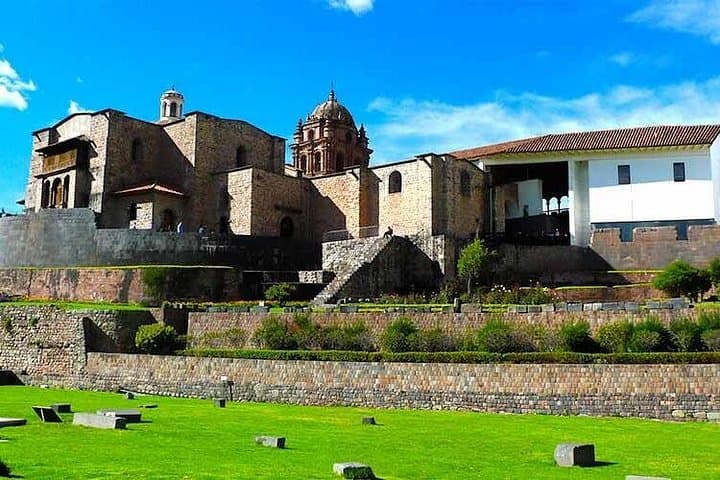
Cusco was the political and ceremonial heart of the Inca Empire; the Qoricancha (Temple of the Sun) was its wealthiest sanctuary before the Spanish built the Convent of Santo Domingo on top of its polished stone platforms. Nearby sites—Qenqo, Puca Pucará and Tambomachay—reveal ritual channels, military outposts and waterworks carved into volcanic stone and red sandstone ridges.
This full-day, approximately six-hour circuit combines short urban walks on uneven cobbles with a steeper 1–2 km climb to Sacsayhuamán (roughly 100–200 m ascent depending on route). Expect packed dirt paths, stone stairs and open hilltop exposure. Practicalities matter: acclimatize for altitude, wear grippy shoes for cobbles and steps, and bring small cash or the regional Boleto Turístico for site access. Timing your visit for morning light reduces crowds and cold wind on exposed summits.
The tour is cultural and accessible for most walkers but requires steady footing and short uphill stretches. Pay attention to local signage, respect fragile masonry by not climbing on walls, and keep water close — the combination of sun and altitude can surprise you.
Many archaeological sites are covered by Cusco’s Boleto Turístico; check in advance and bring your passport as ID for ticket purchase.
Walking is moderate—short urban walks on cobbles and a steeper 1–2 km climb to Sacsayhuamán with uneven stone surfaces; not technical but requires steady footing.
Yes—Cusco sits around 3,400 m. Rest a day after arrival, hydrate, avoid heavy meals and consider altitude medication if you're prone to sickness.
Some city stops like the Plaza de Armas and parts of Qoricancha are accessible, but archaeological sites involve steps and uneven terrain that limit full accessibility.
MACHUPICCHU SENSATIONS Travel & Expeditions operates guided outdoor trips and adventures with an emphasis on safety, stewardship, and memorable experiences.



You step out onto the Plaza de Armas and the highland air immediately shapes your rhythm — thin, clear, and insistently cool at 3,400 meters (about 11,150 ft). Stone streets fan away from the square: colonial arcades and the baroque Cathedral press against foundations cut by Inca masons. The day moves from sunlight on carved colonial facades to the ochre terraces and massive ashlar walls of Sacsayhuamán above the city.
You step out onto the Plaza de Armas and the highland air immediately shapes your rhythm — thin, clear, and insistently cool at 3,400 meters (about 11,150 ft). Stone streets fan away from the square: colonial arcades and the baroque Cathedral press against foundations cut by Inca masons. The day moves from sunlight on carved colonial facades to the ochre terraces and massive ashlar walls of Sacsayhuamán above the city.
Cusco was the political and ceremonial heart of the Inca Empire; the Qoricancha (Temple of the Sun) was its wealthiest sanctuary before the Spanish built the Convent of Santo Domingo on top of its polished stone platforms. Nearby sites—Qenqo, Puca Pucará and Tambomachay—reveal ritual channels, military outposts and waterworks carved into volcanic stone and red sandstone ridges.
This full-day, approximately six-hour circuit combines short urban walks on uneven cobbles with a steeper 1–2 km climb to Sacsayhuamán (roughly 100–200 m ascent depending on route). Expect packed dirt paths, stone stairs and open hilltop exposure. Practicalities matter: acclimatize for altitude, wear grippy shoes for cobbles and steps, and bring small cash or the regional Boleto Turístico for site access. Timing your visit for morning light reduces crowds and cold wind on exposed summits.
The tour is cultural and accessible for most walkers but requires steady footing and short uphill stretches. Pay attention to local signage, respect fragile masonry by not climbing on walls, and keep water close — the combination of sun and altitude can surprise you.