THE ADVENTURE COLLECTIVE® · Independent discovery and booking for outdoor travel

A focused two-day circuit from Cusco that pairs Moray's circular terraces and the salt pans of Maras with an overnight train to Machu Picchu. Expect ancient engineering, steep stairs, and tightly scheduled trains.
A focused two-day circuit from Cusco that pairs Moray's circular terraces and the salt pans of Maras with an overnight train to Machu Picchu. Expect ancient engineering, steep stairs, and tightly scheduled trains.
Dawn breaks over the high Andes and the Sacred Valley exhales a cool, mineral-scented breeze. You begin in Chinchero at a traditional weaving workshop, threads and dye vats clacking under a sky that keeps the seasons honest. The road slips past puna grasses and steep-sided valleys to Moray, where concentric Inca terraces curve like an amphitheater cut into the earth — an ancient agricultural laboratory that still hints at lost experiments in microclimates.
Verified experiences and guided adventures in the surrounding area.
Operated by Machupicchu Nice · Cusco, Cusco
Dawn breaks over the high Andes and the Sacred Valley exhales a cool, mineral-scented breeze. You begin in Chinchero at a traditional weaving workshop, threads and dye vats clacking under a sky that keeps the seasons honest. The road slips past puna grasses and steep-sided valleys to Moray, where concentric Inca terraces curve like an amphitheater cut into the earth — an ancient agricultural laboratory that still hints at lost experiments in microclimates.
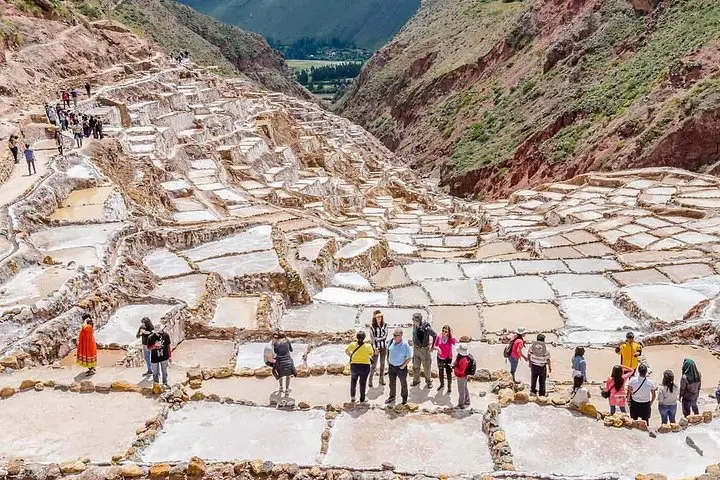
From there the landscape tightens to the salt pans of Maras: thousands of pink-tinged pools catching light and local labor with the same simple economy of salt extraction practiced for centuries. Ollantaytambo offers a different pulse — massive stone terraces and a village grid that survived conquest, its staircases and waterworks a living blueprint of Inca engineering.
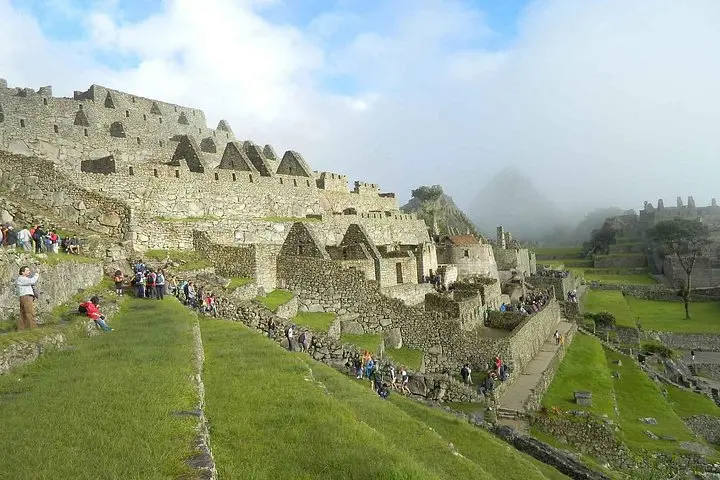
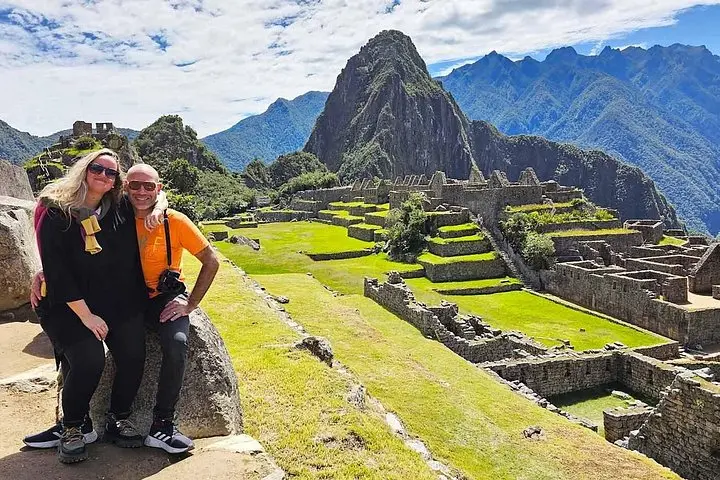
On the second day the train winds down a steep gorge to Aguas Calientes, and Machu Picchu appears like a ruin reasserting itself into jungle. The site’s stonework, drainage channels, and aligned plazas reflect an intimate conversation with geology and sky; condors wheel and llamas graze where priests once walked.
Practical guidance: expect narrow Inca steps, brief steep climbs, and heavy altitude early on; carry water, sun protection, and comfortable footwear. Trains and collectors enforce schedules — plan buffer time for stations and security checks. Move deliberately, give altitude time, and follow the guide’s routing to protect fragile paths while getting the most from two compact, intense days in the Sacred Valley and Machu Picchu.
Yes — the itinerary includes Machu Picchu entrance on day two; if you booked Huayna or Machu Picchu Mountain, that is arranged in advance.
Yes — the tour includes scheduled train service both directions as part of the package.
The tour is moderate: terraces and archaeological sites involve uneven surfaces and many stairs, but no technical climbing; basic mobility is sufficient.
Cusco and the Sacred Valley sit above 3,300 m; rest before the tour, hydrate, avoid alcohol before travel, and consider coca tea or medication if you are prone to symptoms.
Machupicchu Nice operates guided outdoor trips and adventures with an emphasis on safety, stewardship, and memorable experiences.
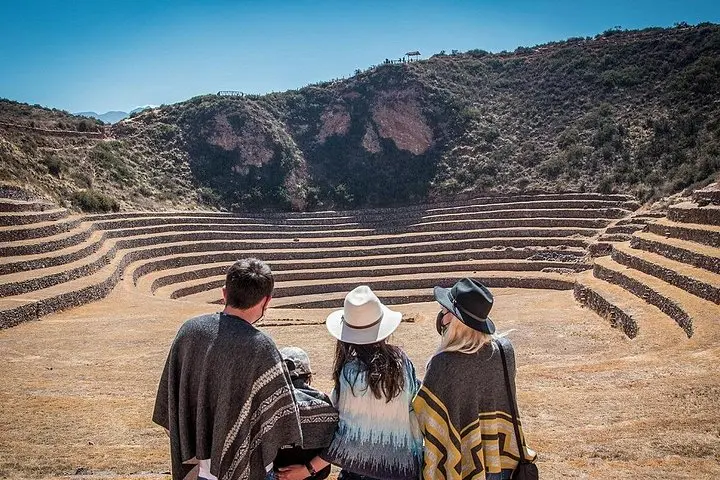
Dawn breaks over the high Andes and the Sacred Valley exhales a cool, mineral-scented breeze. You begin in Chinchero at a traditional weaving workshop, threads and dye vats clacking under a sky that keeps the seasons honest. The road slips past puna grasses and steep-sided valleys to Moray, where concentric Inca terraces curve like an amphitheater cut into the earth — an ancient agricultural laboratory that still hints at lost experiments in microclimates.
Dawn breaks over the high Andes and the Sacred Valley exhales a cool, mineral-scented breeze. You begin in Chinchero at a traditional weaving workshop, threads and dye vats clacking under a sky that keeps the seasons honest. The road slips past puna grasses and steep-sided valleys to Moray, where concentric Inca terraces curve like an amphitheater cut into the earth — an ancient agricultural laboratory that still hints at lost experiments in microclimates.
From there the landscape tightens to the salt pans of Maras: thousands of pink-tinged pools catching light and local labor with the same simple economy of salt extraction practiced for centuries. Ollantaytambo offers a different pulse — massive stone terraces and a village grid that survived conquest, its staircases and waterworks a living blueprint of Inca engineering.
On the second day the train winds down a steep gorge to Aguas Calientes, and Machu Picchu appears like a ruin reasserting itself into jungle. The site’s stonework, drainage channels, and aligned plazas reflect an intimate conversation with geology and sky; condors wheel and llamas graze where priests once walked.
Practical guidance: expect narrow Inca steps, brief steep climbs, and heavy altitude early on; carry water, sun protection, and comfortable footwear. Trains and collectors enforce schedules — plan buffer time for stations and security checks. Move deliberately, give altitude time, and follow the guide’s routing to protect fragile paths while getting the most from two compact, intense days in the Sacred Valley and Machu Picchu.