THE ADVENTURE COLLECTIVE® · Independent discovery and booking for outdoor travel

Follow the Route of the Sun from Cusco to Puno on a 10‑hour sightseeing bus that blends colonial churches, Inca ruins and high Andean panoramas. Expect guided stops at San Pedro de Andahuaylillas, Raqchi, La Raya pass and the Pucara Lithic Museum.
Follow the Route of the Sun from Cusco to Puno on a 10‑hour sightseeing bus that blends colonial churches, Inca ruins and high Andean panoramas. Expect guided stops at San Pedro de Andahuaylillas, Raqchi, La Raya pass and the Pucara Lithic Museum.
You step onto the convoy with the Andes unspooling ahead: terraced valleys near Cusco giving way to the broad, wind-swept altiplano. The road climbs, the air thins, and by La Raya the landscape opens into high puna where llamas graze and light slices the ridgelines.
Verified experiences and guided adventures in the surrounding area.
Operated by Peru Sceneries · Cusco, Cusco Region
You step onto the convoy with the Andes unspooling ahead: terraced valleys near Cusco giving way to the broad, wind-swept altiplano. The road climbs, the air thins, and by La Raya the landscape opens into high puna where llamas graze and light slices the ridgelines.
The route threads colonial and pre‑Columbian history. San Pedro de Andahuaylillas bears seventeenth‑century gilded murals that echo Spanish mission art; Raqchi preserves massive Inca stonework and the footprint of a Viracocha temple from the 15th century. At La Raya you cross the natural divide between Andean valleys and the high plateau; geologically it’s a transition from folded, river‑cut slopes to the flatter, wind‑scoured sedimentary basin that cradles Lake Titicaca. The Pucara Lithic Museum showcases carved stones from the Pucara culture (circa 500 BC) — local iconography of fauna and ritual imagery.
Practicalities: the full drive is about 10 hours (roughly 380 km), with multiple guided stops; travel time is included in the schedule. Lunch and a bilingual guide are provided. Expect short, flat walks at sites but prolonged seated travel and altitude highs above 4,300 m at La Raya.
Plan for sun, wind, and altitude—hydrate, wear layered clothing and sturdy shoes, and move deliberately at high passes. Bring cash for small purchases and a camera for the wide, crystalline light; respectful photography inside the church and careful footing around ruins keep the experience both safe and culturally considerate.
Admissions to the highlighted sites are generally not included in the basic tour price; check the operator’s specifics and carry cash for individual tickets.
Yes—the tour includes one lunch during the itinerary, typically a set-menu meal at a roadside restaurant.
La Raya reaches above 4,300 m (≈14,100 ft); many travelers notice mild altitude effects—headache or shortness of breath—so plan accordingly.
The tour is marked suitable for all fitness levels, but families and older travelers should consider altitude sensitivity and long travel time when deciding to join.
Peru Sceneries operates guided outdoor trips and adventures with an emphasis on safety, stewardship, and memorable experiences.
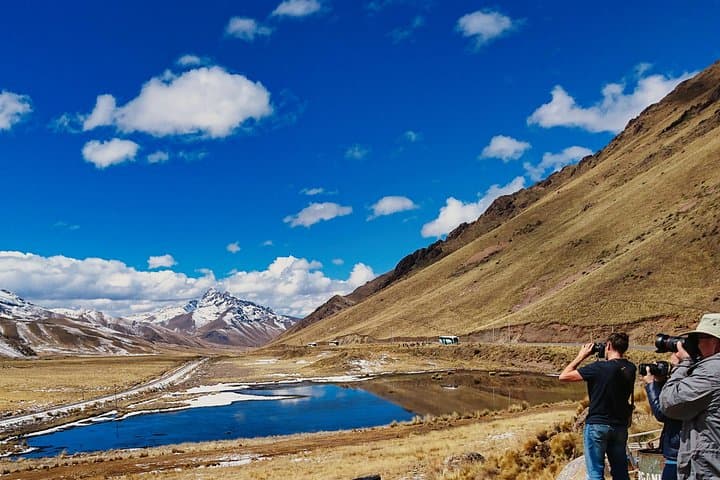


You step onto the convoy with the Andes unspooling ahead: terraced valleys near Cusco giving way to the broad, wind-swept altiplano. The road climbs, the air thins, and by La Raya the landscape opens into high puna where llamas graze and light slices the ridgelines.
You step onto the convoy with the Andes unspooling ahead: terraced valleys near Cusco giving way to the broad, wind-swept altiplano. The road climbs, the air thins, and by La Raya the landscape opens into high puna where llamas graze and light slices the ridgelines.
The route threads colonial and pre‑Columbian history. San Pedro de Andahuaylillas bears seventeenth‑century gilded murals that echo Spanish mission art; Raqchi preserves massive Inca stonework and the footprint of a Viracocha temple from the 15th century. At La Raya you cross the natural divide between Andean valleys and the high plateau; geologically it’s a transition from folded, river‑cut slopes to the flatter, wind‑scoured sedimentary basin that cradles Lake Titicaca. The Pucara Lithic Museum showcases carved stones from the Pucara culture (circa 500 BC) — local iconography of fauna and ritual imagery.
Practicalities: the full drive is about 10 hours (roughly 380 km), with multiple guided stops; travel time is included in the schedule. Lunch and a bilingual guide are provided. Expect short, flat walks at sites but prolonged seated travel and altitude highs above 4,300 m at La Raya.
Plan for sun, wind, and altitude—hydrate, wear layered clothing and sturdy shoes, and move deliberately at high passes. Bring cash for small purchases and a camera for the wide, crystalline light; respectful photography inside the church and careful footing around ruins keep the experience both safe and culturally considerate.