THE ADVENTURE COLLECTIVE® · Independent discovery and booking for outdoor travel

Plan a private, flexible day through Nara’s temples, roaming deer, and panoramic viewpoints. This customizable tour pairs cultural depth with simple logistics for a focused, walkable exploration.
Plan a private, flexible day through Nara’s temples, roaming deer, and panoramic viewpoints. This customizable tour pairs cultural depth with simple logistics for a focused, walkable exploration.
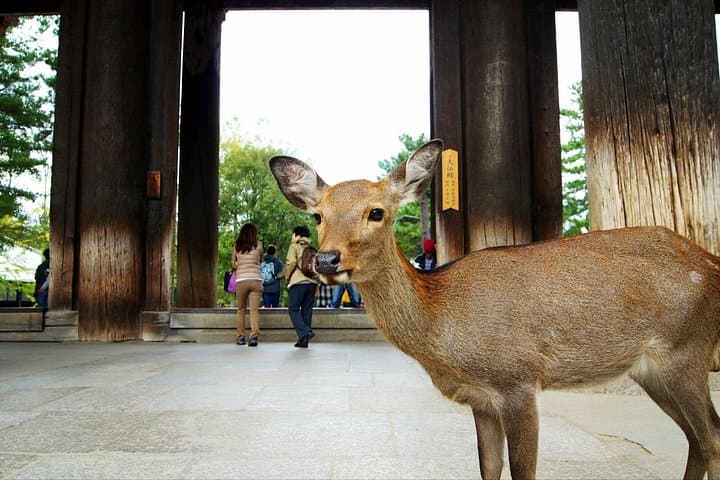
The morning air in Nara tastes faintly of wood smoke and green tea as a low-slung vehicle eases into a plaza where deer wander like local guides. You step out, map in hand or not — this private, customizable day lets you follow history on foot: temple courtyards, lanterned shrines, and a city that served as Japan’s first permanent capital.
Verified experiences and guided adventures in the surrounding area.
Operated by osakatravel · Nara, Nara Prefecture
The morning air in Nara tastes faintly of wood smoke and green tea as a low-slung vehicle eases into a plaza where deer wander like local guides. You step out, map in hand or not — this private, customizable day lets you follow history on foot: temple courtyards, lanterned shrines, and a city that served as Japan’s first permanent capital.
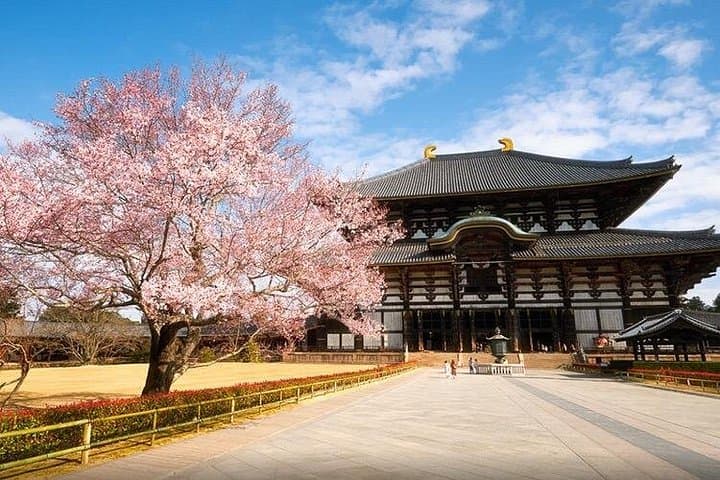
Todai-ji’s Great Buddha dominates both skyline and story; the current Daibutsu Hall is a reconstruction of an earlier, larger structure and remains a pivotal example of Nara-period temple architecture. Nearby, Kasuga Taisha’s hanging lanterns and mossy forest paths reveal Shinto ritual woven into the landscape. Geologically, the city sits on gentle plains framed by low hills like Mount Wakakusa, whose grassy slope offers broad views of tiled roofs and temple forests.
Culturally, Nara’s deer are protected and historically considered messengers of the gods — today they are tame but regulated: feeding is controlled and respectful distance is expected. Local insights: linger on Sanjo-dori for snacks and crafts, and allow time for the Heijo Palace site to contextualize the city’s imperial past.
Practical guidance: the one-day plan is fully adjustable on the move — ideal if you want longer at Todai-ji or a quieter walk on Wakakusa. Expect 4–6 miles of walking spread across flat streets and one moderate hill climb. Visit early to avoid crowds and midday heat; bring cash for small shrine fees and deer crackers sold by vendors. Wheelchair access and infant seats are available through the tour vehicle; clarify pickup point and special requests when booking.
Yes — the tour is designed to be flexible within Nara city limits; confirm any time-sensitive reservations with your driver or guide in advance.
Admissions are generally not included; bring cash for entry fees to Todai-ji, Kasuga Taisha exhibits, and other sites as noted.
The vehicle and many park areas are wheelchair accessible, but some temple grounds and Mount Wakakusa paths have uneven surfaces—check specific site accessibility in advance.
Purchase deer crackers from authorized vendors, offer gently from your palm, and avoid feeding human food; follow park signage and staff instructions.
osakatravel operates guided outdoor trips and adventures with an emphasis on safety, stewardship, and memorable experiences.


The morning air in Nara tastes faintly of wood smoke and green tea as a low-slung vehicle eases into a plaza where deer wander like local guides. You step out, map in hand or not — this private, customizable day lets you follow history on foot: temple courtyards, lanterned shrines, and a city that served as Japan’s first permanent capital.
The morning air in Nara tastes faintly of wood smoke and green tea as a low-slung vehicle eases into a plaza where deer wander like local guides. You step out, map in hand or not — this private, customizable day lets you follow history on foot: temple courtyards, lanterned shrines, and a city that served as Japan’s first permanent capital.
Todai-ji’s Great Buddha dominates both skyline and story; the current Daibutsu Hall is a reconstruction of an earlier, larger structure and remains a pivotal example of Nara-period temple architecture. Nearby, Kasuga Taisha’s hanging lanterns and mossy forest paths reveal Shinto ritual woven into the landscape. Geologically, the city sits on gentle plains framed by low hills like Mount Wakakusa, whose grassy slope offers broad views of tiled roofs and temple forests.
Culturally, Nara’s deer are protected and historically considered messengers of the gods — today they are tame but regulated: feeding is controlled and respectful distance is expected. Local insights: linger on Sanjo-dori for snacks and crafts, and allow time for the Heijo Palace site to contextualize the city’s imperial past.
Practical guidance: the one-day plan is fully adjustable on the move — ideal if you want longer at Todai-ji or a quieter walk on Wakakusa. Expect 4–6 miles of walking spread across flat streets and one moderate hill climb. Visit early to avoid crowds and midday heat; bring cash for small shrine fees and deer crackers sold by vendors. Wheelchair access and infant seats are available through the tour vehicle; clarify pickup point and special requests when booking.