THE ADVENTURE COLLECTIVE® · Independent discovery and booking for outdoor travel

Pedal a private, full-day loop through Angkor’s greatest sites—from the root-entwined corridors of Ta Prohm to the smiling faces of Bayon and the monumental sweep of Angkor Wat. This tour mixes history, jungle edge, and practical guidance for a long but manageable day on the bike.
Pedal a private, full-day loop through Angkor’s greatest sites—from the root-entwined corridors of Ta Prohm to the smiling faces of Bayon and the monumental sweep of Angkor Wat. This tour mixes history, jungle edge, and practical guidance for a long but manageable day on the bike.
You set off before the heat, tires whispering over cracked asphalt as the jungle leans close. Morning light slices through banyan roots at Ta Prohm, where roots have turned stone into living architecture; later you pedal under the carved faces of Bayon and arrive at Angkor Wat’s wide causeways, the temple rising like an edited memory of the sky.
Verified experiences and guided adventures in the surrounding area.
Operated by Pitt Angkor Tour · Siem Reap, Siem Reap Province
You set off before the heat, tires whispering over cracked asphalt as the jungle leans close. Morning light slices through banyan roots at Ta Prohm, where roots have turned stone into living architecture; later you pedal under the carved faces of Bayon and arrive at Angkor Wat’s wide causeways, the temple rising like an edited memory of the sky.
The route threads the Khmer Empire’s 12th-century heart—Suryavarman II’s Angkor Wat built as a microcosm of the cosmos, Angkor Thom’s Bayon crowned with smiling towers, and Ta Prohm left intentionally unrestored so fig and silk-cotton trees may continue their slow reclamation. The sandstone here is soft; centuries of rain and roots have hollowed bas-reliefs and softened corners, while laterite foundations keep the monuments anchored.
Culturally the complex is living: monks in saffron move through cool galleries, local guides read inscriptions in a language older than modern borders. The park is managed by the APSARA Authority; visitor flow and respect for fragile carving matter as much as the route.
Practical edge: this private full-day trip (6–7 hours) includes bikes, helmets, and hotel transfer, but not the Angkor Pass—buy at the ticket center before dawn. Expect paved and compacted dirt tracks, short on steep climbs but long on distance; hydrate, carry sunscreen, and pace yourself through midday heat. Photograph selectively—angles and light make the best pictures, and leaving the busiest viewpoints for off-peak moments yields quiet corridors and sharper impressions.
No. The Angkor Pass is not included; visitors must buy a pass at the official ticket center near Siem Reap before entering the park.
The day is long (6–7 hours) but mostly flat; riders should be comfortable pedaling for extended periods and be prepared for heat rather than steep climbs.
Many galleries and inner courtyards offer shade, but causeways and outer approaches are exposed—plan rest and hydration accordingly.
Yes—equipment like infant seats are available per operator notes, but check age and comfort with long days on a bike when booking.
Pitt Angkor Tour operates guided outdoor trips and adventures with an emphasis on safety, stewardship, and memorable experiences.
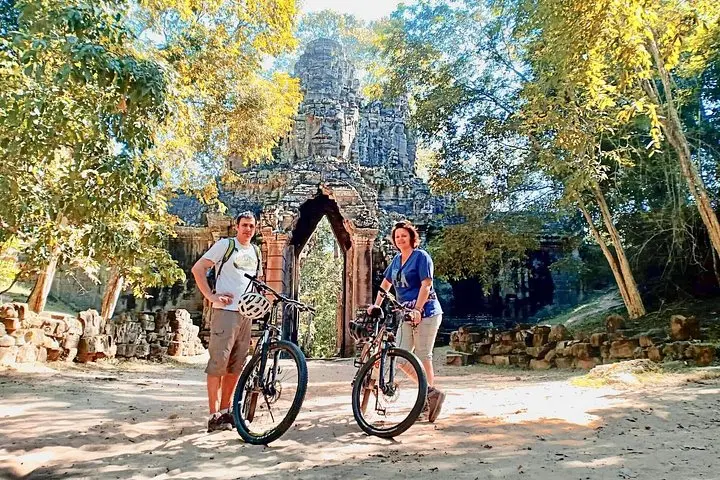
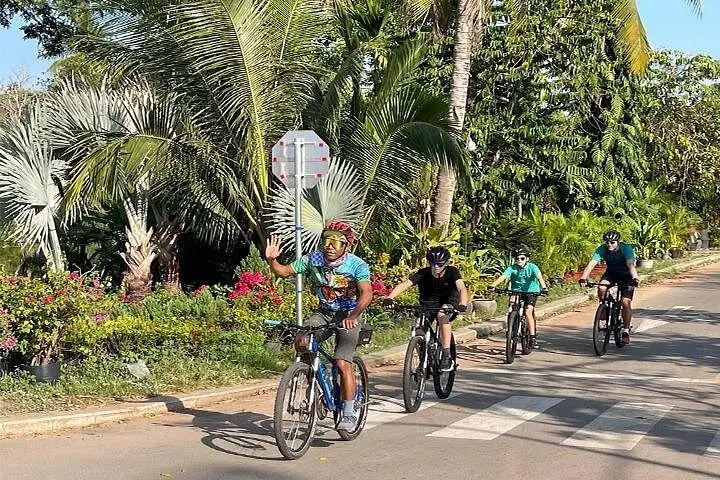
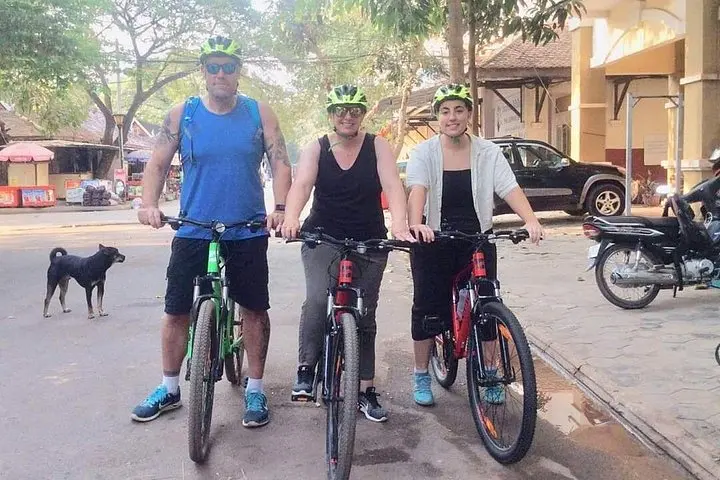
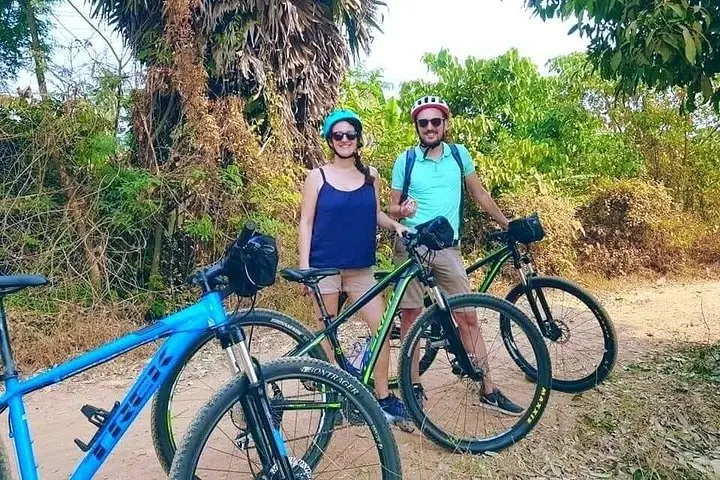
You set off before the heat, tires whispering over cracked asphalt as the jungle leans close. Morning light slices through banyan roots at Ta Prohm, where roots have turned stone into living architecture; later you pedal under the carved faces of Bayon and arrive at Angkor Wat’s wide causeways, the temple rising like an edited memory of the sky.
You set off before the heat, tires whispering over cracked asphalt as the jungle leans close. Morning light slices through banyan roots at Ta Prohm, where roots have turned stone into living architecture; later you pedal under the carved faces of Bayon and arrive at Angkor Wat’s wide causeways, the temple rising like an edited memory of the sky.
The route threads the Khmer Empire’s 12th-century heart—Suryavarman II’s Angkor Wat built as a microcosm of the cosmos, Angkor Thom’s Bayon crowned with smiling towers, and Ta Prohm left intentionally unrestored so fig and silk-cotton trees may continue their slow reclamation. The sandstone here is soft; centuries of rain and roots have hollowed bas-reliefs and softened corners, while laterite foundations keep the monuments anchored.
Culturally the complex is living: monks in saffron move through cool galleries, local guides read inscriptions in a language older than modern borders. The park is managed by the APSARA Authority; visitor flow and respect for fragile carving matter as much as the route.
Practical edge: this private full-day trip (6–7 hours) includes bikes, helmets, and hotel transfer, but not the Angkor Pass—buy at the ticket center before dawn. Expect paved and compacted dirt tracks, short on steep climbs but long on distance; hydrate, carry sunscreen, and pace yourself through midday heat. Photograph selectively—angles and light make the best pictures, and leaving the busiest viewpoints for off-peak moments yields quiet corridors and sharper impressions.