
Cycle Nara's Hidden Temples: Heart of Nature Cross Bike Tour
A 5–6 hour guided ride that leaves the tourist routes to explore Wakakusayama, forgotten temples, forest‑carved Buddhas and a 750‑year knife shop. Expect mixed surfaces, steady climbs and panoramic views over historic Nara.
An Adventure In Nara.
A 5–6 hour guided ride that leaves the tourist routes to explore Wakakusayama, forgotten temples, forest‑carved Buddhas and a 750‑year knife shop. Expect mixed surfaces, steady climbs and panoramic views over historic Nara.
Read the full experience
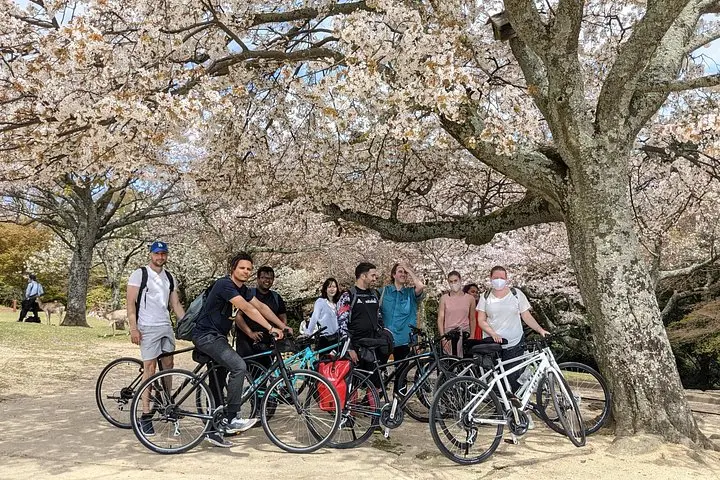
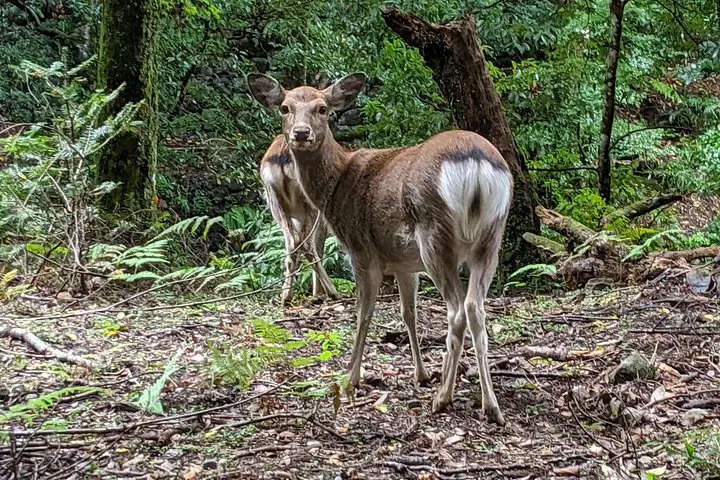
Morning light slices through the cedar groves as riders wheel out from the edge of Nara Park, deer lifting their heads to watch the procession. The route threads from the open fields near Todaiji into the darker, older slopes of Kasugayama — a place where stone Buddhas peer from moss and an old bridge keeps time over Uguisuno Falls.
Morning light slices through the cedar groves as riders wheel out from the edge of Nara Park, deer lifting their heads to watch the procession. The route threads from the open fields near Todaiji into the darker, older slopes of Kasugayama — a place where stone Buddhas peer from moss and an old bridge keeps time over Uguisuno Falls.
This loop mixes natural history with human history: Nara was Japan’s first permanent capital in the 8th century, and the surrounding forests contain sacred sites tied to Kasuga Taisha and small Buddhist communities now reclaimed by moss and root. Geologically the area is low, rounded hills of volcanic and sedimentary soils, easy on the tires but often loose underfoot when the trail narrows.
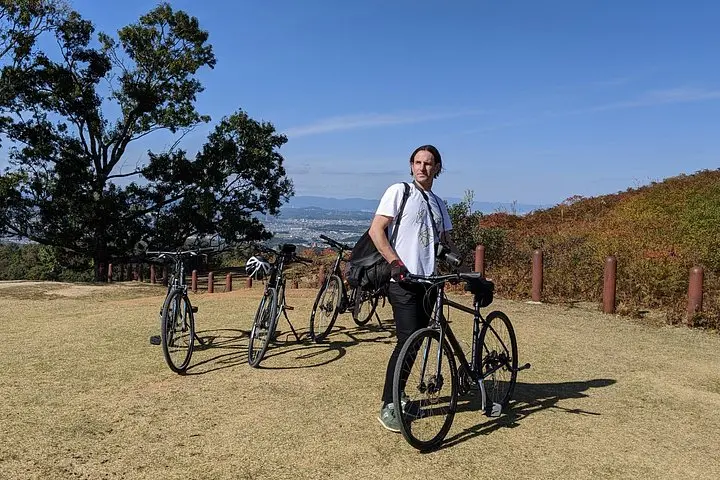
Cultural stops include a 750‑year‑old knife shop where blades are still tested on paper and a calligraphy stop near a temple balcony that frames Todaiji’s roofs. The climb to the top of Wakakusayama (Wakakusa hill) rewards riders with a panoramic view of Nara’s roofscape and the cedar shadow of the forest beyond.
Expect mixed surfaces: quiet paved lanes, packed dirt, short gravel climbs and a few stair-assist sections where you may dismount. The tour runs about 5–6 hours (roughly 20–30 km) with cumulative climbing in the low hundreds of meters — suitable for fit cyclists comfortable with sustained uphill effort.
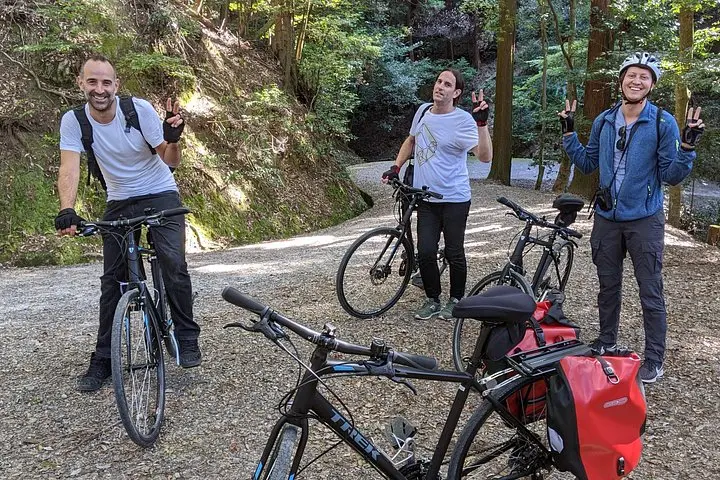
Bring layered clothing, a full water bottle, and a readiness to dismount and walk where the forest reclaims the trail. Guides provide bikes, helmets, sunglasses, bottled water refills and local insights — they shepherd the logistics so riders can focus on the ride, the ruins, and the view.
Frequently asked questions
The tour is physically demanding with sustained climbs; regular cyclists or those who train 2–3 times per week should be comfortable. Inform the operator of any health issues.
Yes — the tour provides bicycles, helmets and cycling sunglasses as standard gear; bring your own pedals or shoes if you prefer.
Solo bookings are accepted but a two‑guest minimum applies; if the tour cannot operate due to low numbers you’ll be offered rescheduling or a full refund.
Guides speak English and Japanese; French may be available on private bookings if requested in advance but is not guaranteed on shared tours.
About This Experience
Japan Tour Adventure operates guided outdoor trips and adventures with an emphasis on safety, stewardship, and memorable experiences.
Adventure tips
Recommended gear
- Hybrid/gravel-capable bike (provided): A bike with wider tires or provided cross bike handles packed gravel and dirt sections more confidently.
- Helmet (provided): Protects on mixed roads and downhill runs; worn at all times on the tour.
- Hydration bottle or pack: Essential for the 5–6 hour outing; refills available but bring capacity for climbs.
- Grippy cycling shoes or trail shoes: Good traction when you need to shoulder or walk your bike on forest paths and temple steps.
Photos of the experience
Related adventures & guides
Read the full experience
Morning light slices through the cedar groves as riders wheel out from the edge of Nara Park, deer lifting their heads to watch the procession. The route threads from the open fields near Todaiji into the darker, older slopes of Kasugayama — a place where stone Buddhas peer from moss and an old bridge keeps time over Uguisuno Falls.
Morning light slices through the cedar groves as riders wheel out from the edge of Nara Park, deer lifting their heads to watch the procession. The route threads from the open fields near Todaiji into the darker, older slopes of Kasugayama — a place where stone Buddhas peer from moss and an old bridge keeps time over Uguisuno Falls.
This loop mixes natural history with human history: Nara was Japan’s first permanent capital in the 8th century, and the surrounding forests contain sacred sites tied to Kasuga Taisha and small Buddhist communities now reclaimed by moss and root. Geologically the area is low, rounded hills of volcanic and sedimentary soils, easy on the tires but often loose underfoot when the trail narrows.
Cultural stops include a 750‑year‑old knife shop where blades are still tested on paper and a calligraphy stop near a temple balcony that frames Todaiji’s roofs. The climb to the top of Wakakusayama (Wakakusa hill) rewards riders with a panoramic view of Nara’s roofscape and the cedar shadow of the forest beyond.
Expect mixed surfaces: quiet paved lanes, packed dirt, short gravel climbs and a few stair-assist sections where you may dismount. The tour runs about 5–6 hours (roughly 20–30 km) with cumulative climbing in the low hundreds of meters — suitable for fit cyclists comfortable with sustained uphill effort.
Bring layered clothing, a full water bottle, and a readiness to dismount and walk where the forest reclaims the trail. Guides provide bikes, helmets, sunglasses, bottled water refills and local insights — they shepherd the logistics so riders can focus on the ride, the ruins, and the view.
Make a day of it nearby.
Verified experiences and guided adventures in the surrounding area.