THE ADVENTURE COLLECTIVE® · Independent discovery and booking for outdoor travel

Ride an e‑bike along the ancient Via Appia Antica to see monumental tombs, the Parco degli Acquedotti and guided catacombs. This 3–4 hour small-group tour blends Roman history with gentle off-road cycling—perfect for travelers who want exploration with expert local context.
Ride an e‑bike along the ancient Via Appia Antica to see monumental tombs, the Parco degli Acquedotti and guided catacombs. This 3–4 hour small-group tour blends Roman history with gentle off-road cycling—perfect for travelers who want exploration with expert local context.
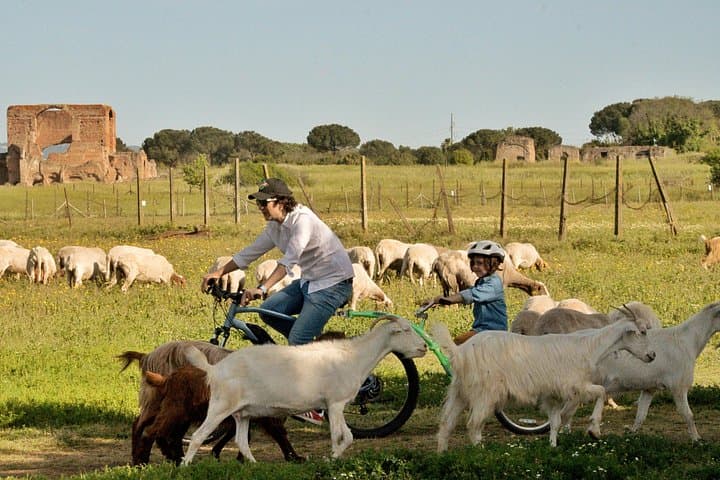
You push off from the rental point and the city’s edge thins behind you—cicadas hum, hedgerows lean close, and the old basalt beneath your wheels clicks with a story. Riding an e‑bike along the Via Appia Antica places you on the same engineered ribbon Romans laid down over 2,300 years ago; every turn opens a view of monumental tombs, open fields, and the long ribs of aqueduct arches that frame the skyline.
Verified experiences and guided adventures in the surrounding area.
Operated by Bicycle Roma · Rome, Lazio
You push off from the rental point and the city’s edge thins behind you—cicadas hum, hedgerows lean close, and the old basalt beneath your wheels clicks with a story. Riding an e‑bike along the Via Appia Antica places you on the same engineered ribbon Romans laid down over 2,300 years ago; every turn opens a view of monumental tombs, open fields, and the long ribs of aqueduct arches that frame the skyline.
The Appian Way dates to 312 BCE and functioned as Rome’s arterial road; the nearby Parco degli Acquedotti preserves the arches of aqueducts that once fed the city. Catacombs like San Callisto and San Sebastiano hold early Christian burial networks carved into volcanic tuff—45 minutes inside offers a cool, dim counterpoint to the sunlit route. Geology here is straightforward: compacted basolato (ancient stone paving), short stretches of packed dirt and occasional paved crossings.
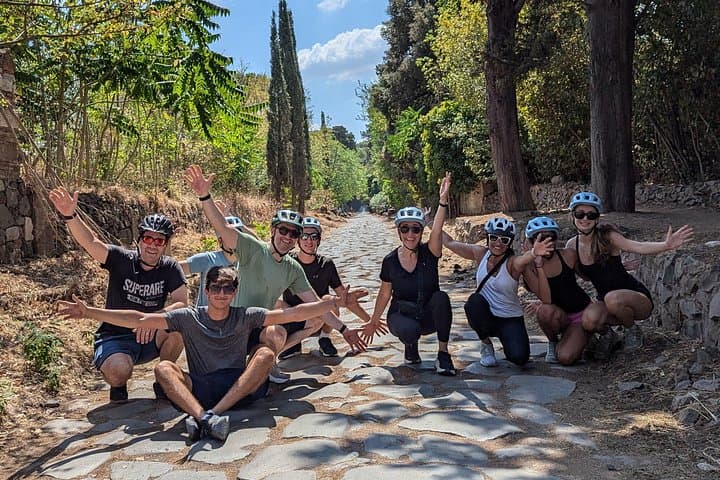
Expect roughly 10–20 km of riding spread over about 3–4 hours with minimal elevation change but a steady pace—e‑assist smooths rolling sections and helps on uneven basolato. Groups are small, guides narrate history and point out lesser-known ruins, and entrances to the catacombs are included.
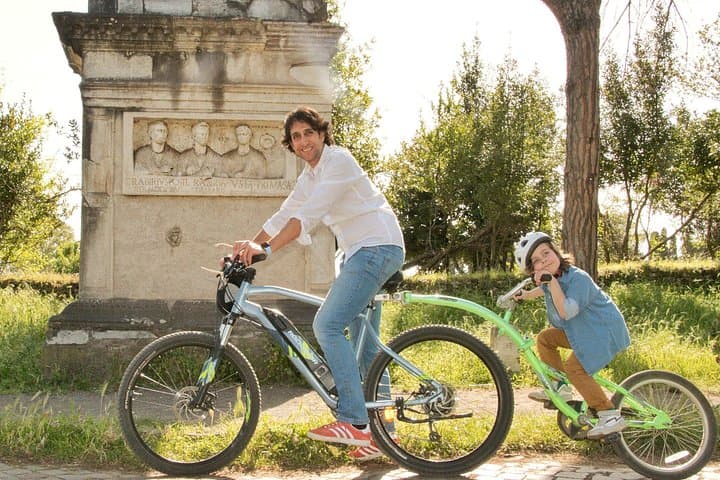
Practical notes: wear closed-toe shoes, carry water, and start in the morning to avoid heat and crowds. The guide performs a brief skills check; younger riders can use tag-alongs or child seats. With basic cycling ability and comfortable clothing, this is a focused way to trade urban noise for Roman antiquity, shaded lanes, and aqueduct arches daring you to keep moving forward.
The full experience runs about 3–4 hours including stops; total cycling distance is typically 10–20 km with minimal elevation—e‑bikes make it accessible to most riders with basic skills.
Yes—e‑bikes, helmets and a rain poncho are included; guides also conduct a short pre-departure safety check.
Children under 139 cm must use a bike extension (tag-along/trailer); infants up to 20 kg can ride in supplied child seats—minimum e‑bike operator age to ride solo is 12.
Bring photo ID and wear modest clothing; catacombs are cool and underground, so a light layer is useful and camera use may be restricted in certain areas.
Bicycle Roma operates guided outdoor trips and adventures with an emphasis on safety, stewardship, and memorable experiences.

You push off from the rental point and the city’s edge thins behind you—cicadas hum, hedgerows lean close, and the old basalt beneath your wheels clicks with a story. Riding an e‑bike along the Via Appia Antica places you on the same engineered ribbon Romans laid down over 2,300 years ago; every turn opens a view of monumental tombs, open fields, and the long ribs of aqueduct arches that frame the skyline.
You push off from the rental point and the city’s edge thins behind you—cicadas hum, hedgerows lean close, and the old basalt beneath your wheels clicks with a story. Riding an e‑bike along the Via Appia Antica places you on the same engineered ribbon Romans laid down over 2,300 years ago; every turn opens a view of monumental tombs, open fields, and the long ribs of aqueduct arches that frame the skyline.
The Appian Way dates to 312 BCE and functioned as Rome’s arterial road; the nearby Parco degli Acquedotti preserves the arches of aqueducts that once fed the city. Catacombs like San Callisto and San Sebastiano hold early Christian burial networks carved into volcanic tuff—45 minutes inside offers a cool, dim counterpoint to the sunlit route. Geology here is straightforward: compacted basolato (ancient stone paving), short stretches of packed dirt and occasional paved crossings.
Expect roughly 10–20 km of riding spread over about 3–4 hours with minimal elevation change but a steady pace—e‑assist smooths rolling sections and helps on uneven basolato. Groups are small, guides narrate history and point out lesser-known ruins, and entrances to the catacombs are included.
Practical notes: wear closed-toe shoes, carry water, and start in the morning to avoid heat and crowds. The guide performs a brief skills check; younger riders can use tag-alongs or child seats. With basic cycling ability and comfortable clothing, this is a focused way to trade urban noise for Roman antiquity, shaded lanes, and aqueduct arches daring you to keep moving forward.