THE ADVENTURE COLLECTIVE® · Independent discovery and booking for outdoor travel

Start at Odawara, climb historic Hakone and take on the Fuji Subaru Line—the highest paved road you can cycle in Japan. This private, fully supported day ride pairs high-quality bikes and mechanics with long climbs, volcanic landscapes, and unrivaled Fuji views.
Start at Odawara, climb historic Hakone and take on the Fuji Subaru Line—the highest paved road you can cycle in Japan. This private, fully supported day ride pairs high-quality bikes and mechanics with long climbs, volcanic landscapes, and unrivaled Fuji views.
The morning begins at Odawara Station: a cold breath of air, the clack of trains, and a staff member in a red helmet holding a sign with your name. You unload your legs, check tire pressure, and push off along the old Tokaido—stone markers and rice paddies give way to rising pine slopes and the first sightlines of Hakone. The road climbs with intention; Hakone dares your rhythm and asks for patience. Past Lake Ashi, where sampans drift like slow punctuation marks, the route turns toward the Fuji foothills and the long, technical pitch of the Fuji Subaru Line.
Verified experiences and guided adventures in the surrounding area.
Operated by Tokyo eBike Rent & Deliver · Odawara, Kanagawa
The morning begins at Odawara Station: a cold breath of air, the clack of trains, and a staff member in a red helmet holding a sign with your name. You unload your legs, check tire pressure, and push off along the old Tokaido—stone markers and rice paddies give way to rising pine slopes and the first sightlines of Hakone. The road climbs with intention; Hakone dares your rhythm and asks for patience. Past Lake Ashi, where sampans drift like slow punctuation marks, the route turns toward the Fuji foothills and the long, technical pitch of the Fuji Subaru Line.
This one-day private tour traces two threads of Japan’s history: the Tokaido road, which linked Edo and Kyoto and still carries travelers in a modern key, and Mount Fuji, the island’s most storied peak. Geologically, the ride crosses volcanic terraces—Hakone’s caldera lakes and hot-spring scars remind you the land here is restless. Culturally, Fuji has been a place of pilgrimage for centuries; views from the Subaru Line have inspired woodblock prints and religious rites alike.
On the bike you feel the mountain’s progression: lower, shaded slopes with hairpins, then a cleaner alpine light as you cross 1,000m and beyond. The Subaru Line is famous for being the highest paved road in Japan accessible by bicycle, topping out above 2,000m, where clouds gather and you look down into a sea of weather. This is not a casual pedal—expect repeated climbs, gradients that flirt with double digits, and sustained concentration on descents.
The operator supplies high-quality road bikes or electric-assist models, a mechanic, and a support car that carries lunch and spares, so you can focus on cadence and scenery. Practical planning matters: an early start, layered clothing for big temperature swings, and conservative pacing on long climbs make the difference between a great day and a long, cold push.
If you’re aiming for a personal benchmark—reaching the Fuji Subaru Line 5th Station by bike or simply riding as far as weather and legs allow—this route rewards preparation. Bring compact tools, prioritize hydration, and respect the mountain’s sudden weather shifts. Whether you finish the entire loop or choose the 20km Hakone finish suggested for beginners, you’ll come away with a clear sense of why Fuji commands attention: it still sets the pace for those who try to meet it.
Practical snapshot: the full itinerary runs about 9–12 hours with 80–110 km of riding and 1,800–2,400 m of total elevation gain depending on turnarounds. Expect frequent photo stops, a packed lunch at a scenic pullout, and a support car ride option if conditions demand it.
No—this ride follows the Fuji Subaru Line up to the public high point (around the 5th Station elevation), but not to the volcanic summit itself.
The full day covers roughly 80–110 km with about 1,800–2,400 meters of cumulative elevation gain depending on route choices and turnarounds.
Yes; the tour offers regular and electric-assist road bikes—state your preference when booking so the operator can prepare the right model.
This is best for riders with strong endurance and prior experience on multi-hour climbs; beginners can opt to stop after the Hakone segment (~20 km) as suggested.
Meet at Odawara Station east exit where staff in a red helmet wait; the tour includes high-quality bikes, a mechanic, bottled water, lunch, and a support car.
Full refund if cancelled at least 24 hours before departure; no refund within 24 hours of the start time according to the operator’s policy.
Tokyo eBike Rent & Deliver operates guided outdoor trips and adventures with an emphasis on safety, stewardship, and memorable experiences.
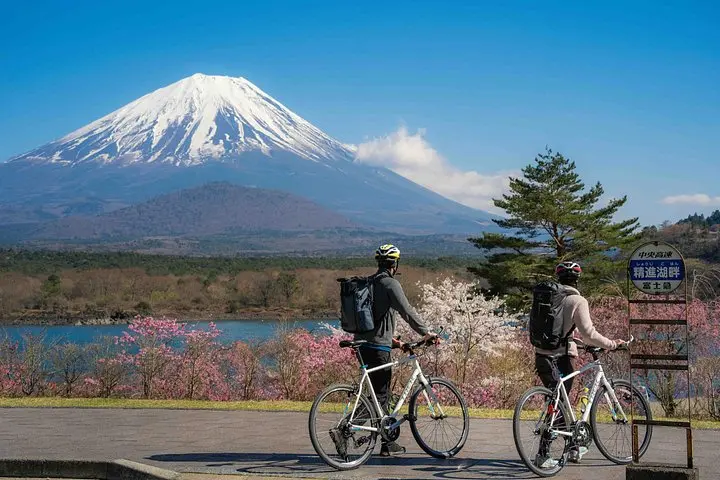
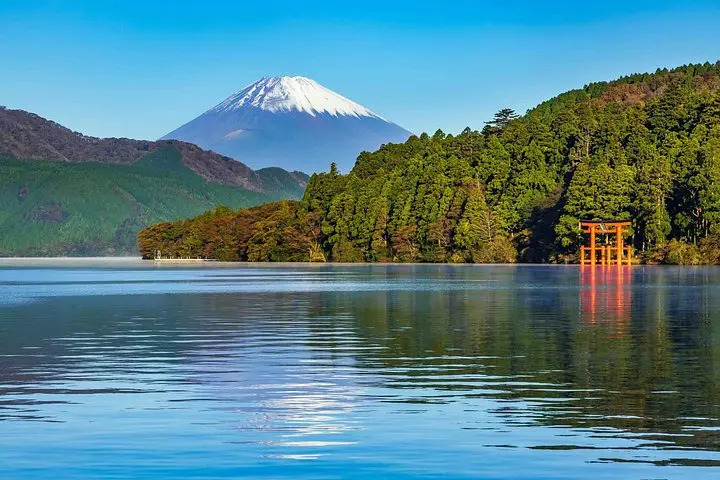
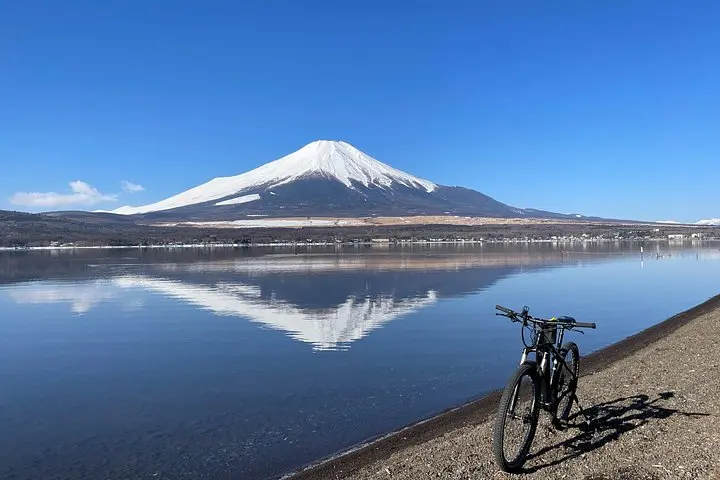
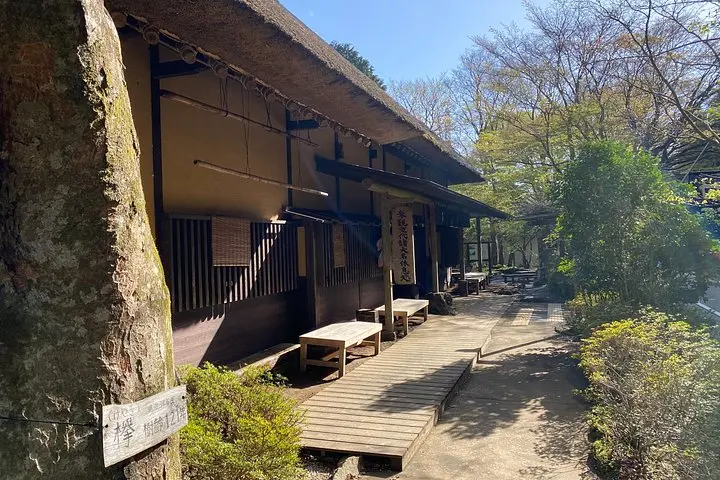
The morning begins at Odawara Station: a cold breath of air, the clack of trains, and a staff member in a red helmet holding a sign with your name. You unload your legs, check tire pressure, and push off along the old Tokaido—stone markers and rice paddies give way to rising pine slopes and the first sightlines of Hakone. The road climbs with intention; Hakone dares your rhythm and asks for patience. Past Lake Ashi, where sampans drift like slow punctuation marks, the route turns toward the Fuji foothills and the long, technical pitch of the Fuji Subaru Line.
The morning begins at Odawara Station: a cold breath of air, the clack of trains, and a staff member in a red helmet holding a sign with your name. You unload your legs, check tire pressure, and push off along the old Tokaido—stone markers and rice paddies give way to rising pine slopes and the first sightlines of Hakone. The road climbs with intention; Hakone dares your rhythm and asks for patience. Past Lake Ashi, where sampans drift like slow punctuation marks, the route turns toward the Fuji foothills and the long, technical pitch of the Fuji Subaru Line.
This one-day private tour traces two threads of Japan’s history: the Tokaido road, which linked Edo and Kyoto and still carries travelers in a modern key, and Mount Fuji, the island’s most storied peak. Geologically, the ride crosses volcanic terraces—Hakone’s caldera lakes and hot-spring scars remind you the land here is restless. Culturally, Fuji has been a place of pilgrimage for centuries; views from the Subaru Line have inspired woodblock prints and religious rites alike.
On the bike you feel the mountain’s progression: lower, shaded slopes with hairpins, then a cleaner alpine light as you cross 1,000m and beyond. The Subaru Line is famous for being the highest paved road in Japan accessible by bicycle, topping out above 2,000m, where clouds gather and you look down into a sea of weather. This is not a casual pedal—expect repeated climbs, gradients that flirt with double digits, and sustained concentration on descents.
The operator supplies high-quality road bikes or electric-assist models, a mechanic, and a support car that carries lunch and spares, so you can focus on cadence and scenery. Practical planning matters: an early start, layered clothing for big temperature swings, and conservative pacing on long climbs make the difference between a great day and a long, cold push.
If you’re aiming for a personal benchmark—reaching the Fuji Subaru Line 5th Station by bike or simply riding as far as weather and legs allow—this route rewards preparation. Bring compact tools, prioritize hydration, and respect the mountain’s sudden weather shifts. Whether you finish the entire loop or choose the 20km Hakone finish suggested for beginners, you’ll come away with a clear sense of why Fuji commands attention: it still sets the pace for those who try to meet it.
Practical snapshot: the full itinerary runs about 9–12 hours with 80–110 km of riding and 1,800–2,400 m of total elevation gain depending on turnarounds. Expect frequent photo stops, a packed lunch at a scenic pullout, and a support car ride option if conditions demand it.