THE ADVENTURE COLLECTIVE® · Independent discovery and booking for outdoor travel

This leisurely bike tour rolls between Angkor Wat and Bayon, combining gentle pedaling with deep-dive history from an English-speaking guide. Ideal for travelers seeking a relaxed cultural ride through Siem Reap’s temple complex.
This leisurely bike tour rolls between Angkor Wat and Bayon, combining gentle pedaling with deep-dive history from an English-speaking guide. Ideal for travelers seeking a relaxed cultural ride through Siem Reap’s temple complex.
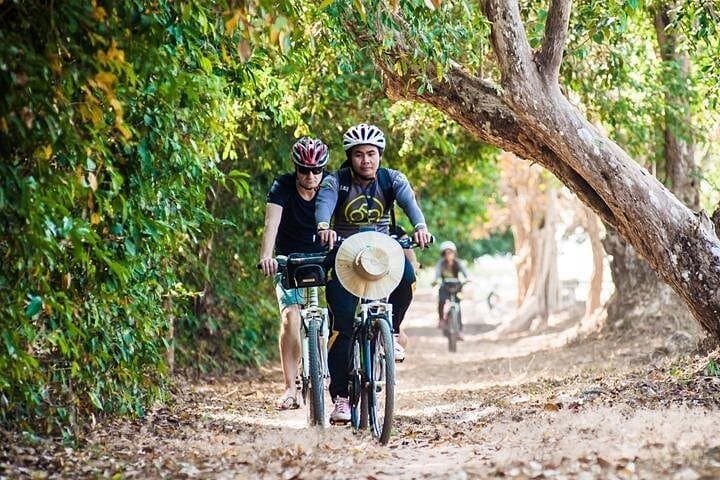
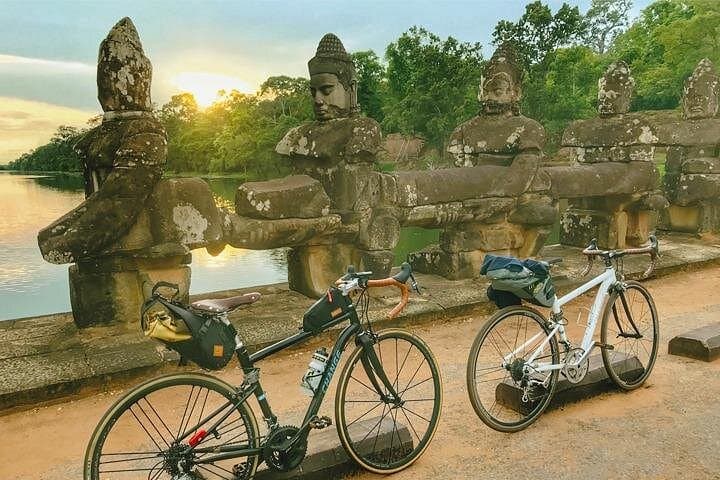
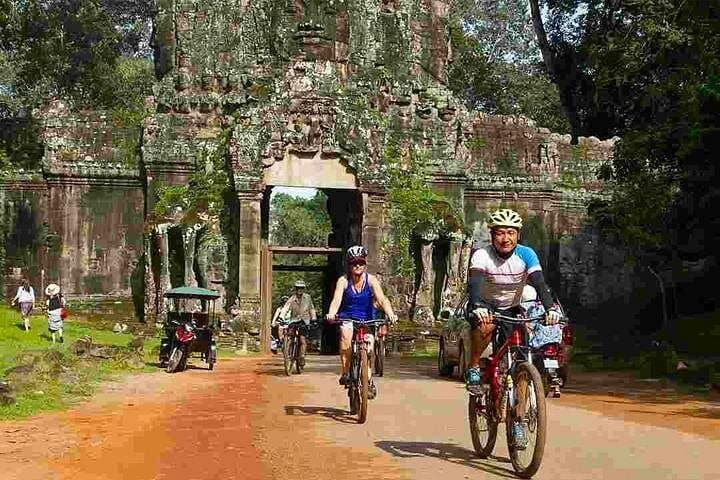
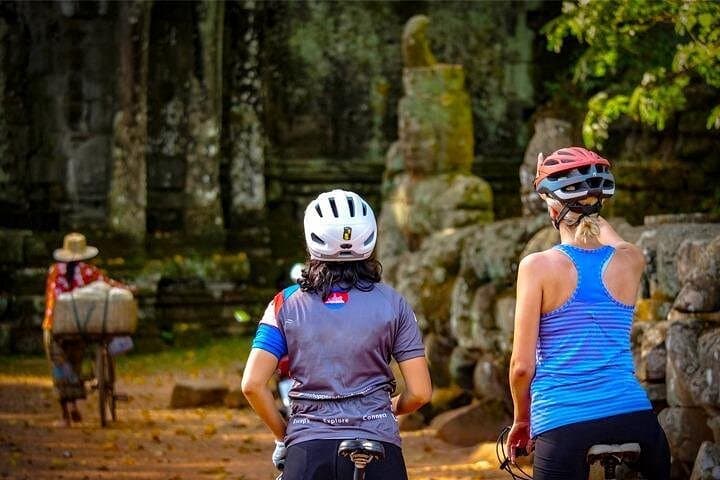
Pedaling beneath towering tamarind and banyan, the tour unfurls like a slow-motion postcard: sun-bleached laterite walls, moss-dark bas-reliefs, and the occasional troop of macaques darting through shady avenues. Riders follow flat, quiet tracks that thread between rice paddies and the great stone faces of Bayon, arriving at Angkor Wat as the light softens across its reflecting moat.
Verified experiences and guided adventures in the surrounding area.
Operated by Angkor Express Boat · Siem Reap, Siem Reap Province
Pedaling beneath towering tamarind and banyan, the tour unfurls like a slow-motion postcard: sun-bleached laterite walls, moss-dark bas-reliefs, and the occasional troop of macaques darting through shady avenues. Riders follow flat, quiet tracks that thread between rice paddies and the great stone faces of Bayon, arriving at Angkor Wat as the light softens across its reflecting moat.
The temples date to the Khmer Empire (11th–13th centuries). Angkor Wat began as a 12th-century state temple and mausoleum of King Suryavarman II; Bayon, reworked under Jayavarman VII, is famous for its 200+ carved smiling faces. Geologically, the site sits on an alluvial plain; sandstone blocks were quarried and hauled across the landscape, their bas-reliefs preserving scenes of everyday life and warfare. Local culture remains tied to agriculture, and many guides combine temple lore with living stories from Siem Reap’s villages.
Expect a relaxed, non-technical ride of about five hours on mostly flat roads and compacted soil with occasional ruts. The experience balances mindful history with sensory details — buzzing dragonflies, cinnamon-scented market stalls, and the cooling relief of fresh coconut juice provided mid-ride.
Practical guidance: start early to avoid midday heat and temple crowds, wear sun-protective clothing, and carry a refillable bottle (operators supply drinking water). Helmets and quality hybrid bikes are provided, but verify bike fit before departure. Respect temple rules: no climbing on bas-reliefs, and dress modestly when entering sanctified areas. With easy terrain and local insight, this tour suits curious travelers wanting cultural context alongside light exercise.
The tour runs about five hours total, including stops at Angkor Wat, Bayon, and nearby points of interest.
Yes—quality mountain/hybrid bikes and helmets (Giant/Trek) are included; inspect the fit before you ride.
Yes; the route is described as leisurely and flat, appropriate for beginners and families comfortable on a bike.
A valid Angkor pass is required for park entry; confirm whether it’s included or if you should purchase it beforehand at the park ticket center.
Angkor Express Boat operates guided outdoor trips and adventures with an emphasis on safety, stewardship, and memorable experiences.
Pedaling beneath towering tamarind and banyan, the tour unfurls like a slow-motion postcard: sun-bleached laterite walls, moss-dark bas-reliefs, and the occasional troop of macaques darting through shady avenues. Riders follow flat, quiet tracks that thread between rice paddies and the great stone faces of Bayon, arriving at Angkor Wat as the light softens across its reflecting moat.
Pedaling beneath towering tamarind and banyan, the tour unfurls like a slow-motion postcard: sun-bleached laterite walls, moss-dark bas-reliefs, and the occasional troop of macaques darting through shady avenues. Riders follow flat, quiet tracks that thread between rice paddies and the great stone faces of Bayon, arriving at Angkor Wat as the light softens across its reflecting moat.
The temples date to the Khmer Empire (11th–13th centuries). Angkor Wat began as a 12th-century state temple and mausoleum of King Suryavarman II; Bayon, reworked under Jayavarman VII, is famous for its 200+ carved smiling faces. Geologically, the site sits on an alluvial plain; sandstone blocks were quarried and hauled across the landscape, their bas-reliefs preserving scenes of everyday life and warfare. Local culture remains tied to agriculture, and many guides combine temple lore with living stories from Siem Reap’s villages.
Expect a relaxed, non-technical ride of about five hours on mostly flat roads and compacted soil with occasional ruts. The experience balances mindful history with sensory details — buzzing dragonflies, cinnamon-scented market stalls, and the cooling relief of fresh coconut juice provided mid-ride.
Practical guidance: start early to avoid midday heat and temple crowds, wear sun-protective clothing, and carry a refillable bottle (operators supply drinking water). Helmets and quality hybrid bikes are provided, but verify bike fit before departure. Respect temple rules: no climbing on bas-reliefs, and dress modestly when entering sanctified areas. With easy terrain and local insight, this tour suits curious travelers wanting cultural context alongside light exercise.