THE ADVENTURE COLLECTIVE® · Independent discovery and booking for outdoor travel

Cycle through Polonnaruwa’s 12th‑century ruins and wide reservoirs on a full‑day private tour from Colombo. Expect flat rural roads, temple complexes, a village lunch and panoramic lake views on a roughly 10 km loop inside the UNESCO zone.
Cycle through Polonnaruwa’s 12th‑century ruins and wide reservoirs on a full‑day private tour from Colombo. Expect flat rural roads, temple complexes, a village lunch and panoramic lake views on a roughly 10 km loop inside the UNESCO zone.
The ride begins before dawn on the highway out of Colombo, the city shrinking behind you as rice paddies and marshy reservoirs stretch toward a low, ancient skyline. Cyclists arrive at Polonnaruwa to mount bikes and pedal through open courtyards where stone Buddhas watch the path and the breeze pushes across Parakrama Samudra like an invitation.
Verified experiences and guided adventures in the surrounding area.
Operated by Ceylon Travel Dream · Polonnaruwa, North Central Province
The ride begins before dawn on the highway out of Colombo, the city shrinking behind you as rice paddies and marshy reservoirs stretch toward a low, ancient skyline. Cyclists arrive at Polonnaruwa to mount bikes and pedal through open courtyards where stone Buddhas watch the path and the breeze pushes across Parakrama Samudra like an invitation.
Polonnaruwa was Sri Lanka’s second great capital in the 11th–13th centuries; its compact citadel, royal baths and monastic complexes are carved from hard granite and set around man-made reservoirs that reveal the island’s medieval water engineering. The terrain is mostly flat—compact dirt and paved lanes—with occasional rutted village tracks that trace irrigation channels and paddy edges. Culture here is present in slow village rhythms: toddy tastes, a home-cooked lunch, and farmers working by hand.
Expect a roughly 10 km loop inside the archaeological zone combined with longer stretches along lake shores and fields—the day is as much about steady pedaling as it is about steady observation. Practicalities matter: bring sun protection, a refillable water bottle, and a basic repair kit even though cycles and a helmet are provided. Timing your visit for early morning light or late afternoon keeps heat manageable and highlights the stone reliefs.
This is a daylong outing from Colombo—long transit folded around a moderate, culturally rich ride—best suited to travelers with reasonable fitness who want a kinetic way to engage with Sri Lanka’s past without sacrificing comfort.
No advanced skills are required—this is a mostly flat, moderate ride—but riders should be comfortable on a bicycle for a few hours and able to handle light traffic and uneven tracks.
The tour includes round‑trip transport from Colombo, bicycle and equipment, mineral water, an English‑speaking guide, and a village lunch; drinks like toddy may be extra depending on the operator.
The archaeological loop is about 10 km, with additional riding along paddy fields and lake shores; expect several hours of cycling within a full‑day schedule.
Helmets and basic cycle equipment are typically provided, but confirm on booking if you prefer to bring your own.
Ceylon Travel Dream operates guided outdoor trips and adventures with an emphasis on safety, stewardship, and memorable experiences.
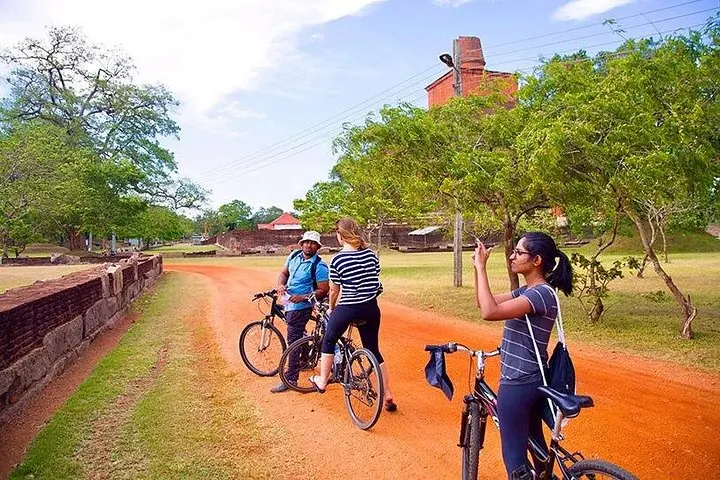
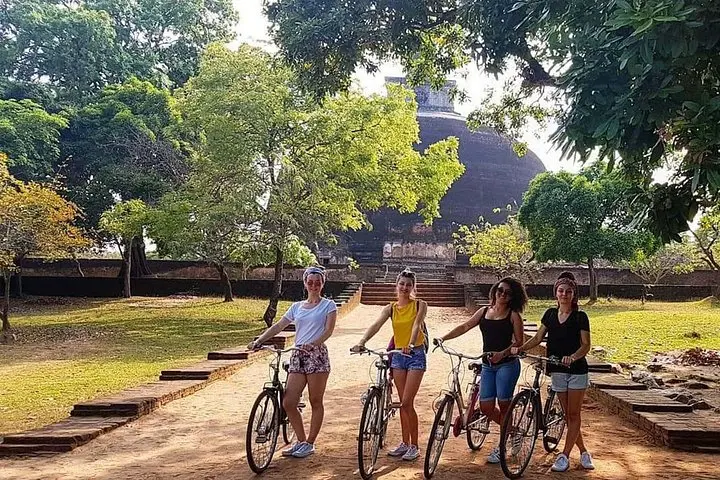
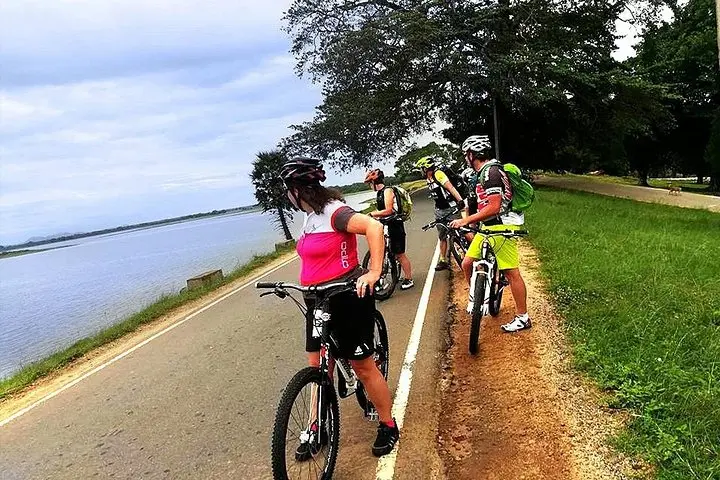
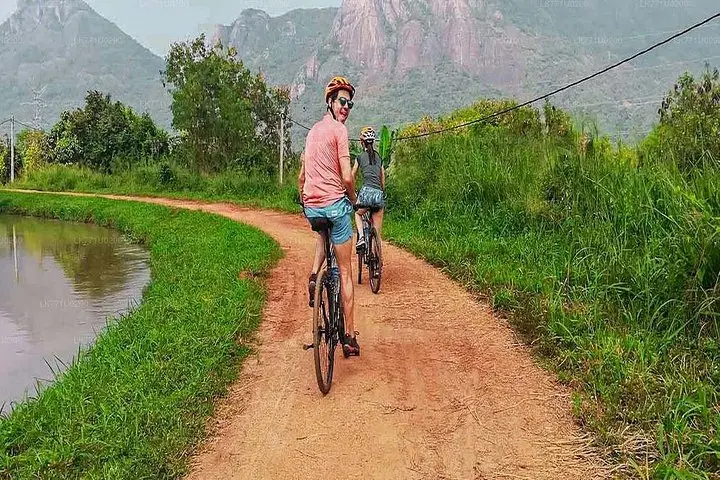
The ride begins before dawn on the highway out of Colombo, the city shrinking behind you as rice paddies and marshy reservoirs stretch toward a low, ancient skyline. Cyclists arrive at Polonnaruwa to mount bikes and pedal through open courtyards where stone Buddhas watch the path and the breeze pushes across Parakrama Samudra like an invitation.
The ride begins before dawn on the highway out of Colombo, the city shrinking behind you as rice paddies and marshy reservoirs stretch toward a low, ancient skyline. Cyclists arrive at Polonnaruwa to mount bikes and pedal through open courtyards where stone Buddhas watch the path and the breeze pushes across Parakrama Samudra like an invitation.
Polonnaruwa was Sri Lanka’s second great capital in the 11th–13th centuries; its compact citadel, royal baths and monastic complexes are carved from hard granite and set around man-made reservoirs that reveal the island’s medieval water engineering. The terrain is mostly flat—compact dirt and paved lanes—with occasional rutted village tracks that trace irrigation channels and paddy edges. Culture here is present in slow village rhythms: toddy tastes, a home-cooked lunch, and farmers working by hand.
Expect a roughly 10 km loop inside the archaeological zone combined with longer stretches along lake shores and fields—the day is as much about steady pedaling as it is about steady observation. Practicalities matter: bring sun protection, a refillable water bottle, and a basic repair kit even though cycles and a helmet are provided. Timing your visit for early morning light or late afternoon keeps heat manageable and highlights the stone reliefs.
This is a daylong outing from Colombo—long transit folded around a moderate, culturally rich ride—best suited to travelers with reasonable fitness who want a kinetic way to engage with Sri Lanka’s past without sacrificing comfort.