THE ADVENTURE COLLECTIVE® · Independent discovery and booking for outdoor travel

Pedal through a living cultural corridor from Trincomalee to two UNESCO highlights—Dambulla’s cave temples and the dramatic Sigiriya Rock—on a guided day tour that mixes rural roads, village stops, a hands-on lunch and a reservoir swim.
Pedal through a living cultural corridor from Trincomalee to two UNESCO highlights—Dambulla’s cave temples and the dramatic Sigiriya Rock—on a guided day tour that mixes rural roads, village stops, a hands-on lunch and a reservoir swim.
You start the day before sun bleaches the rice fields white—an air-conditioned van deposits you on a narrow road where bicycles wait like patient steeds. Pedals engage and the countryside pushes back: a ribbon of tarmac that gives way to packed-earth tracks, glinting reservoirs that dare you to jump in later, and villagers already moving through the morning light. Over the next hours you move between two of Sri Lanka’s most visible eras: the painted caves of Dambulla and the lion-shaped ramparts of Sigiriya.
Verified experiences and guided adventures in the surrounding area.
Operated by Ceylon Travel Dream · Sigiriya, Central Province
You start the day before sun bleaches the rice fields white—an air-conditioned van deposits you on a narrow road where bicycles wait like patient steeds. Pedals engage and the countryside pushes back: a ribbon of tarmac that gives way to packed-earth tracks, glinting reservoirs that dare you to jump in later, and villagers already moving through the morning light. Over the next hours you move between two of Sri Lanka’s most visible eras: the painted caves of Dambulla and the lion-shaped ramparts of Sigiriya.
Dambulla’s cave temple sits low on the horizon, a low ridge lined with rock-cut sanctuaries whose interiors hold centuries of devotion. Murals from the eighteenth century sit beside Pre-Brahmi inscriptions reaching into the third century BC; the conservation work that preserves them is visible in the careful walkways and guard-robed guides. A short pedal later and Sigiriya rises—an abrupt, honey-colored column of rock about 180 meters tall, the remains of an ancient fortress and palace complex built by King Kashyapa in the fifth century AD. The rock’s sides still bear faded frescoes and the carved lion paws that once marked the gateway, offering a raw, vertical counterpoint to the flat, irrigated plains around it.
Geology and history collide here: the plain is shaped by seasonal irrigation tanks—man-made reservoirs that remain essential to farming—and the rock itself stands like an argument against erosion. The tour threads through paddy fields, past water buffalo wallowing at the margins, and into small villages where your guide will point out that life revolves around the rhythm of planting and harvest more than tourist timetables.
Practical notes: the cycling portion is roughly 10 km of mixed surfaces—paved back roads and firm dirt tracks—with frequent stops for interpretation and photographs. Transportation to and from Trincomalee is included, as is a guide, helmet and a mineral water bottle; entry fees to the cave temple and Sigiriya rock are not included, so bring local currency or a card if you plan to climb. Midday often brings heat—the tour typically offers a chance to cook a local lunch and swim in a reservoir with wide views, a refreshing interlude before the return leg.
Expect moderate physical exertion; basic cycling ability and comfort riding on rural roads will make the day smoother. Bring sun protection, a reusable water bottle, closed-toe shoes and light layers for the morning transfer. Respect temple rules—no exposed shoulders or short skirts inside Dambulla’s sanctuaries—and follow your guide’s advice when approaching wildlife.
It’s a day of contrasts: slow pedaling through living landscapes and sudden vertical history carved in stone. The route doesn’t rush you toward a postcard; it places you in a working countryside whose past still shapes the present, and lets you meet it at human speed.
The guided cycling loop around Dambulla and Sigiriya covers roughly 10 km of mixed terrain, broken into short sections with stops for sights and photos.
No—admission fees are not included in the tour price, so bring local currency or a card to pay at the sites.
A moderate level of fitness is recommended: you should be comfortable cycling for a few hours and walking short staircases or uneven paths if you choose to climb Sigiriya.
Yes—round-trip transport from hotels in Trincomalee/Nilaveli is included in the tour, typically in an air-conditioned vehicle.
Yes—the itinerary includes time for a swim in a local reservoir and a hands-on local lunch experience before returning to Trincomalee.
The operator advises against participation for pregnant travelers and those with significant back or heart problems; children can join if they meet the cycling and safety requirements.
Ceylon Travel Dream operates guided outdoor trips and adventures with an emphasis on safety, stewardship, and memorable experiences.

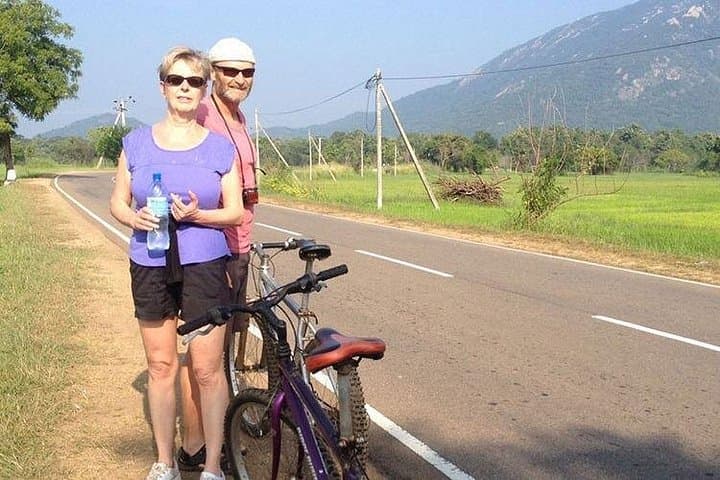


You start the day before sun bleaches the rice fields white—an air-conditioned van deposits you on a narrow road where bicycles wait like patient steeds. Pedals engage and the countryside pushes back: a ribbon of tarmac that gives way to packed-earth tracks, glinting reservoirs that dare you to jump in later, and villagers already moving through the morning light. Over the next hours you move between two of Sri Lanka’s most visible eras: the painted caves of Dambulla and the lion-shaped ramparts of Sigiriya.
You start the day before sun bleaches the rice fields white—an air-conditioned van deposits you on a narrow road where bicycles wait like patient steeds. Pedals engage and the countryside pushes back: a ribbon of tarmac that gives way to packed-earth tracks, glinting reservoirs that dare you to jump in later, and villagers already moving through the morning light. Over the next hours you move between two of Sri Lanka’s most visible eras: the painted caves of Dambulla and the lion-shaped ramparts of Sigiriya.
Dambulla’s cave temple sits low on the horizon, a low ridge lined with rock-cut sanctuaries whose interiors hold centuries of devotion. Murals from the eighteenth century sit beside Pre-Brahmi inscriptions reaching into the third century BC; the conservation work that preserves them is visible in the careful walkways and guard-robed guides. A short pedal later and Sigiriya rises—an abrupt, honey-colored column of rock about 180 meters tall, the remains of an ancient fortress and palace complex built by King Kashyapa in the fifth century AD. The rock’s sides still bear faded frescoes and the carved lion paws that once marked the gateway, offering a raw, vertical counterpoint to the flat, irrigated plains around it.
Geology and history collide here: the plain is shaped by seasonal irrigation tanks—man-made reservoirs that remain essential to farming—and the rock itself stands like an argument against erosion. The tour threads through paddy fields, past water buffalo wallowing at the margins, and into small villages where your guide will point out that life revolves around the rhythm of planting and harvest more than tourist timetables.
Practical notes: the cycling portion is roughly 10 km of mixed surfaces—paved back roads and firm dirt tracks—with frequent stops for interpretation and photographs. Transportation to and from Trincomalee is included, as is a guide, helmet and a mineral water bottle; entry fees to the cave temple and Sigiriya rock are not included, so bring local currency or a card if you plan to climb. Midday often brings heat—the tour typically offers a chance to cook a local lunch and swim in a reservoir with wide views, a refreshing interlude before the return leg.
Expect moderate physical exertion; basic cycling ability and comfort riding on rural roads will make the day smoother. Bring sun protection, a reusable water bottle, closed-toe shoes and light layers for the morning transfer. Respect temple rules—no exposed shoulders or short skirts inside Dambulla’s sanctuaries—and follow your guide’s advice when approaching wildlife.
It’s a day of contrasts: slow pedaling through living landscapes and sudden vertical history carved in stone. The route doesn’t rush you toward a postcard; it places you in a working countryside whose past still shapes the present, and lets you meet it at human speed.