THE ADVENTURE COLLECTIVE® · Independent discovery and booking for outdoor travel

Cycle through fertile valleys and rice paddies, visit the impressive Wat Ban Den, then cool off on Bua Thong’s famous sticky limestone falls. This full-day ride mixes cultural insight with hands-on adventure.
Cycle through fertile valleys and rice paddies, visit the impressive Wat Ban Den, then cool off on Bua Thong’s famous sticky limestone falls. This full-day ride mixes cultural insight with hands-on adventure.
A morning in the Mae Ngat valley begins with cool air pushing through rice stalks and a herd of distant cockerels calling you onto quiet asphalt. You roll out of Chiang Mai by minivan, then onto little-used rural roads where farmers tend flooded paddies and banana palms sway. The ride keeps a slow, social pace—plenty of stops at village scenes, canals, and the ornate Wat Ban Den, whose recent teak and stucco work rises in deliberate tiers above the fields.
Verified experiences and guided adventures in the surrounding area.
Operated by ActiveThailand · Chiang Mai, Chiang Mai Province
A morning in the Mae Ngat valley begins with cool air pushing through rice stalks and a herd of distant cockerels calling you onto quiet asphalt. You roll out of Chiang Mai by minivan, then onto little-used rural roads where farmers tend flooded paddies and banana palms sway. The ride keeps a slow, social pace—plenty of stops at village scenes, canals, and the ornate Wat Ban Den, whose recent teak and stucco work rises in deliberate tiers above the fields.
Geology here is practical: volcanic basement uplift and limestone outcrops feed the streams that form the so-called “sticky” waterfalls. The Bua Thong falls are a travertine/limestone formation covered in porous mineral deposits that grip bare feet, allowing adventurous climbers to scale cascades that would be slick elsewhere.
Culturally, this corridor is agricultural heartland—rice cultivation cycles shape daily life, and local markets reflect seasonal harvests. Guides often explain irrigation practices and the role of small dams like Mae Ngat in water management.
Practical guidance: expect 7–8 hours total, mostly easy-to-moderate cycling on paved and compact dirt surfaces with short climbs. Bring closed-toe shoes that can get wet, a refillable water bottle, sun protection, and modest clothing for temple visits. The waterfall is a relaxed finale—try climbing the cascades if you’re confident in wet footing, but follow your guide and avoid crowded ledges. Plan this for the cooler morning hours to avoid mid-day heat and to catch village life at its most active.
Moderate fitness is required—participants should be comfortable cycling for several hours with occasional short climbs; guides maintain a social pace with stops.
Yes—guided climbing on the Bua Thong sticky limestone is common; it’s grippy but can be uneven, so follow guide instructions and wear appropriate footwear.
Visits to Wat Ban Den are included; wear clothes covering shoulders and knees and be prepared to remove shoes in sacred areas.
Yes—lunch includes Thai delicacies and a vegetarian option is typically available if requested during booking.
ActiveThailand operates guided outdoor trips and adventures with an emphasis on safety, stewardship, and memorable experiences.
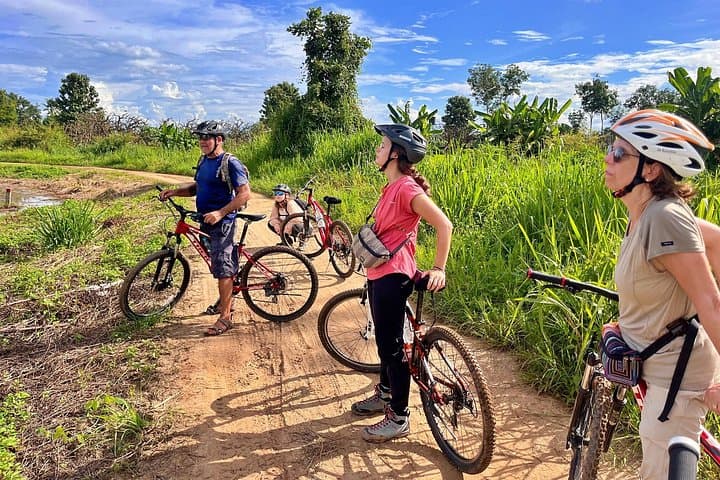

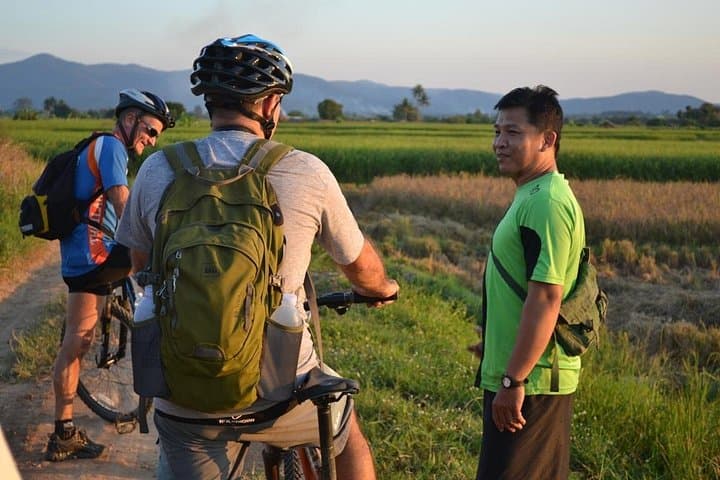
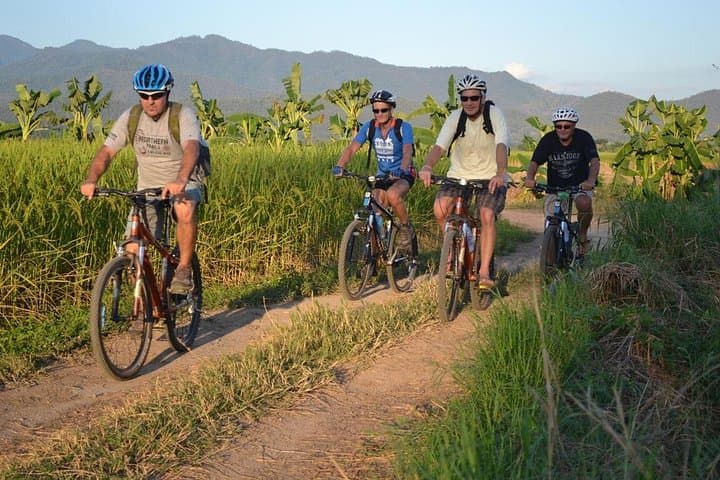
A morning in the Mae Ngat valley begins with cool air pushing through rice stalks and a herd of distant cockerels calling you onto quiet asphalt. You roll out of Chiang Mai by minivan, then onto little-used rural roads where farmers tend flooded paddies and banana palms sway. The ride keeps a slow, social pace—plenty of stops at village scenes, canals, and the ornate Wat Ban Den, whose recent teak and stucco work rises in deliberate tiers above the fields.
A morning in the Mae Ngat valley begins with cool air pushing through rice stalks and a herd of distant cockerels calling you onto quiet asphalt. You roll out of Chiang Mai by minivan, then onto little-used rural roads where farmers tend flooded paddies and banana palms sway. The ride keeps a slow, social pace—plenty of stops at village scenes, canals, and the ornate Wat Ban Den, whose recent teak and stucco work rises in deliberate tiers above the fields.
Geology here is practical: volcanic basement uplift and limestone outcrops feed the streams that form the so-called “sticky” waterfalls. The Bua Thong falls are a travertine/limestone formation covered in porous mineral deposits that grip bare feet, allowing adventurous climbers to scale cascades that would be slick elsewhere.
Culturally, this corridor is agricultural heartland—rice cultivation cycles shape daily life, and local markets reflect seasonal harvests. Guides often explain irrigation practices and the role of small dams like Mae Ngat in water management.
Practical guidance: expect 7–8 hours total, mostly easy-to-moderate cycling on paved and compact dirt surfaces with short climbs. Bring closed-toe shoes that can get wet, a refillable water bottle, sun protection, and modest clothing for temple visits. The waterfall is a relaxed finale—try climbing the cascades if you’re confident in wet footing, but follow your guide and avoid crowded ledges. Plan this for the cooler morning hours to avoid mid-day heat and to catch village life at its most active.