THE ADVENTURE COLLECTIVE® · Independent discovery and booking for outdoor travel

Bike between the grand galleries of Angkor Wat, the enigmatic faces of Bayon and the root-entwined ruins of Ta Prohm on a private, guided full-day ride. Expect 7–8 hours of mixed cycling and temple walks, local history from an expert guide, and hotel pickup.
Bike between the grand galleries of Angkor Wat, the enigmatic faces of Bayon and the root-entwined ruins of Ta Prohm on a private, guided full-day ride. Expect 7–8 hours of mixed cycling and temple walks, local history from an expert guide, and hotel pickup.
The morning air in Angkor carries the scent of wet earth and lotus; pedals hum as a small group slips past a lotus pond and into history. On this private bicycle trip, riders move at a human pace through the outer gallery of Angkor Wat, then into the walled heart of Angkor Thom where the Bayon’s carved faces peer down like time-worn witnesses. The route winds along compacted dirt and quiet paved roads, past the Terrace of the Elephants and into the vine-clad corridors of Ta Prohm, where Tetrameles nudiflora roots embrace stone and sunlight sifts through banyans.
Verified experiences and guided adventures in the surrounding area.
Operated by Tour Guide-Siem Reap · Siem Reap, Siem Reap
The morning air in Angkor carries the scent of wet earth and lotus; pedals hum as a small group slips past a lotus pond and into history. On this private bicycle trip, riders move at a human pace through the outer gallery of Angkor Wat, then into the walled heart of Angkor Thom where the Bayon’s carved faces peer down like time-worn witnesses. The route winds along compacted dirt and quiet paved roads, past the Terrace of the Elephants and into the vine-clad corridors of Ta Prohm, where Tetrameles nudiflora roots embrace stone and sunlight sifts through banyans.
Angkor was the capital of the Khmer Empire from the 9th to the 15th centuries; Angkor Wat itself dates to the early 12th century and combines Hindu iconography with later Buddhist use. Geologically the region sits on flat alluvial plains with shallow sandstone bedrock—temples rise from carved blocks that absorb humidity and bloom with moss. Culturally, these sites remain active symbols of Cambodian identity; modest dress and quiet respect are expected.
Practically, expect a 7–8 hour day covering roughly 12–18 km of cycling with several walking sections inside temple compounds. The terrain is mostly flat but can be dusty or slick after rain; a guided ride means local timing for light and crowds. Bring at least 2 liters of water, sun protection, sturdy shoes for steps and roots, and a light rain layer in wetter months. Hotel pickup and a private guide are included, making this a good choice for photographers and history-minded riders wanting an informed, paced exploration rather than a hurried circuit.
Yes—visitors need an Angkor Archaeological Park pass (day or multi-day). Your guide can advise where to purchase it upon arrival if not already obtained.
Most operators supply city or hybrid bikes and helmets; confirm in advance if you prefer a specific bike size or e-bike upgrade.
Expect moderate exertion: several hours of cycling with multiple short walks and stair climbs inside temple complexes. Not recommended for those with serious back, heart, or pregnancy concerns.
A private guide times the route to minimize crowding (early Angkor Wat views and mid-morning at Ta Prohm help), but peak season sees higher visitor numbers regardless.
Tour Guide-Siem Reap operates guided outdoor trips and adventures with an emphasis on safety, stewardship, and memorable experiences.
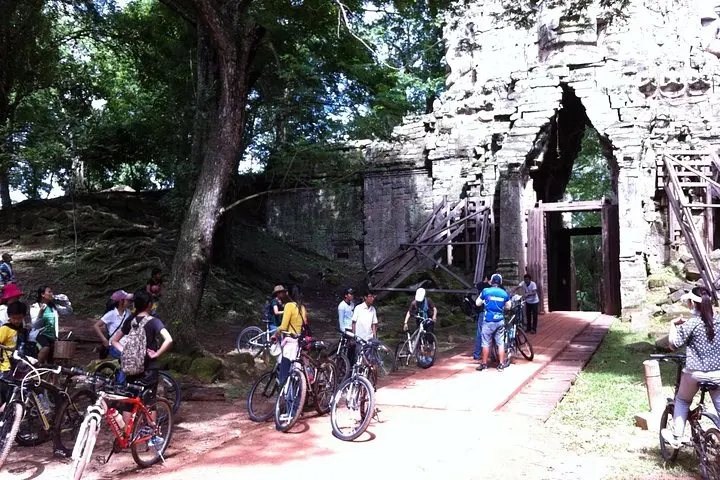
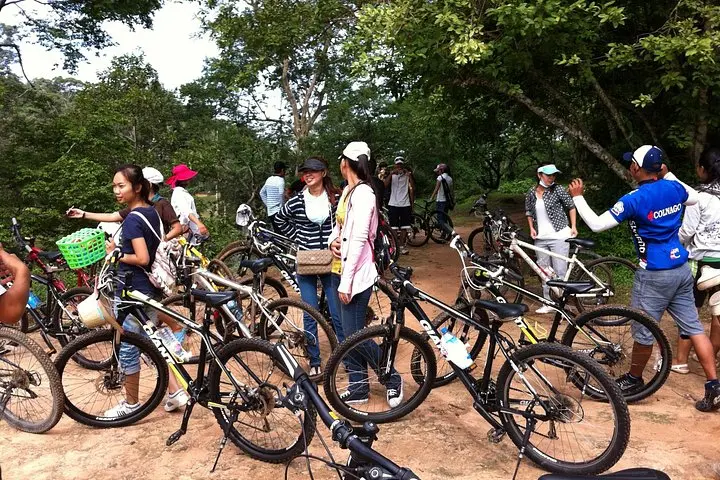
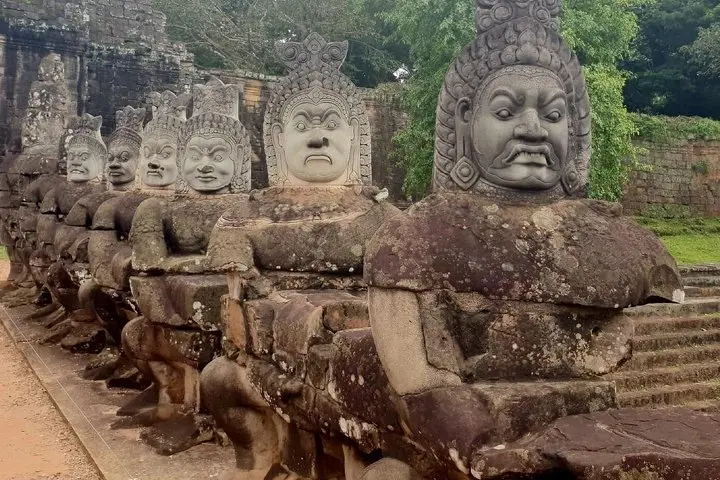
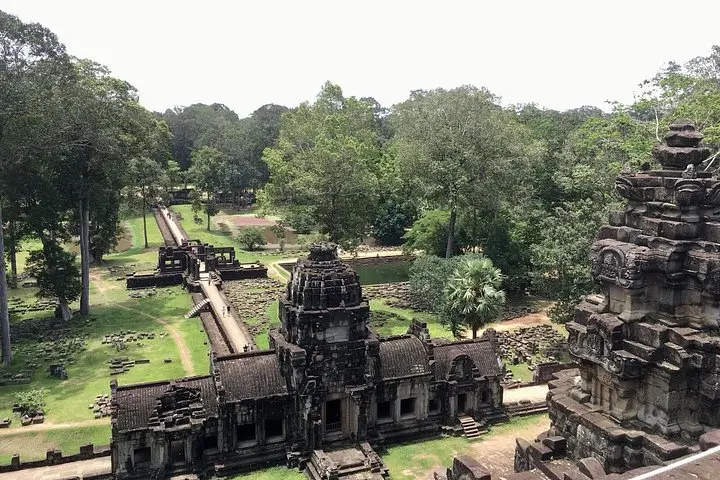
The morning air in Angkor carries the scent of wet earth and lotus; pedals hum as a small group slips past a lotus pond and into history. On this private bicycle trip, riders move at a human pace through the outer gallery of Angkor Wat, then into the walled heart of Angkor Thom where the Bayon’s carved faces peer down like time-worn witnesses. The route winds along compacted dirt and quiet paved roads, past the Terrace of the Elephants and into the vine-clad corridors of Ta Prohm, where Tetrameles nudiflora roots embrace stone and sunlight sifts through banyans.
The morning air in Angkor carries the scent of wet earth and lotus; pedals hum as a small group slips past a lotus pond and into history. On this private bicycle trip, riders move at a human pace through the outer gallery of Angkor Wat, then into the walled heart of Angkor Thom where the Bayon’s carved faces peer down like time-worn witnesses. The route winds along compacted dirt and quiet paved roads, past the Terrace of the Elephants and into the vine-clad corridors of Ta Prohm, where Tetrameles nudiflora roots embrace stone and sunlight sifts through banyans.
Angkor was the capital of the Khmer Empire from the 9th to the 15th centuries; Angkor Wat itself dates to the early 12th century and combines Hindu iconography with later Buddhist use. Geologically the region sits on flat alluvial plains with shallow sandstone bedrock—temples rise from carved blocks that absorb humidity and bloom with moss. Culturally, these sites remain active symbols of Cambodian identity; modest dress and quiet respect are expected.
Practically, expect a 7–8 hour day covering roughly 12–18 km of cycling with several walking sections inside temple compounds. The terrain is mostly flat but can be dusty or slick after rain; a guided ride means local timing for light and crowds. Bring at least 2 liters of water, sun protection, sturdy shoes for steps and roots, and a light rain layer in wetter months. Hotel pickup and a private guide are included, making this a good choice for photographers and history-minded riders wanting an informed, paced exploration rather than a hurried circuit.