THE ADVENTURE COLLECTIVE® · Independent discovery and booking for outdoor travel

An eight‑hour shore excursion from Da Nang that pairs the UNESCO‑listed My Son temple valley with the marble caves and pagodas of the Marble Mountains, finishing at the modern sweep of Dragon Bridge. Expect moderate walking, stair climbs, and rich cultural history woven through rugged limestone and red brick ruins.
An eight‑hour shore excursion from Da Nang that pairs the UNESCO‑listed My Son temple valley with the marble caves and pagodas of the Marble Mountains, finishing at the modern sweep of Dragon Bridge. Expect moderate walking, stair climbs, and rich cultural history woven through rugged limestone and red brick ruins.
You step off the ship into humid air, the city’s traffic a distant drum as a minivan pulls away from the pier toward jungle-clad karsts. The road unspools past rice paddies and low hills until the valley of My Son opens—stone towers rise from the green like a language half-erased, shapes that have watched monsoon and mortar for a thousand years.
Verified experiences and guided adventures in the surrounding area.
Operated by My Son Tours · Da Nang, Da Nang
You step off the ship into humid air, the city’s traffic a distant drum as a minivan pulls away from the pier toward jungle-clad karsts. The road unspools past rice paddies and low hills until the valley of My Son opens—stone towers rise from the green like a language half-erased, shapes that have watched monsoon and mortar for a thousand years.
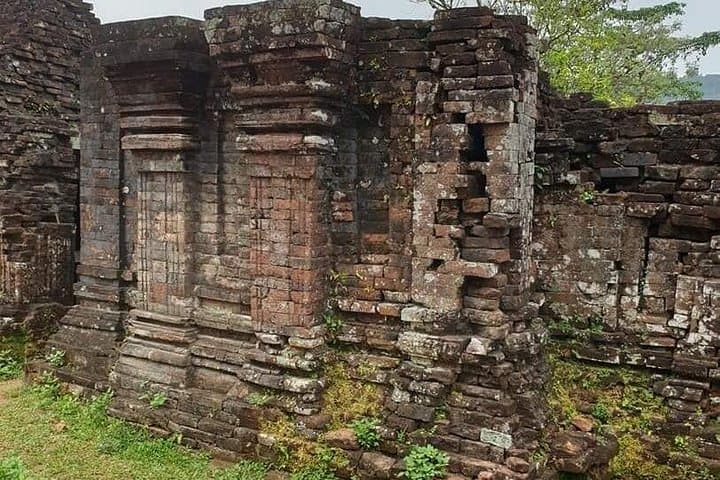
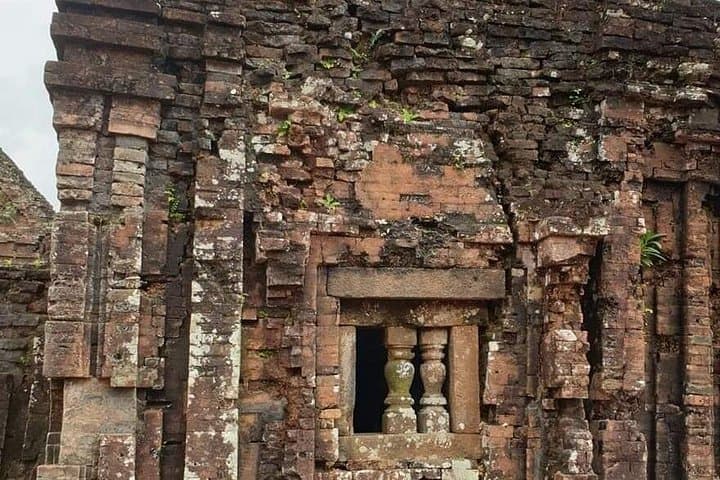
My Son was the religious heart of the Cham kingdom from roughly the 4th to 13th centuries. Its red-brick towers, carved with Hindu iconography, reveal construction methods that relied on mortar-less precision; the surrounding valley’s volcanic and alluvial soils shaped where craftsmen placed temples and shrines. Later, the Marble Mountains (Núi Ngũ Hành Sơn) present a different geology: five marble and limestone outcrops named for the elements, pocked with caves and Buddhist pagodas. Caves here once became improvised hospitals and hiding places during the Vietnam War—history and geology braided together.
The route ends at Dragon Bridge, where the Han River pushes the city forward; the bridge breathes fire at night and frames Da Nang’s modern skyline.
Practical guidance: this is an eight-hour shore excursion with moderate walking and stair climbs. Expect uneven stone paths and steps at My Son and Marble Mountains; wear sturdy shoes, bring sun protection and refillable water, and keep a small amount of local currency for handicrafts. Morning visits beat heat and crowds; photography is excellent but respect restricted areas. Guides explain Champa culture and entry fees are typically included in organized shore tours. For travelers who like active cultural days—temples, caves, and a splash of modern cityscape—this loop delivers a compact, informative sample of central Vietnam.
The shore excursion runs about eight hours and usually includes pickup from Chan May or Tien Sa port, transport, an English‑speaking guide, bottled water, lunch, and entrance tickets.
Children can join but must be accompanied by an adult; there are many steps and uneven surfaces, so it’s not ideal for travelers with significant mobility limitations.
Organized shore excursions commonly include entrance fees to My Son and Marble Mountains and a local lunch; confirm at booking for any variations.
Morning visits to My Son avoid the midday heat and crowds; Marble Mountains can be visited mid‑day or late afternoon when light highlights cave interiors and views over Da Nang.
My Son Tours operates guided outdoor trips and adventures with an emphasis on safety, stewardship, and memorable experiences.

You step off the ship into humid air, the city’s traffic a distant drum as a minivan pulls away from the pier toward jungle-clad karsts. The road unspools past rice paddies and low hills until the valley of My Son opens—stone towers rise from the green like a language half-erased, shapes that have watched monsoon and mortar for a thousand years.
You step off the ship into humid air, the city’s traffic a distant drum as a minivan pulls away from the pier toward jungle-clad karsts. The road unspools past rice paddies and low hills until the valley of My Son opens—stone towers rise from the green like a language half-erased, shapes that have watched monsoon and mortar for a thousand years.
My Son was the religious heart of the Cham kingdom from roughly the 4th to 13th centuries. Its red-brick towers, carved with Hindu iconography, reveal construction methods that relied on mortar-less precision; the surrounding valley’s volcanic and alluvial soils shaped where craftsmen placed temples and shrines. Later, the Marble Mountains (Núi Ngũ Hành Sơn) present a different geology: five marble and limestone outcrops named for the elements, pocked with caves and Buddhist pagodas. Caves here once became improvised hospitals and hiding places during the Vietnam War—history and geology braided together.
The route ends at Dragon Bridge, where the Han River pushes the city forward; the bridge breathes fire at night and frames Da Nang’s modern skyline.
Practical guidance: this is an eight-hour shore excursion with moderate walking and stair climbs. Expect uneven stone paths and steps at My Son and Marble Mountains; wear sturdy shoes, bring sun protection and refillable water, and keep a small amount of local currency for handicrafts. Morning visits beat heat and crowds; photography is excellent but respect restricted areas. Guides explain Champa culture and entry fees are typically included in organized shore tours. For travelers who like active cultural days—temples, caves, and a splash of modern cityscape—this loop delivers a compact, informative sample of central Vietnam.