THE ADVENTURE COLLECTIVE® · Independent discovery and booking for outdoor travel

Explore some of Sinai’s oldest rock art on an eight-hour Jeep tour from Dahab. See handprints and animal figures dating back millennia, learn local archaeological insights, and hike short stretches between desert caves.
Explore some of Sinai’s oldest rock art on an eight-hour Jeep tour from Dahab. See handprints and animal figures dating back millennia, learn local archaeological insights, and hike short stretches between desert caves.
The Jeep eases off the sealed road and the Sinai desert opens like a slow-moving horizon, wind sketching lines across ochre rock. You step out on gravel and limestone ledges where red and dark-brown pigments still cling to overhangs; handprints and animal figures stare back across thousands of years.
Verified experiences and guided adventures in the surrounding area.
Operated by Dahab Safari Day Tours · Dahab, South Sinai Governorate
The Jeep eases off the sealed road and the Sinai desert opens like a slow-moving horizon, wind sketching lines across ochre rock. You step out on gravel and limestone ledges where red and dark-brown pigments still cling to overhangs; handprints and animal figures stare back across thousands of years.
These paintings date from roughly 10,000 to 5,500 BC, placing them in late Epipaleolithic to early Neolithic periods when nomadic hunters passed through the peninsula. The geology here is rugged: layered sandstone and limestone sculpted by wind and flash floods, creating small caves and rock shelters that preserved pigments. Local Bedouin routes and oral memory have long pointed archaeologists to these panels, and you’ll likely sip Bedouin tea while a guide explains the scenes and the archaeological context.
Expect short hikes between Jeep drop-offs and close-up views of hand stencils, animal motifs, and an unusual “war scene” panel some researchers highlight. The landscape is spare but expressive; desert wind feels like a patient companion pushing you from one panel to the next. Practicalities: the trip runs about eight hours with hotel pickup in Dahab, bottled water, lunch, and an English-speaking guide included. Wear sturdy shoes for uneven rock, sun protection, and carry extra water—shade is rare and temperatures swing quickly.
Respect the art: don’t touch the paintings, keep to marked paths, and photograph without flash. The reward is immediate: quiet, direct contact with human marks made millennia ago, framed by raw Sinai light.
The tour is approximately eight hours and includes hotel pickup and drop-off from Dahab, bottled water, lunch, Bedouin tea, transport in an air-conditioned 4×4 Jeep, and an English-speaking guide.
Yes—guides note the activity is suitable for all fitness levels, but expect uneven terrain; families with very young children should plan for brief carrying and cautious footing.
Do not touch the paintings; oils damage pigments. Photography is generally allowed—avoid flash and follow your guide’s instructions for sensitive panels.
Wear closed-toe shoes with grip, sun protection (hat, sunscreen), and bring extra water and a light layer for cooler mornings or evenings.
Dahab Safari Day Tours operates guided outdoor trips and adventures with an emphasis on safety, stewardship, and memorable experiences.


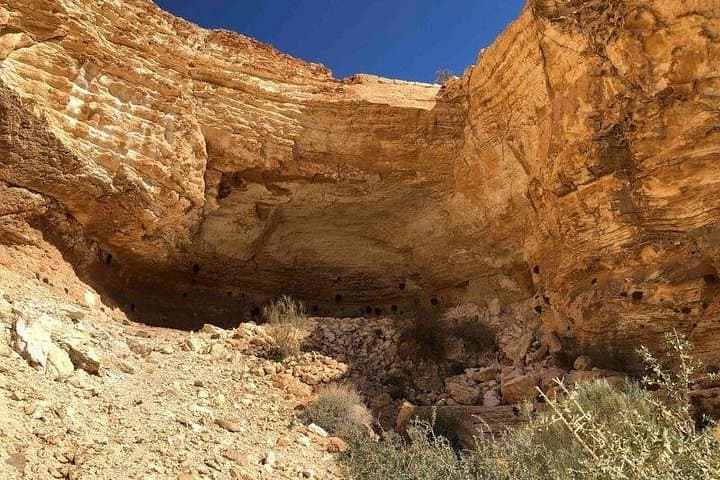

The Jeep eases off the sealed road and the Sinai desert opens like a slow-moving horizon, wind sketching lines across ochre rock. You step out on gravel and limestone ledges where red and dark-brown pigments still cling to overhangs; handprints and animal figures stare back across thousands of years.
The Jeep eases off the sealed road and the Sinai desert opens like a slow-moving horizon, wind sketching lines across ochre rock. You step out on gravel and limestone ledges where red and dark-brown pigments still cling to overhangs; handprints and animal figures stare back across thousands of years.
These paintings date from roughly 10,000 to 5,500 BC, placing them in late Epipaleolithic to early Neolithic periods when nomadic hunters passed through the peninsula. The geology here is rugged: layered sandstone and limestone sculpted by wind and flash floods, creating small caves and rock shelters that preserved pigments. Local Bedouin routes and oral memory have long pointed archaeologists to these panels, and you’ll likely sip Bedouin tea while a guide explains the scenes and the archaeological context.
Expect short hikes between Jeep drop-offs and close-up views of hand stencils, animal motifs, and an unusual “war scene” panel some researchers highlight. The landscape is spare but expressive; desert wind feels like a patient companion pushing you from one panel to the next. Practicalities: the trip runs about eight hours with hotel pickup in Dahab, bottled water, lunch, and an English-speaking guide included. Wear sturdy shoes for uneven rock, sun protection, and carry extra water—shade is rare and temperatures swing quickly.
Respect the art: don’t touch the paintings, keep to marked paths, and photograph without flash. The reward is immediate: quiet, direct contact with human marks made millennia ago, framed by raw Sinai light.