THE ADVENTURE COLLECTIVE® · Independent discovery and booking for outdoor travel

Sail a traditional dahabiya from Luxor to Aswan over five days, stopping at the Valley of the Kings, Karnak, Edfu, Kom Ombo and Aswan’s quays. This slow-paced Nile cruise pairs private cabins and guided archaeology tours with close-up river scenery.
Sail a traditional dahabiya from Luxor to Aswan over five days, stopping at the Valley of the Kings, Karnak, Edfu, Kom Ombo and Aswan’s quays. This slow-paced Nile cruise pairs private cabins and guided archaeology tours with close-up river scenery.
You step onto the deck as the Nile slides by like a patient traveler, its current daring you to slow down. A low wind fills the dahabiya's lateen sails and the boat eases away from Luxor's temple lights, palm-lined banks giving way to wide, sun-baked horizons.
Verified experiences and guided adventures in the surrounding area.
Operated by Show You Egypt · Luxor, Luxor Governorate
You step onto the deck as the Nile slides by like a patient traveler, its current daring you to slow down. A low wind fills the dahabiya's lateen sails and the boat eases away from Luxor's temple lights, palm-lined banks giving way to wide, sun-baked horizons.
Over five days and four nights you move at river pace—about 200–220 km of Nile—stopping at carved tombs, temple pylons and small river towns. The route threads through the Valley of the Kings, Hatshepsut’s mortuary temple, Karnak's colonnades, the Greco-Roman reliefs at Edfu and the twin shrines of Kom Ombo before the granite quays of Aswan. Geology is obvious: the soft yellow sandstone of the Theban cliffs, the harder granite exposures around Aswan, and broad cultivated banks where irrigation holds the desert at bay.
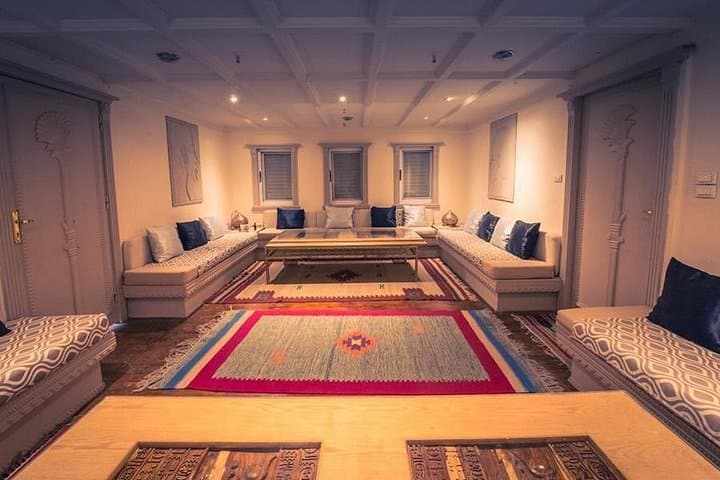
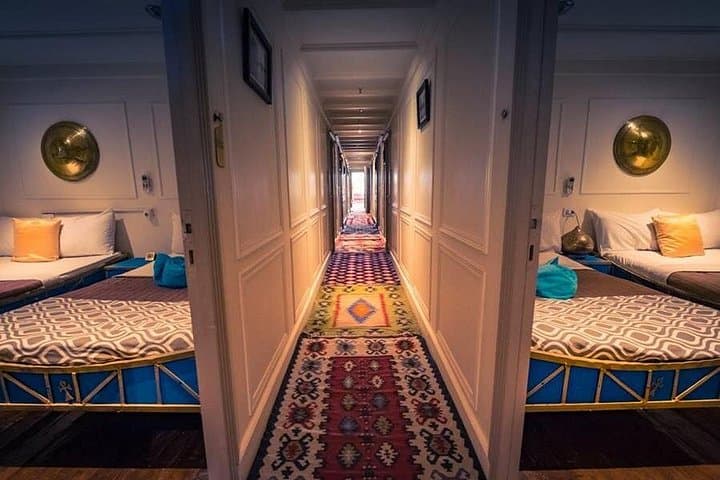
A dahabiya is a low-profile sailboat historically favored by 19th-century Egyptologists and travelers for its quiet passage and close connection to river life. Expect small, private cabins, full-board meals, and guided shore excursions with an Egyptologist. Culture here is river-centered: farmers irrigating felucca-side plots, market calls in Nubian tones, and temple guides who read hieroglyphs like local news.
Practical guidance: travel light with sun protection, bring good walking shoes for uneven temple steps and a daypack for water and camera. Start early—mornings are cooler and light is best for ruins—carry modest clothing for temple visits and small bills for tips and market purchases. The cruise has minimal elevation change; the reward is slow, tactile travel along the Nile.
Yes — the itinerary is listed as a private dahabiya cruise with a private Egyptology guide and private vehicle transfers.
The tour notes that entrance fees to sights between Luxor and Aswan are included in the package.
Dahabiyas typically offer small private cabins with basic amenities; full-board meals are provided but cabins are compact compared with hotel rooms.
The trip is classified as physically easy, but shore visits include uneven steps and some climbing—travelers with serious mobility restrictions should consult the operator ahead of booking.
Show You Egypt operates guided outdoor trips and adventures with an emphasis on safety, stewardship, and memorable experiences.
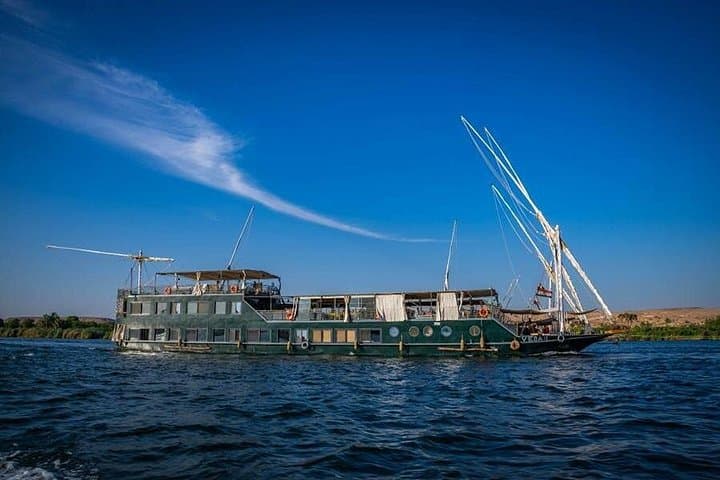
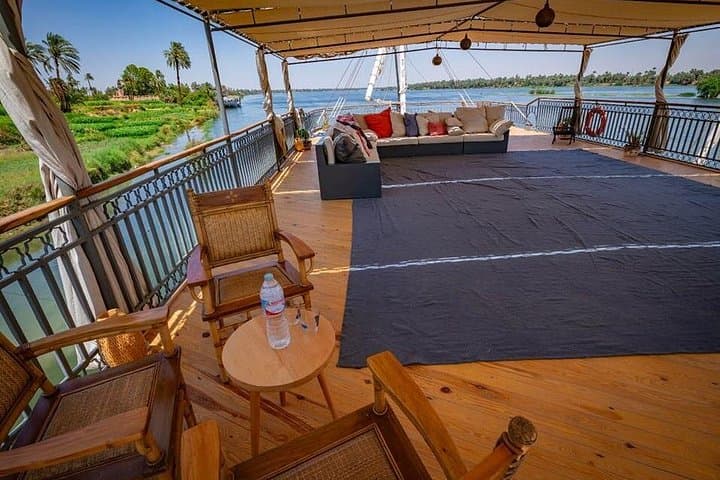
You step onto the deck as the Nile slides by like a patient traveler, its current daring you to slow down. A low wind fills the dahabiya's lateen sails and the boat eases away from Luxor's temple lights, palm-lined banks giving way to wide, sun-baked horizons.
You step onto the deck as the Nile slides by like a patient traveler, its current daring you to slow down. A low wind fills the dahabiya's lateen sails and the boat eases away from Luxor's temple lights, palm-lined banks giving way to wide, sun-baked horizons.
Over five days and four nights you move at river pace—about 200–220 km of Nile—stopping at carved tombs, temple pylons and small river towns. The route threads through the Valley of the Kings, Hatshepsut’s mortuary temple, Karnak's colonnades, the Greco-Roman reliefs at Edfu and the twin shrines of Kom Ombo before the granite quays of Aswan. Geology is obvious: the soft yellow sandstone of the Theban cliffs, the harder granite exposures around Aswan, and broad cultivated banks where irrigation holds the desert at bay.
A dahabiya is a low-profile sailboat historically favored by 19th-century Egyptologists and travelers for its quiet passage and close connection to river life. Expect small, private cabins, full-board meals, and guided shore excursions with an Egyptologist. Culture here is river-centered: farmers irrigating felucca-side plots, market calls in Nubian tones, and temple guides who read hieroglyphs like local news.
Practical guidance: travel light with sun protection, bring good walking shoes for uneven temple steps and a daypack for water and camera. Start early—mornings are cooler and light is best for ruins—carry modest clothing for temple visits and small bills for tips and market purchases. The cruise has minimal elevation change; the reward is slow, tactile travel along the Nile.