THE ADVENTURE COLLECTIVE® · Independent discovery and booking for outdoor travel

Experience Chiloe’s living wooden architecture and village life on a full-day tour from Castro. Visit Dalcahue’s craft fair, ride a ferry to Quinchao Island, and explore centuries-old churches that reveal the archipelago’s cultural layers.
Experience Chiloe’s living wooden architecture and village life on a full-day tour from Castro. Visit Dalcahue’s craft fair, ride a ferry to Quinchao Island, and explore centuries-old churches that reveal the archipelago’s cultural layers.
Sea-salt air and the slow rhythm of ferries set the tempo as you leave Castro behind and head for Dalcahue’s harbor. The town spills down a gentle slope to the water; wooden houses with painted tiles peer over the quay while the tide pulls at small fishing skiffs. On this full-day loop you move between water and village, each crossing a small cultural threshold.
Verified experiences and guided adventures in the surrounding area.
Operated by Tangol · Dalcahue, Los Lagos
Sea-salt air and the slow rhythm of ferries set the tempo as you leave Castro behind and head for Dalcahue’s harbor. The town spills down a gentle slope to the water; wooden houses with painted tiles peer over the quay while the tide pulls at small fishing skiffs. On this full-day loop you move between water and village, each crossing a small cultural threshold.
Chiloé’s story is written in its churches and planked houses. The region’s logging and shipbuilding past, mixed with Spanish missionary architecture and Mapuche influences, produced churches like Santa María de Loreto de Achao and the Dalcahue church — both World Heritage Sites — where wooden joinery and native alerce and cypress tell a local building history. Geologically, the archipelago is a ragged fringe of glacially sculpted islands and gentle hills formed by uplift and marine terrace incision; beaches and tidal flats frame the settlements.
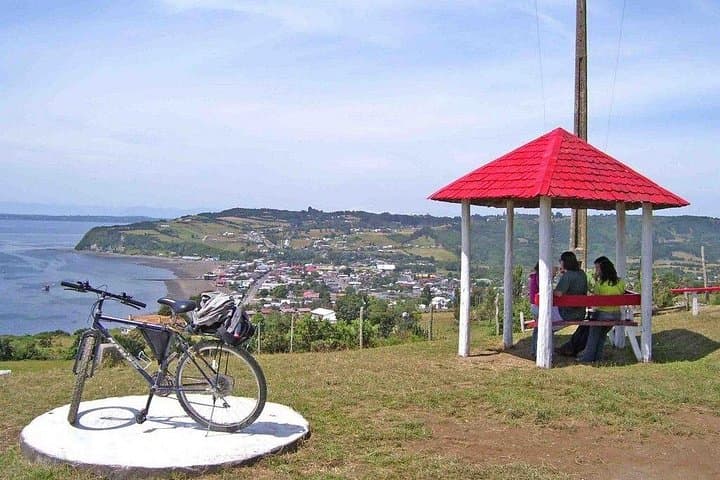
You’ll pass craft markets where wool garments and carved wooden toys reflect fishing families’ seasonal economies, and cross via a short ferry to Quinchao Island, where hamlets gather around sheltered coves. Guides will point out local folklore, including Chilote mythic figures and the strong tradition of communal carpentry.
Practical notes: expect short on-foot visits, easy walking on uneven streets and boardwalks, and at least one vehicle-to-ferry transfer. Bring sun and rain protection, a light waterproof layer, comfortable walking shoes, and cash for crafts and small donations to church maintenance. Morning light is best for photography and calmer seas make crossings smoother.
Walking is short and easy—mostly street-level visits, brief jumps on and off the ferry, and short approaches to churches and markets.
Guided visits typically include exterior and interior viewing of heritage churches; small donations may be requested for maintenance.
Yes—tour is rated easy, but participants should manage ferry transfers and uneven surfaces; inform the operator of mobility needs.
No—this full-day tour includes ferry crossings and motorized transfers as part of the itinerary.
Tangol operates guided outdoor trips and adventures with an emphasis on safety, stewardship, and memorable experiences.
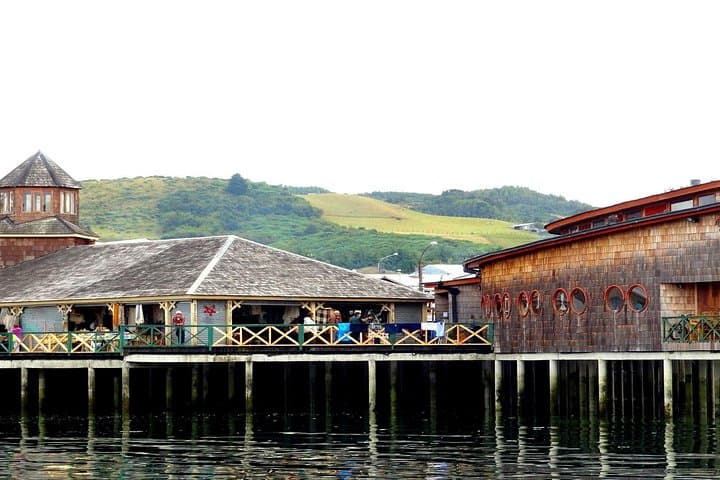

Sea-salt air and the slow rhythm of ferries set the tempo as you leave Castro behind and head for Dalcahue’s harbor. The town spills down a gentle slope to the water; wooden houses with painted tiles peer over the quay while the tide pulls at small fishing skiffs. On this full-day loop you move between water and village, each crossing a small cultural threshold.
Sea-salt air and the slow rhythm of ferries set the tempo as you leave Castro behind and head for Dalcahue’s harbor. The town spills down a gentle slope to the water; wooden houses with painted tiles peer over the quay while the tide pulls at small fishing skiffs. On this full-day loop you move between water and village, each crossing a small cultural threshold.
Chiloé’s story is written in its churches and planked houses. The region’s logging and shipbuilding past, mixed with Spanish missionary architecture and Mapuche influences, produced churches like Santa María de Loreto de Achao and the Dalcahue church — both World Heritage Sites — where wooden joinery and native alerce and cypress tell a local building history. Geologically, the archipelago is a ragged fringe of glacially sculpted islands and gentle hills formed by uplift and marine terrace incision; beaches and tidal flats frame the settlements.
You’ll pass craft markets where wool garments and carved wooden toys reflect fishing families’ seasonal economies, and cross via a short ferry to Quinchao Island, where hamlets gather around sheltered coves. Guides will point out local folklore, including Chilote mythic figures and the strong tradition of communal carpentry.
Practical notes: expect short on-foot visits, easy walking on uneven streets and boardwalks, and at least one vehicle-to-ferry transfer. Bring sun and rain protection, a light waterproof layer, comfortable walking shoes, and cash for crafts and small donations to church maintenance. Morning light is best for photography and calmer seas make crossings smoother.