THE ADVENTURE COLLECTIVE® · Independent discovery and booking for outdoor travel

A full-day excursion from Mekele into the Danakil Depression, this trip brings you face-to-face with Dallol’s acid pools, colorful hydrothermal terraces and traditional salt-mining caravans. Early starts, extreme heat and a knowledgeable guide make this an accessible yet adventurous day trip.
A full-day excursion from Mekele into the Danakil Depression, this trip brings you face-to-face with Dallol’s acid pools, colorful hydrothermal terraces and traditional salt-mining caravans. Early starts, extreme heat and a knowledgeable guide make this an accessible yet adventurous day trip.
Before dawn you leave Mekele, headlights cutting across the flat salt plains as camel caravans wait in silhouette. By midmorning the ground opens into an otherworldly scene: vivid yellow, green and rust terraces steaming from geothermal vents, shallow acid pools that sheen like oil, and salt crusts fractured into geometric tiles. The air tastes faintly of sulfur; the heat presses like a second skin.
Verified experiences and guided adventures in the surrounding area.
Operated by Simien Tour and Travel · Dallol, Afar Region
Before dawn you leave Mekele, headlights cutting across the flat salt plains as camel caravans wait in silhouette. By midmorning the ground opens into an otherworldly scene: vivid yellow, green and rust terraces steaming from geothermal vents, shallow acid pools that sheen like oil, and salt crusts fractured into geometric tiles. The air tastes faintly of sulfur; the heat presses like a second skin.
The Danakil Depression is one of Earth’s most active geothermal areas, a rift where the crust is pulling apart and magma alters surface minerals. Dallol itself is shaped by recent volcanic activity and hydrothermal alteration that brings iron- and sulfur-rich fluids to the surface, producing the intense colors visitors come to see. For centuries the Afar people have harvested salt here, loading rectangular slabs onto dromedary caravans that still move between pits and markets.
Expect a tour that balances landscape photography and cultural observation: stops at salt-mining sites like Ragad (Asebo), Potash Lake, and viewpoints over sulfur terraces. Guides explain mineral processes and local life while cooks prepare simple meals; vehicles are 4WD with air-conditioning but much of the experience is exposed to the elements.
Practical tips: start extremely early, bring at least 3 liters of water, full sun protection and sturdy shoes for alkaline crusts. Temperatures often exceed 40–50°C (104–122°F) and changeable ground calls for caution—stay with your guide, keep distance from fragile hydrothermal pools, and respect mining activities.
The reward is immediate: raw geology that changes by the week and the chance to witness a working salt landscape that has shaped local culture for generations.
Expect an early departure around 04:00 and a full day back to Mekele; total itinerary is roughly 8–10 hours including drive time and stops.
Guided areas and paths are generally safe, but hydrothermal pools and thin salt crusts are hazardous — always follow your guide and avoid wandering off marked areas.
Yes — visits typically include Ragad/Asebo salt-mining sites and camel caravans, offering firsthand views of traditional salt harvesting.
Yes — extreme temperatures can cause heat illness; anyone with cardiovascular issues should avoid this excursion and all travelers should hydrate and seek shade when needed.
Simien Tour and Travel operates guided outdoor trips and adventures with an emphasis on safety, stewardship, and memorable experiences.
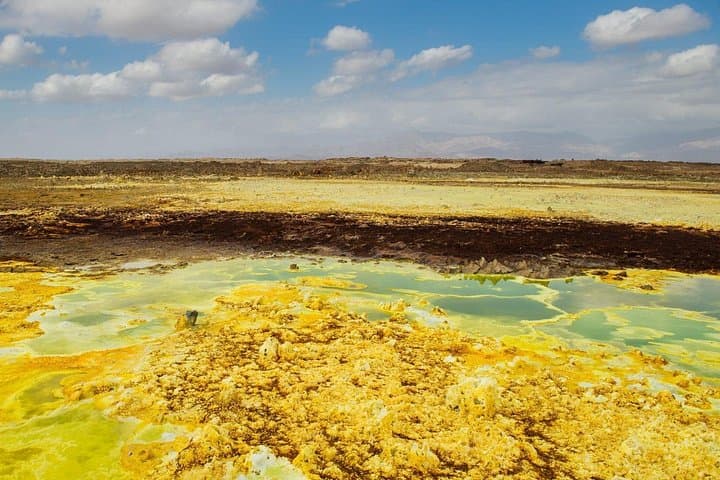
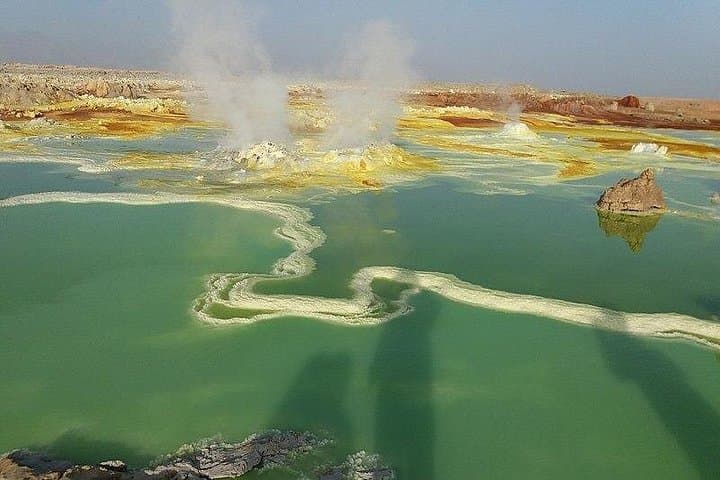
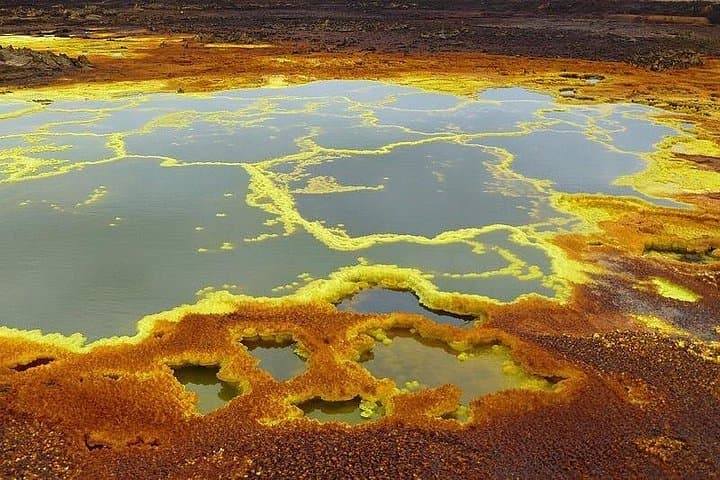
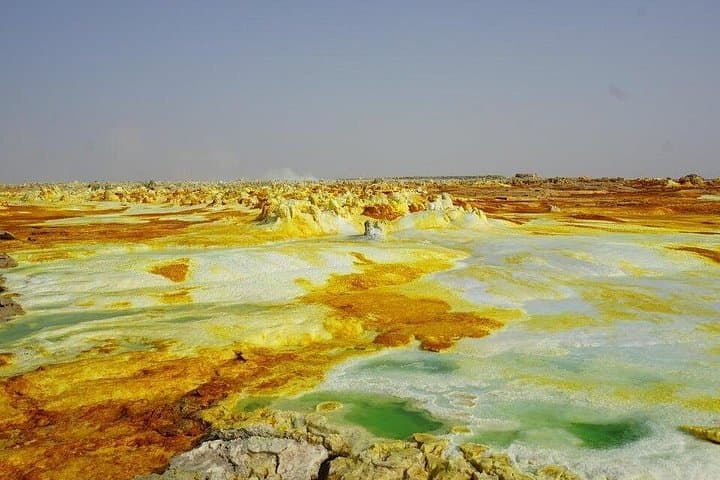
Before dawn you leave Mekele, headlights cutting across the flat salt plains as camel caravans wait in silhouette. By midmorning the ground opens into an otherworldly scene: vivid yellow, green and rust terraces steaming from geothermal vents, shallow acid pools that sheen like oil, and salt crusts fractured into geometric tiles. The air tastes faintly of sulfur; the heat presses like a second skin.
Before dawn you leave Mekele, headlights cutting across the flat salt plains as camel caravans wait in silhouette. By midmorning the ground opens into an otherworldly scene: vivid yellow, green and rust terraces steaming from geothermal vents, shallow acid pools that sheen like oil, and salt crusts fractured into geometric tiles. The air tastes faintly of sulfur; the heat presses like a second skin.
The Danakil Depression is one of Earth’s most active geothermal areas, a rift where the crust is pulling apart and magma alters surface minerals. Dallol itself is shaped by recent volcanic activity and hydrothermal alteration that brings iron- and sulfur-rich fluids to the surface, producing the intense colors visitors come to see. For centuries the Afar people have harvested salt here, loading rectangular slabs onto dromedary caravans that still move between pits and markets.
Expect a tour that balances landscape photography and cultural observation: stops at salt-mining sites like Ragad (Asebo), Potash Lake, and viewpoints over sulfur terraces. Guides explain mineral processes and local life while cooks prepare simple meals; vehicles are 4WD with air-conditioning but much of the experience is exposed to the elements.
Practical tips: start extremely early, bring at least 3 liters of water, full sun protection and sturdy shoes for alkaline crusts. Temperatures often exceed 40–50°C (104–122°F) and changeable ground calls for caution—stay with your guide, keep distance from fragile hydrothermal pools, and respect mining activities.
The reward is immediate: raw geology that changes by the week and the chance to witness a working salt landscape that has shaped local culture for generations.