THE ADVENTURE COLLECTIVE® · Independent discovery and booking for outdoor travel

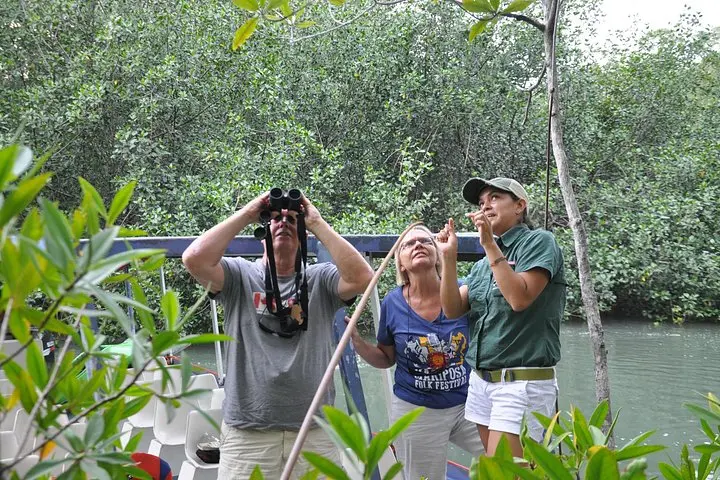
Glide through narrow mangrove canals on a four‑hour boat tour from Manuel Antonio. A naturalist guide highlights birds, monkeys and the estuary’s ecology while you pass under living tunnels of mangrove roots.
Glide through narrow mangrove canals on a four‑hour boat tour from Manuel Antonio. A naturalist guide highlights birds, monkeys and the estuary’s ecology while you pass under living tunnels of mangrove roots.
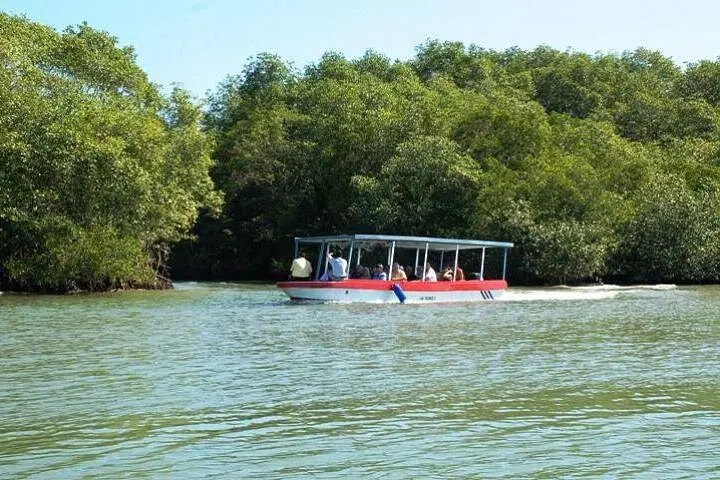
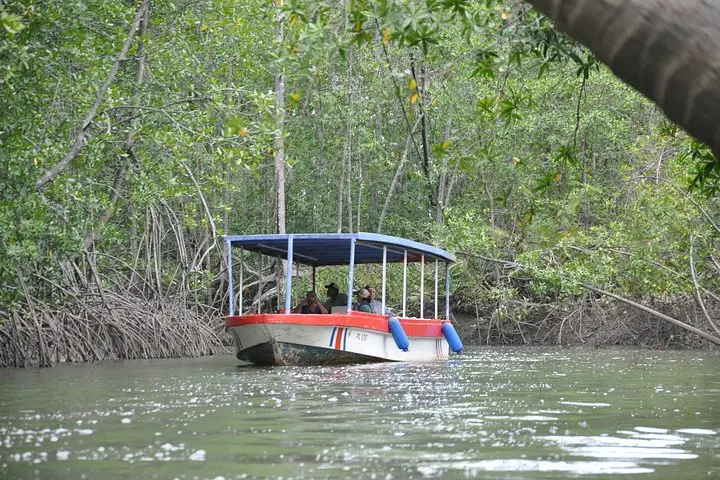
The boat slips forward under a green vault of mangrove roots, water dark and brackish, and the guide narrows the throttle so the silence lets birds and monkeys name themselves.
Verified experiences and guided adventures in the surrounding area.
Operated by Destination Services Costa Rica · Manuel Antonio, Puntarenas
The boat slips forward under a green vault of mangrove roots, water dark and brackish, and the guide narrows the throttle so the silence lets birds and monkeys name themselves.
This four‑hour estuary cruise through Damas Island moves where river meets sea: channels carved by tidal push, mud flats that feed crabs and shorebirds, and natural tunnels formed by centuries of mangrove growth. The area sits on the central Pacific coast of Costa Rica, where sediment from inland rivers builds the estuary and supports a dense, specialized ecosystem.
Local fishermen and guides have long used these waterways; today tours balance interpretation with steady observation — expect commentary on flora like red and black mangrove, and fauna from kingfishers and herons to white‑faced capuchins. Mangroves are culturally and economically important here, protecting the shoreline and supporting fisheries.
Practically, the trip is low‑impact but active: you’ll board a small motorboat, glide slowly through narrow canals, and stop for focused wildlife viewing. Departure times shift with tides and the season, so mornings are often best for bird activity and calmer water. Bring sun and insect protection, a camera with a zoom lens, and a light waterproof layer for sudden showers.
Guides point out ecological connections — how upstream land use alters sediment and how mangrove conservation supports both birds and local livelihoods. For photographers and nature lovers, the tight light under the canopy, reflections in still pools, and the quick, interwoven wildlife sightings make this an efficient, accessible way to experience Costa Rica’s coastal wildness.
Yes — pickup from hotels in Manuel Antonio is included; pickup time varies with tide and tour scheduling.
Lunch or an early dinner is included with the tour as stated in the itinerary.
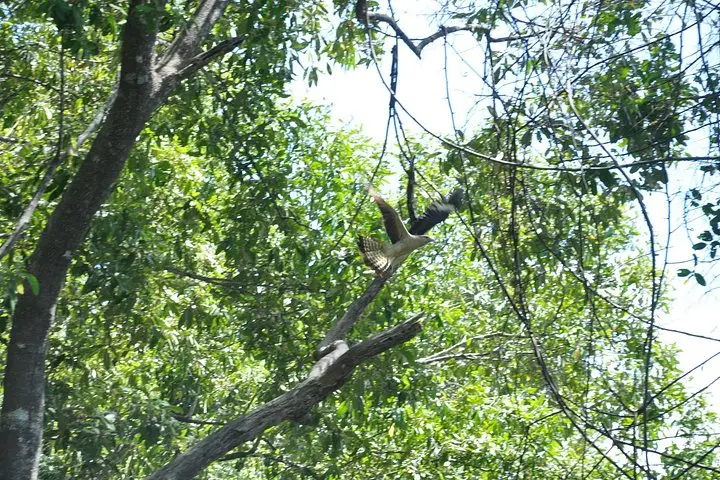
Expect herons, kingfishers, ospreys, frigatebirds, white‑faced capuchin monkeys, and chances of reptiles like basilisk lizards and small crabs along the mudflats.
Not recommended for pregnant travelers or those with serious spinal/cardiovascular conditions; moderate balance and mobility are required for boarding.
Destination Services Costa Rica operates guided outdoor trips and adventures with an emphasis on safety, stewardship, and memorable experiences.
The boat slips forward under a green vault of mangrove roots, water dark and brackish, and the guide narrows the throttle so the silence lets birds and monkeys name themselves.
The boat slips forward under a green vault of mangrove roots, water dark and brackish, and the guide narrows the throttle so the silence lets birds and monkeys name themselves.
This four‑hour estuary cruise through Damas Island moves where river meets sea: channels carved by tidal push, mud flats that feed crabs and shorebirds, and natural tunnels formed by centuries of mangrove growth. The area sits on the central Pacific coast of Costa Rica, where sediment from inland rivers builds the estuary and supports a dense, specialized ecosystem.
Local fishermen and guides have long used these waterways; today tours balance interpretation with steady observation — expect commentary on flora like red and black mangrove, and fauna from kingfishers and herons to white‑faced capuchins. Mangroves are culturally and economically important here, protecting the shoreline and supporting fisheries.
Practically, the trip is low‑impact but active: you’ll board a small motorboat, glide slowly through narrow canals, and stop for focused wildlife viewing. Departure times shift with tides and the season, so mornings are often best for bird activity and calmer water. Bring sun and insect protection, a camera with a zoom lens, and a light waterproof layer for sudden showers.
Guides point out ecological connections — how upstream land use alters sediment and how mangrove conservation supports both birds and local livelihoods. For photographers and nature lovers, the tight light under the canopy, reflections in still pools, and the quick, interwoven wildlife sightings make this an efficient, accessible way to experience Costa Rica’s coastal wildness.