THE ADVENTURE COLLECTIVE® · Independent discovery and booking for outdoor travel

Glide through Isla Damas’s braided canals on a covered motorboat to spot sloths, monkeys, caimans and dozens of bird species. This 4‑hour naturalist tour from Manuel Antonio pairs wildlife viewing with a local Costa Rican lunch and hotel transfer.
Glide through Isla Damas’s braided canals on a covered motorboat to spot sloths, monkeys, caimans and dozens of bird species. This 4‑hour naturalist tour from Manuel Antonio pairs wildlife viewing with a local Costa Rican lunch and hotel transfer.
A low, covered motorboat slips from the river mouth into a lattice of dark water and arching roots. The air smells of salt and green matter; mangrove prop roots reach like hands into the current while mangrove warblers and egrets flit overhead. That first hour often delivers the most surprises — sleepy sloths tucked in the canopy, curious white-faced monkeys peering down, and the flash of a caiman along a muddy bank.
Verified experiences and guided adventures in the surrounding area.
Operated by Costa Rica Groups Travel Company · Quepos, Puntarenas
A low, covered motorboat slips from the river mouth into a lattice of dark water and arching roots. The air smells of salt and green matter; mangrove prop roots reach like hands into the current while mangrove warblers and egrets flit overhead. That first hour often delivers the most surprises — sleepy sloths tucked in the canopy, curious white-faced monkeys peering down, and the flash of a caiman along a muddy bank.
The Damas (Isla Damas) mangrove is a coastal estuary shaped by tidal exchange and sediment from the rivers that feed the central Pacific coast. Mangroves here have long supported local fishing communities; their roots trap nursery fish and protect shorelines. Guides on these tours are naturalists who explain the ecosystem’s role in Costa Rica’s conservation history and how local cultural practices evolved around seasonal catches.
Expect two hours on the water exploring narrow channels in a covered boat, followed by a typical Costa Rican lunch at a nearby restaurant and hotel transfer. Wildlife viewing is best at low tide and in the cooler morning light; bring binoculars and a camera with a zoom. The ride is gentle and suitable for most ages and fitness levels, though those prone to motion sickness should prepare.
Practical tips: arrive with sun protection and a light rain layer (tropical weather changes fast), keep voices low for better wildlife encounters, and follow your guide’s instructions around animals — never feed or touch. With a 4-hour window, this tour is an accessible, informative way to see a living coastline essential to both biodiversity and local livelihoods.
The experience is approximately 4 hours and includes hotel pickup/drop-off in the Manuel Antonio area, a covered motorboat mangrove cruise with a naturalist guide, and a traditional Costa Rican lunch.
Common sightings include three-toed sloths, white-faced capuchin monkeys, herons and egrets, caimans, and various reptiles—sightings depend on tide and time of day.
Yes; the trip is described as easy and suitable for most ages. Boarding involves stepping into a low motorboat—assistance may be provided, but mobility limitations should be noted at booking.
Full refund is available if you cancel at least 24 hours before departure. A minimum of two people per booking is required and the operator may cancel for bad weather or insufficient travelers.
Costa Rica Groups Travel Company operates guided outdoor trips and adventures with an emphasis on safety, stewardship, and memorable experiences.
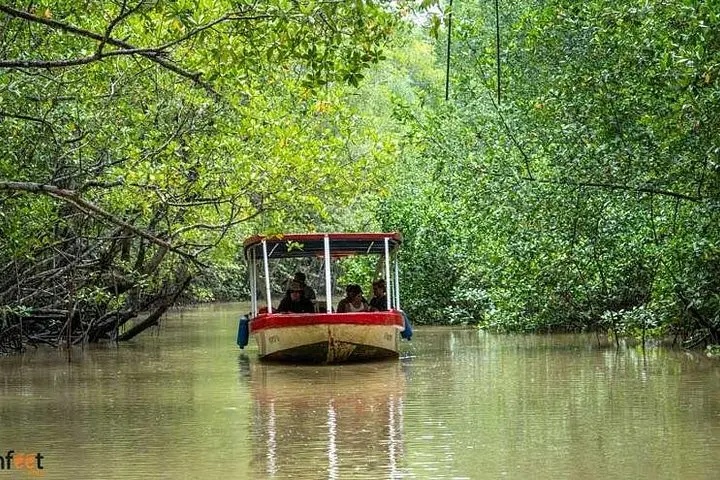
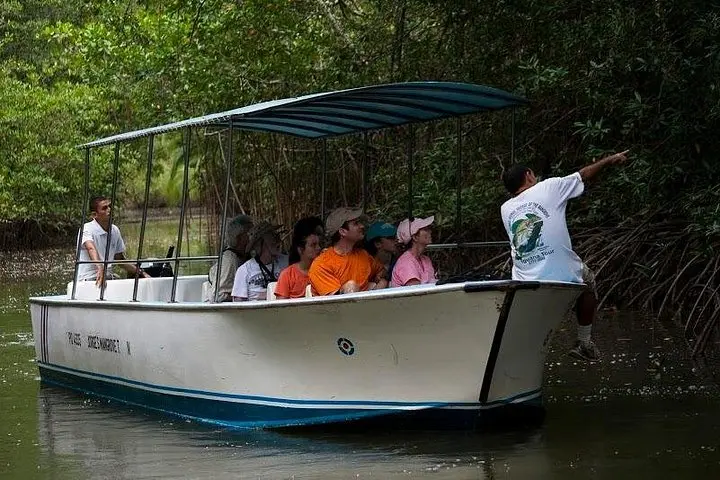
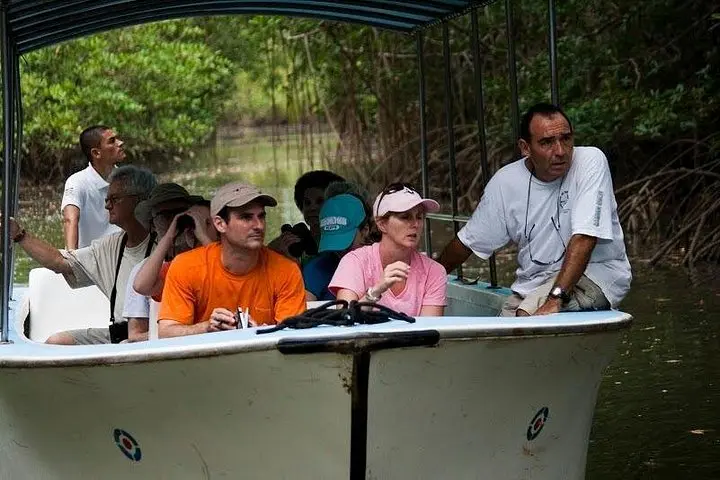
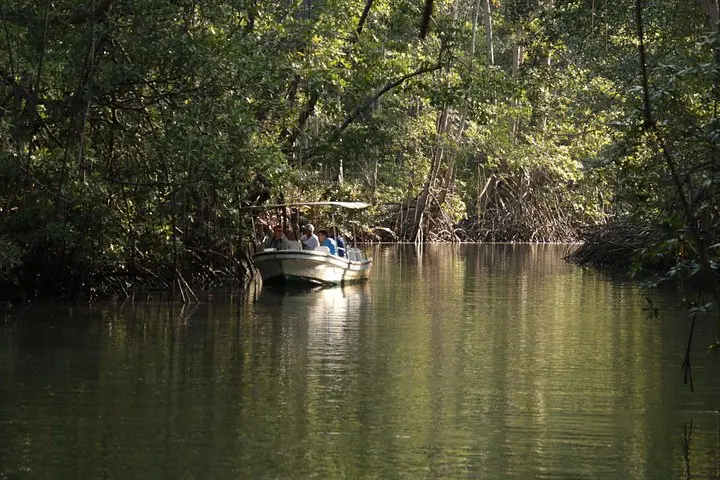
A low, covered motorboat slips from the river mouth into a lattice of dark water and arching roots. The air smells of salt and green matter; mangrove prop roots reach like hands into the current while mangrove warblers and egrets flit overhead. That first hour often delivers the most surprises — sleepy sloths tucked in the canopy, curious white-faced monkeys peering down, and the flash of a caiman along a muddy bank.
A low, covered motorboat slips from the river mouth into a lattice of dark water and arching roots. The air smells of salt and green matter; mangrove prop roots reach like hands into the current while mangrove warblers and egrets flit overhead. That first hour often delivers the most surprises — sleepy sloths tucked in the canopy, curious white-faced monkeys peering down, and the flash of a caiman along a muddy bank.
The Damas (Isla Damas) mangrove is a coastal estuary shaped by tidal exchange and sediment from the rivers that feed the central Pacific coast. Mangroves here have long supported local fishing communities; their roots trap nursery fish and protect shorelines. Guides on these tours are naturalists who explain the ecosystem’s role in Costa Rica’s conservation history and how local cultural practices evolved around seasonal catches.
Expect two hours on the water exploring narrow channels in a covered boat, followed by a typical Costa Rican lunch at a nearby restaurant and hotel transfer. Wildlife viewing is best at low tide and in the cooler morning light; bring binoculars and a camera with a zoom. The ride is gentle and suitable for most ages and fitness levels, though those prone to motion sickness should prepare.
Practical tips: arrive with sun protection and a light rain layer (tropical weather changes fast), keep voices low for better wildlife encounters, and follow your guide’s instructions around animals — never feed or touch. With a 4-hour window, this tour is an accessible, informative way to see a living coastline essential to both biodiversity and local livelihoods.