THE ADVENTURE COLLECTIVE® · Independent discovery and booking for outdoor travel

Experience Bangkok’s most iconic floating market then shift gears to the poignant River Kwai in Kanchanaburi. This full-day trip mixes paddle-boat commerce, Thai street flavors, and World War II history in one practical, sensory-packed itinerary.
Experience Bangkok’s most iconic floating market then shift gears to the poignant River Kwai in Kanchanaburi. This full-day trip mixes paddle-boat commerce, Thai street flavors, and World War II history in one practical, sensory-packed itinerary.
A cool, humid morning on the canal: wooden sterns click past, vendors call over the slap of paddles, and steam from noodle stalls rises in thin ribbons above the water. The market’s narrow waterways force a close choreography between boats selling fruit, noodles and household goods, while lane-side stalls shout bargains to visitors who’ve chosen to stroll rather than float.
Verified experiences and guided adventures in the surrounding area.
Operated by Bangkok Top Sights · Damnoen Saduak, Ratchaburi
A cool, humid morning on the canal: wooden sterns click past, vendors call over the slap of paddles, and steam from noodle stalls rises in thin ribbons above the water. The market’s narrow waterways force a close choreography between boats selling fruit, noodles and household goods, while lane-side stalls shout bargains to visitors who’ve chosen to stroll rather than float.
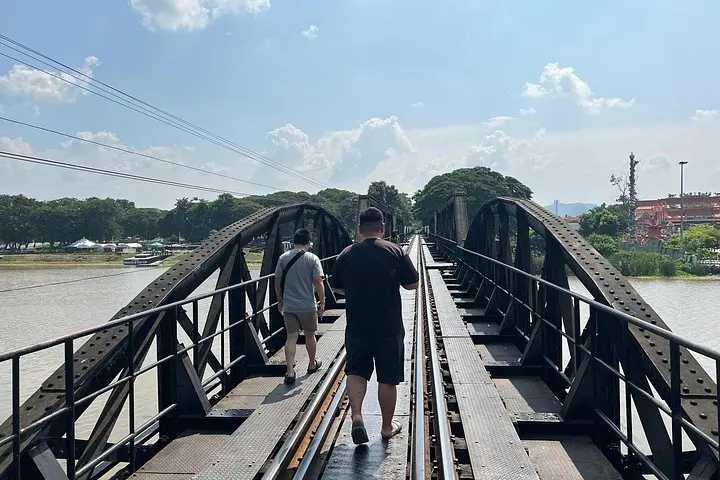
The route ties two very different slices of central Thailand. Damnoen Saduak began as an agricultural trade canal in the 19th century and still smells of citrus and fish sauce; Kanchanaburi’s River Kwai is a landscape marked by wartime engineering—the bridge and the nearby JEATH Museum recall the Death Railway built under Imperial Japan in World War II and the Allied cemetery where thousands lie interred.
Expect sensory contrasts: the bright, chaotic commerce of the floating market shifts after lunch into the quieter, reflective spaces beside the Kwai where metal and concrete meet green riverbanks. Guides typically explain local trade practices, canal ecology, and wartime history in plain, direct language.
Practical guidance: wear quick-dry clothing and closed-toe shoes that can handle muddy alleys; carry cash in small bills for bargaining; bring sun protection and a small, refillable water bottle. The full-day tour runs about 10 hours from Bangkok, includes boat rides and a seated lunch, and is suitable for most fitness levels. Plan for heavy foot and boat traffic at peak hours and be ready to step carefully along narrow, wet planks.
Yes—hotel pickup is included within the operator’s service area; confirm pickup point at booking.
Lunch is included with vegetarian options available; snacks at the market are payable in cash.
Yes—longtail or paddleboat rides through the canals are part of the experience and are arranged on-site.
The operator notes it is not recommended for pregnant travelers due to the full-day schedule and boat movements.
Bangkok Top Sights operates guided outdoor trips and adventures with an emphasis on safety, stewardship, and memorable experiences.
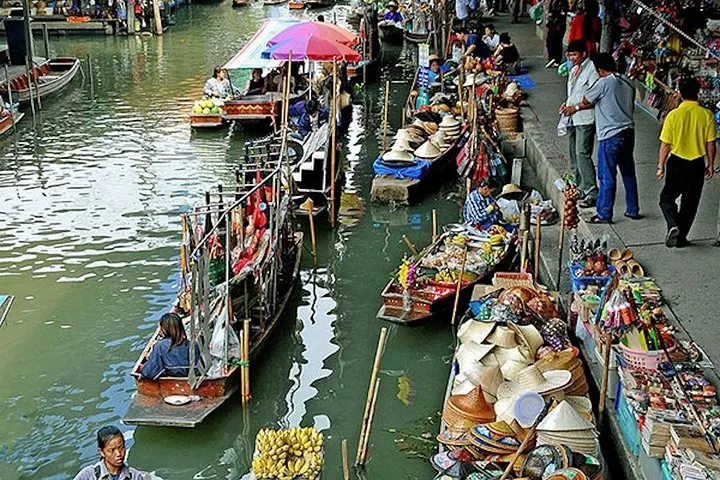
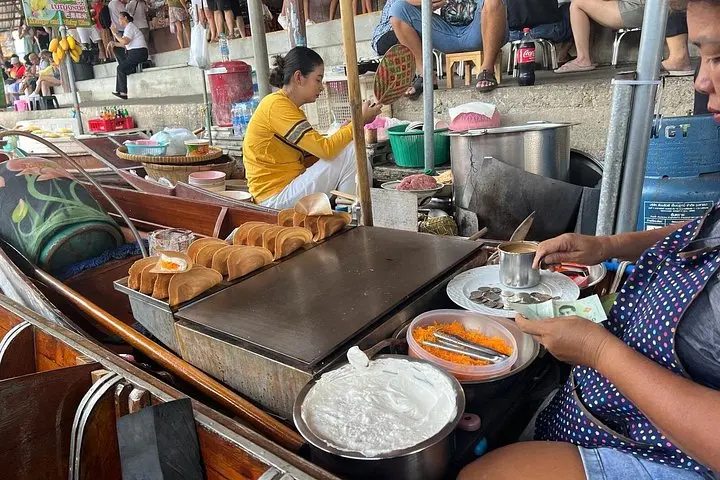
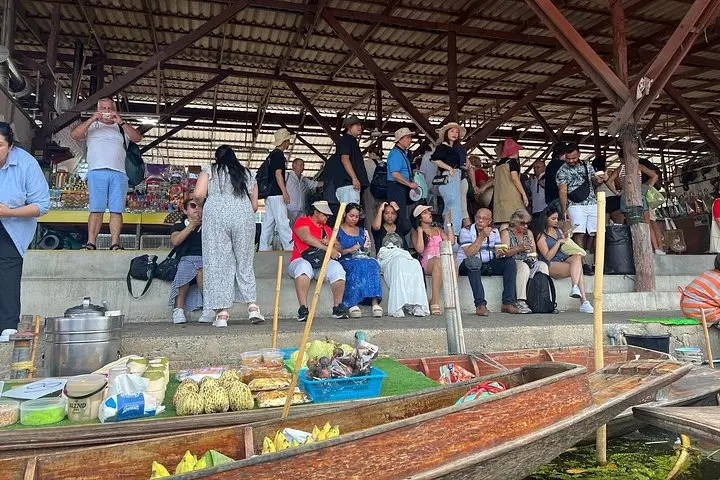
A cool, humid morning on the canal: wooden sterns click past, vendors call over the slap of paddles, and steam from noodle stalls rises in thin ribbons above the water. The market’s narrow waterways force a close choreography between boats selling fruit, noodles and household goods, while lane-side stalls shout bargains to visitors who’ve chosen to stroll rather than float.
A cool, humid morning on the canal: wooden sterns click past, vendors call over the slap of paddles, and steam from noodle stalls rises in thin ribbons above the water. The market’s narrow waterways force a close choreography between boats selling fruit, noodles and household goods, while lane-side stalls shout bargains to visitors who’ve chosen to stroll rather than float.
The route ties two very different slices of central Thailand. Damnoen Saduak began as an agricultural trade canal in the 19th century and still smells of citrus and fish sauce; Kanchanaburi’s River Kwai is a landscape marked by wartime engineering—the bridge and the nearby JEATH Museum recall the Death Railway built under Imperial Japan in World War II and the Allied cemetery where thousands lie interred.
Expect sensory contrasts: the bright, chaotic commerce of the floating market shifts after lunch into the quieter, reflective spaces beside the Kwai where metal and concrete meet green riverbanks. Guides typically explain local trade practices, canal ecology, and wartime history in plain, direct language.
Practical guidance: wear quick-dry clothing and closed-toe shoes that can handle muddy alleys; carry cash in small bills for bargaining; bring sun protection and a small, refillable water bottle. The full-day tour runs about 10 hours from Bangkok, includes boat rides and a seated lunch, and is suitable for most fitness levels. Plan for heavy foot and boat traffic at peak hours and be ready to step carefully along narrow, wet planks.