THE ADVENTURE COLLECTIVE® · Independent discovery and booking for outdoor travel

Start at the motor-boat bustle of Damnoen Saduak, watch vendors clear the tracks at Mae Klong, and finish cooling off beneath Erawan’s seven tiers before sunset on the River Kwai. This private full-day trip blends market chaos, light-hitting rainforest, and living history.
Start at the motor-boat bustle of Damnoen Saduak, watch vendors clear the tracks at Mae Klong, and finish cooling off beneath Erawan’s seven tiers before sunset on the River Kwai. This private full-day trip blends market chaos, light-hitting rainforest, and living history.
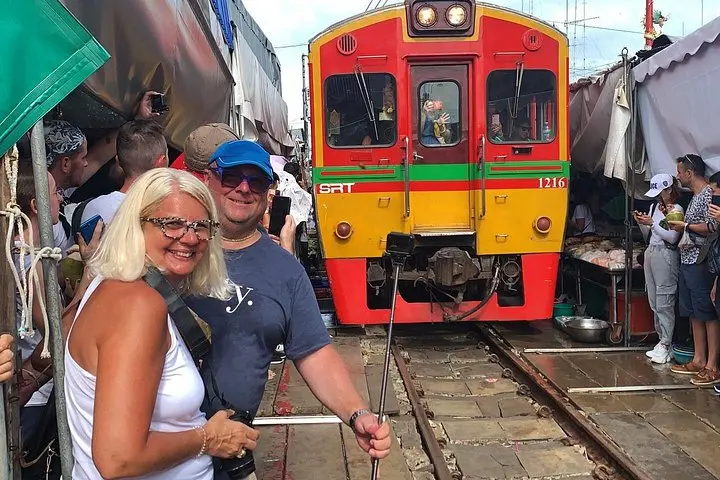
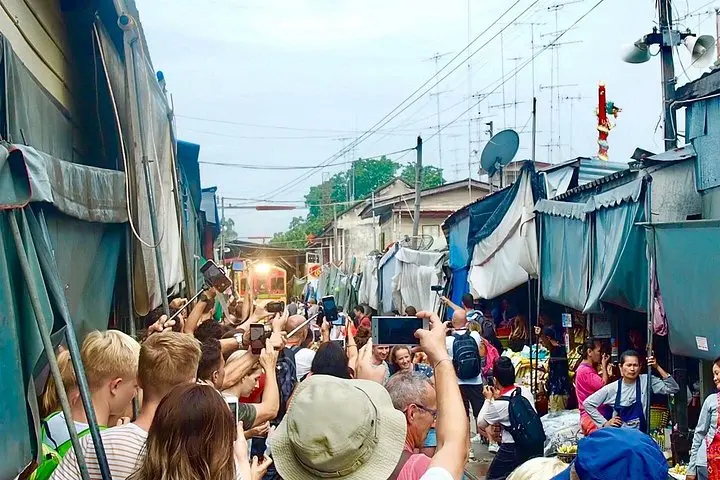
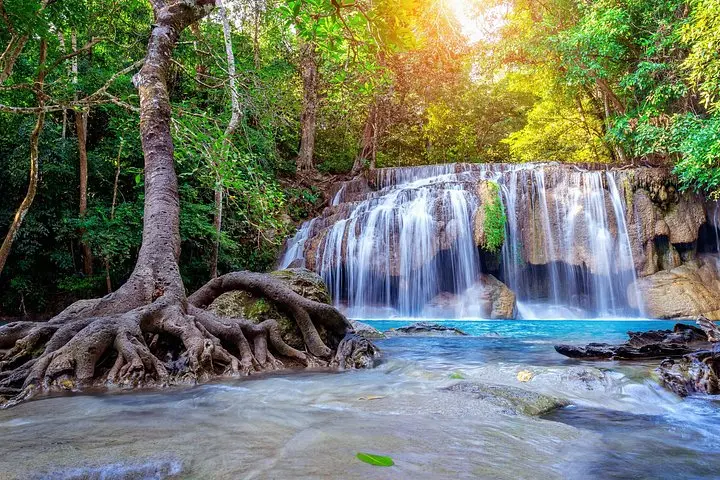
Morning light skims low wooden stalls as a motor boat pushes into the narrow canals of Damnoen Saduak — vendors call, coconuts steam, and the market rearranges itself around your bow. The day pivots through speed and stillness: a riverine market that insists on momentum, a railway market where merchants fold their world back into place for a passing train, and, later, the cool hush of Erawan’s seven emerald tiers.
Verified experiences and guided adventures in the surrounding area.
Operated by Thailand Insight Travel · Kanchanaburi, Kanchanaburi Province
Morning light skims low wooden stalls as a motor boat pushes into the narrow canals of Damnoen Saduak — vendors call, coconuts steam, and the market rearranges itself around your bow. The day pivots through speed and stillness: a riverine market that insists on momentum, a railway market where merchants fold their world back into place for a passing train, and, later, the cool hush of Erawan’s seven emerald tiers.
This route threads Western Thailand’s cultural and geological contrasts. Damnoen Saduak grew from 19th-century canal engineering; Mae Klong’s unfurling market sits on a railway built in the colonial era. Geologically, Erawan Falls cuts through sandstone and limestone, pooling water into vivid green basins fed by rainfall-filtered streams. The River Kwai Bridge — a wartime relic immortalized in literature and film — provides a somber counterpoint: steel and history set against slow-moving water and riverside life.
Expect a lively mix of sensory details — boat diesel and grilled fruit, the metallic clatter as a train threads stalls, humid rainforest smells during a 2–3 hour Erawan loop, and golden-hour photos at the bridge. Practicalities: leave early to avoid the midday heat, wear quick-drying layers and sturdy shoes, and bring insect repellent and a small towel for swims.
Physically the tour suits travelers comfortable with multiple short walks, a moderate waterfall hike, stepping on and off boats, and brief train platform boarding. Guides typically include admissions, lunch, and hotel transfers, so planning centers on pacing and sun management rather than logistics.
The guided portion usually covers about 2–3 hours on trails to several tiers; you can swim at selected pools depending on conditions.
Yes — vendors have a practiced routine and clear the tracks quickly; visitors should follow their guide’s instructions and stay behind marked areas.
Most private tour packages include Erawan entrance and a local lunch; confirm when booking as inclusions vary by operator.
Yes — private tours are often flexible; request a relaxed itinerary with more market time or extra stops if you prefer minimal walking.
Thailand Insight Travel operates guided outdoor trips and adventures with an emphasis on safety, stewardship, and memorable experiences.
Morning light skims low wooden stalls as a motor boat pushes into the narrow canals of Damnoen Saduak — vendors call, coconuts steam, and the market rearranges itself around your bow. The day pivots through speed and stillness: a riverine market that insists on momentum, a railway market where merchants fold their world back into place for a passing train, and, later, the cool hush of Erawan’s seven emerald tiers.
Morning light skims low wooden stalls as a motor boat pushes into the narrow canals of Damnoen Saduak — vendors call, coconuts steam, and the market rearranges itself around your bow. The day pivots through speed and stillness: a riverine market that insists on momentum, a railway market where merchants fold their world back into place for a passing train, and, later, the cool hush of Erawan’s seven emerald tiers.
This route threads Western Thailand’s cultural and geological contrasts. Damnoen Saduak grew from 19th-century canal engineering; Mae Klong’s unfurling market sits on a railway built in the colonial era. Geologically, Erawan Falls cuts through sandstone and limestone, pooling water into vivid green basins fed by rainfall-filtered streams. The River Kwai Bridge — a wartime relic immortalized in literature and film — provides a somber counterpoint: steel and history set against slow-moving water and riverside life.
Expect a lively mix of sensory details — boat diesel and grilled fruit, the metallic clatter as a train threads stalls, humid rainforest smells during a 2–3 hour Erawan loop, and golden-hour photos at the bridge. Practicalities: leave early to avoid the midday heat, wear quick-drying layers and sturdy shoes, and bring insect repellent and a small towel for swims.
Physically the tour suits travelers comfortable with multiple short walks, a moderate waterfall hike, stepping on and off boats, and brief train platform boarding. Guides typically include admissions, lunch, and hotel transfers, so planning centers on pacing and sun management rather than logistics.