THE ADVENTURE COLLECTIVE® · Independent discovery and booking for outdoor travel

Step inside Dangerous Skies at Omaka Aviation Heritage Centre to see rare WWII aircraft presented with cinematic sets and compelling stories. Plan for a 45–120 minute visit, wheelchair access, and skip-the-line tickets to make the most of your time.
Step inside Dangerous Skies at Omaka Aviation Heritage Centre to see rare WWII aircraft presented with cinematic sets and compelling stories. Plan for a 45–120 minute visit, wheelchair access, and skip-the-line tickets to make the most of your time.
You duck beneath a high hangar door and the air changes: cool metal, old oil, and the hollow echo of propellers frozen mid-spin. Light slices between fuselages — a Mosquito’s polished skin, the Spitfire’s silhouette — and a voice from a headset nudges you toward a diorama where Stalingrad’s rubble looks unnervingly real.
Verified experiences and guided adventures in the surrounding area.
Operated by Omaka Aviation Heritage Centre · Blenheim, Marlborough
You duck beneath a high hangar door and the air changes: cool metal, old oil, and the hollow echo of propellers frozen mid-spin. Light slices between fuselages — a Mosquito’s polished skin, the Spitfire’s silhouette — and a voice from a headset nudges you toward a diorama where Stalingrad’s rubble looks unnervingly real.
Omaka’s Dangerous Skies opened in 2016 to expand the centre’s story of aviation through WWII. Located on the outskirts of Blenheim in Marlborough, the exhibition layers restored aircraft with immersive sets produced in collaboration with local cinematic artisans. The displays trace theatres of conflict from the British Isles to the Pacific, and highlight roles played by women on and off the flight line.
Geology and vineyard country frame the site — the low, stony ridges and clear skies that make Marlborough a grape-growing region also preserved an airfield suited to early aviation experiments. Cultural ties to New Zealand’s wartime contribution sit beside international narratives: German, Russian and Allied perspectives are all present.
Practical guidance: buy a skip-the-line ticket and aim to arrive by mid-afternoon; last entry is typically 4pm with closing at 5pm. Minimum recommended visit is 45 minutes; history and aircraft buffs can spend 2–3 hours. The venue is wheelchair accessible and offers a coffee kiosk and souvenirs. Photography is allowed in most areas (avoid flash on restored surfaces). Dress in layers — the hangars are cool year-round — and leave time to explore nearby aviation displays and the Omaka grounds.
Allow at least 45 minutes for the Dangerous Skies exhibition; 1–3 hours lets you explore aircraft, dioramas and the adjacent museum buildings.
Yes — the centre reports wheelchair accessible surfaces and routes; staff can advise on alternative routes through immersive sections.
Yes — infants and small children can use strollers; some immersive scenes may be intense for young children so judge based on age.
Photography without flash is generally allowed; tripods and commercial equipment may require prior permission—check with the museum team.
Omaka Aviation Heritage Centre operates guided outdoor trips and adventures with an emphasis on safety, stewardship, and memorable experiences.

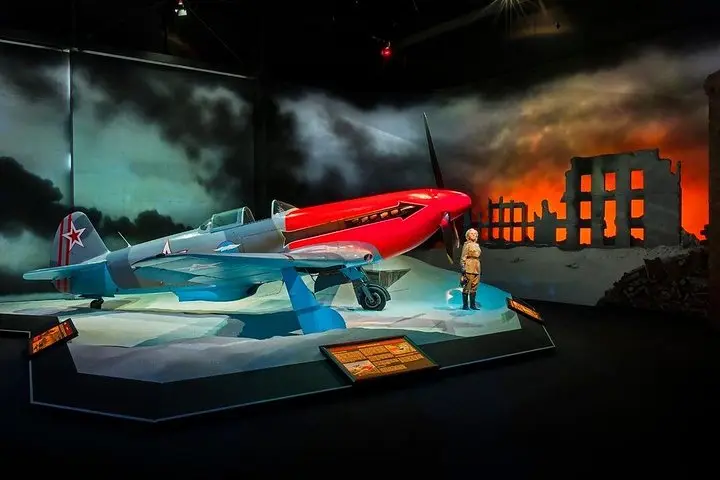


You duck beneath a high hangar door and the air changes: cool metal, old oil, and the hollow echo of propellers frozen mid-spin. Light slices between fuselages — a Mosquito’s polished skin, the Spitfire’s silhouette — and a voice from a headset nudges you toward a diorama where Stalingrad’s rubble looks unnervingly real.
You duck beneath a high hangar door and the air changes: cool metal, old oil, and the hollow echo of propellers frozen mid-spin. Light slices between fuselages — a Mosquito’s polished skin, the Spitfire’s silhouette — and a voice from a headset nudges you toward a diorama where Stalingrad’s rubble looks unnervingly real.
Omaka’s Dangerous Skies opened in 2016 to expand the centre’s story of aviation through WWII. Located on the outskirts of Blenheim in Marlborough, the exhibition layers restored aircraft with immersive sets produced in collaboration with local cinematic artisans. The displays trace theatres of conflict from the British Isles to the Pacific, and highlight roles played by women on and off the flight line.
Geology and vineyard country frame the site — the low, stony ridges and clear skies that make Marlborough a grape-growing region also preserved an airfield suited to early aviation experiments. Cultural ties to New Zealand’s wartime contribution sit beside international narratives: German, Russian and Allied perspectives are all present.
Practical guidance: buy a skip-the-line ticket and aim to arrive by mid-afternoon; last entry is typically 4pm with closing at 5pm. Minimum recommended visit is 45 minutes; history and aircraft buffs can spend 2–3 hours. The venue is wheelchair accessible and offers a coffee kiosk and souvenirs. Photography is allowed in most areas (avoid flash on restored surfaces). Dress in layers — the hangars are cool year-round — and leave time to explore nearby aviation displays and the Omaka grounds.