THE ADVENTURE COLLECTIVE® · Independent discovery and booking for outdoor travel

Follow in Darwin’s footsteps across La Campana National Park on a full-day crossing through Chilean palm groves, Santiago oaks, and coastal ridgelines. This guided hike blends natural history, sustained climbs, and panoramic lunches an hour and a half from Santiago.
Follow in Darwin’s footsteps across La Campana National Park on a full-day crossing through Chilean palm groves, Santiago oaks, and coastal ridgelines. This guided hike blends natural history, sustained climbs, and panoramic lunches an hour and a half from Santiago.
You push through a ribbon of dust-streaked trail and the air changes: it smells of sun-warmed leaves and something older, resinous and green. Towering palms—Jubaea chilensis—rise like columns, their trunks thick and sober, and the coastal range opens toward distant ridgelines that lean toward the Pacific. This is La Campana National Park, an hour-and-a-half from Santiago, and the route that inspired Charles Darwin’s notebooks still asks you to move slowly enough to notice small things—a lichen that clings like a crust, the furtive flash of a bird between oak trunks.
Verified experiences and guided adventures in the surrounding area.
Operated by Coigue Expeditions · Olmué, Valparaíso Region
You push through a ribbon of dust-streaked trail and the air changes: it smells of sun-warmed leaves and something older, resinous and green. Towering palms—Jubaea chilensis—rise like columns, their trunks thick and sober, and the coastal range opens toward distant ridgelines that lean toward the Pacific. This is La Campana National Park, an hour-and-a-half from Santiago, and the route that inspired Charles Darwin’s notebooks still asks you to move slowly enough to notice small things—a lichen that clings like a crust, the furtive flash of a bird between oak trunks.
Declared a UNESCO Biosphere Reserve in 1985, La Campana sits where the Chilean Mediterranean climate sculpts a unique flora: hardy sclerophyll shrubs, relict Nothofagus (Santiago oak), and the rare Chilean palm. Geologically, the park is a fragment of the Coastal Mountain Range—ancient sedimentary layers tilted and eroded into steep passes and rounded peaks. Culturally, the hills carry stories of Mapuche use and later 19th-century naturalists; Darwin recorded observations here during his 1834 visit that helped form early ideas about species distribution.
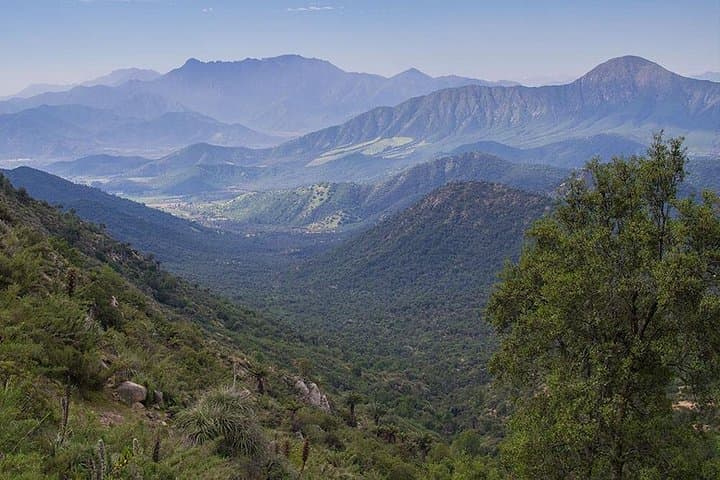
The guided crossing starts at the park’s northern sector and climbs steadily for about three hours to Ocoa Hill pass. Expect approximately 14 km of trail overall with roughly 900 meters of cumulative elevation gain—rocky switchbacks, packed dirt, and occasional exposed ridgelines where wind shapes the vegetation. Lunch at Ocoa Hill is a quiet punctuation: a box lunch, binoculars, and an expansive view across valleys to Olmué where the descent begins through a remnant oak forest.
Wildlife is discreet but present—small mammals, reptiles, and birds that favor the microclimates along the trail—so bring binoculars and patience. The guide’s role is practical and interpretive: trail navigation, botanical identification, and first aid when the terrain demands it.
Practical guidance: start early to avoid midday heat, carry at least 2 liters of water, and wear sturdy hiking boots—sections are steep and loose. The full excursion, including transfers from Santiago, runs about 10 hours; the hiking portion is moderate in pace but sustained. The trip isn’t recommended for pregnant travelers or those with cardiovascular or spinal issues; minimum age is 13. Seasonal differences matter—spring brings wildflower bursts, summer increases fire risk and heat, fall cools and sharpens the light, winter can be windy and wet.
This is a day that balances natural history and exercise: a place where Darwin’s shadow still leans across the palms and the landscape rewards those who pay attention with both broad views and intimate botanical revelations.
The full outing including transfers is about 10 hours; expect 6–8 hours of hiking covering roughly 14 km with ~900 m cumulative ascent—moderate but sustained effort.
Yes—hotel pick-up and drop-off in Santiago are provided; transfer duration varies with traffic, typically about 1.5 hours each way.
Yes—national park fees and a boxed lunch per person are included, along with trekking poles, binoculars, and a professional guide.
Minimum age is 13; the tour is not recommended for pregnant travelers or those with serious cardiovascular or spinal conditions.
Expect birds like Chilean mockingbirds and raptors, occasional small mammals and lizards; wildlife is often subtle—binoculars help.
A minimum of two people per booking is required; check with the operator for private exceptions.
Coigue Expeditions operates guided outdoor trips and adventures with an emphasis on safety, stewardship, and memorable experiences.
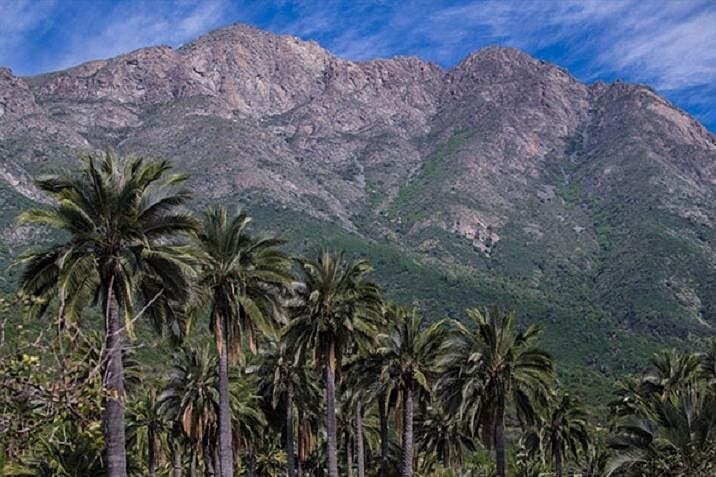
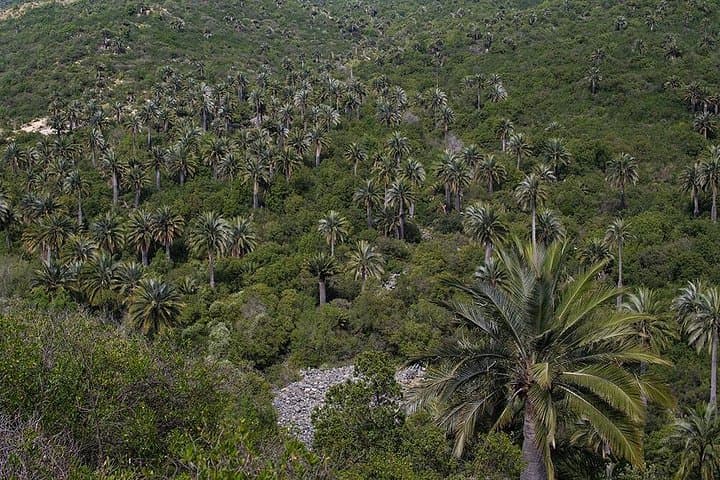
You push through a ribbon of dust-streaked trail and the air changes: it smells of sun-warmed leaves and something older, resinous and green. Towering palms—Jubaea chilensis—rise like columns, their trunks thick and sober, and the coastal range opens toward distant ridgelines that lean toward the Pacific. This is La Campana National Park, an hour-and-a-half from Santiago, and the route that inspired Charles Darwin’s notebooks still asks you to move slowly enough to notice small things—a lichen that clings like a crust, the furtive flash of a bird between oak trunks.
You push through a ribbon of dust-streaked trail and the air changes: it smells of sun-warmed leaves and something older, resinous and green. Towering palms—Jubaea chilensis—rise like columns, their trunks thick and sober, and the coastal range opens toward distant ridgelines that lean toward the Pacific. This is La Campana National Park, an hour-and-a-half from Santiago, and the route that inspired Charles Darwin’s notebooks still asks you to move slowly enough to notice small things—a lichen that clings like a crust, the furtive flash of a bird between oak trunks.
Declared a UNESCO Biosphere Reserve in 1985, La Campana sits where the Chilean Mediterranean climate sculpts a unique flora: hardy sclerophyll shrubs, relict Nothofagus (Santiago oak), and the rare Chilean palm. Geologically, the park is a fragment of the Coastal Mountain Range—ancient sedimentary layers tilted and eroded into steep passes and rounded peaks. Culturally, the hills carry stories of Mapuche use and later 19th-century naturalists; Darwin recorded observations here during his 1834 visit that helped form early ideas about species distribution.
The guided crossing starts at the park’s northern sector and climbs steadily for about three hours to Ocoa Hill pass. Expect approximately 14 km of trail overall with roughly 900 meters of cumulative elevation gain—rocky switchbacks, packed dirt, and occasional exposed ridgelines where wind shapes the vegetation. Lunch at Ocoa Hill is a quiet punctuation: a box lunch, binoculars, and an expansive view across valleys to Olmué where the descent begins through a remnant oak forest.
Wildlife is discreet but present—small mammals, reptiles, and birds that favor the microclimates along the trail—so bring binoculars and patience. The guide’s role is practical and interpretive: trail navigation, botanical identification, and first aid when the terrain demands it.
Practical guidance: start early to avoid midday heat, carry at least 2 liters of water, and wear sturdy hiking boots—sections are steep and loose. The full excursion, including transfers from Santiago, runs about 10 hours; the hiking portion is moderate in pace but sustained. The trip isn’t recommended for pregnant travelers or those with cardiovascular or spinal issues; minimum age is 13. Seasonal differences matter—spring brings wildflower bursts, summer increases fire risk and heat, fall cools and sharpens the light, winter can be windy and wet.
This is a day that balances natural history and exercise: a place where Darwin’s shadow still leans across the palms and the landscape rewards those who pay attention with both broad views and intimate botanical revelations.