THE ADVENTURE COLLECTIVE® · Independent discovery and booking for outdoor travel

Catch dawn at the Tatio Geysers on a small-group morning tour from San Pedro de Atacama. See steam plumes, mineral pools and Altiplano wildlife, then visit Machuca village and the Rio Putana wetlands on a compact 7–8 hour outing.
Catch dawn at the Tatio Geysers on a small-group morning tour from San Pedro de Atacama. See steam plumes, mineral pools and Altiplano wildlife, then visit Machuca village and the Rio Putana wetlands on a compact 7–8 hour outing.
You leave San Pedro de Atacama before first light, windows of the van fogging as the desert night gives way to a brittle blue dawn. The road climbs into the Altiplano and, at 4,320 meters above sea level, the Tatio geothermal field announces itself with steam pillars stabbing into the cold air — some jets rising ten meters — and mineral-streaked pools hissing in the morning chill.
Verified experiences and guided adventures in the surrounding area.
Operated by Say Hueque Travel · San Pedro de Atacama, Antofagasta
You leave San Pedro de Atacama before first light, windows of the van fogging as the desert night gives way to a brittle blue dawn. The road climbs into the Altiplano and, at 4,320 meters above sea level, the Tatio geothermal field announces itself with steam pillars stabbing into the cold air — some jets rising ten meters — and mineral-streaked pools hissing in the morning chill.
The geysers sit where tectonic heat meets high plain, a geological stage set by the Andean uplift and ongoing volcanism. Human history here is sparse but deep: pre-Columbian communities adapted to this altitude, using hot springs and herding camelids; Machuca, a tiny adobe hamlet seen from the road, still keeps traditional cheese- and llama-based livelihoods alive. The Rio Putana wetlands are a counterpoint — a narrow bofedal where sedges and cushion plants survive and where flamingos, Andean geese and other wildlife concentrate at high altitude.
Practically, expect a 7–8 hour excursion with an early pickup, included breakfast at the geysers, and some short walks across uneven, often wet ground. Temperatures before sunrise can be well below freezing; layers and a warm hat matter as much as sunscreen and sunglasses once the sun rises. Altitude is the real variable — move deliberately, hydrate, and avoid heavy meals before the drive up. Bring a camera with extra batteries (cold shortens battery life) and be ready for quick photo stops at Machuca and the Putana wetlands on the return. The tour balances spectacle and ease: a compact way to experience high‑Andes geology, wildlife and resilient local culture in a single morning.
Pickup is very early (typically before sunrise) to arrive at the geysers at dawn; confirm exact time with your operator the day before.
The tour visits elevations around 4,320 m; people with heart or hypertension issues, or pregnant travelers, should not join and everyone should monitor for altitude sickness symptoms.
On the semi-private option, entrance fee and a light breakfast at the geysers are included; check your booking details for confirmation.
The minimum age is usually 12 years; the early start and altitude make the experience unsuitable for younger children.
Say Hueque Travel operates guided outdoor trips and adventures with an emphasis on safety, stewardship, and memorable experiences.
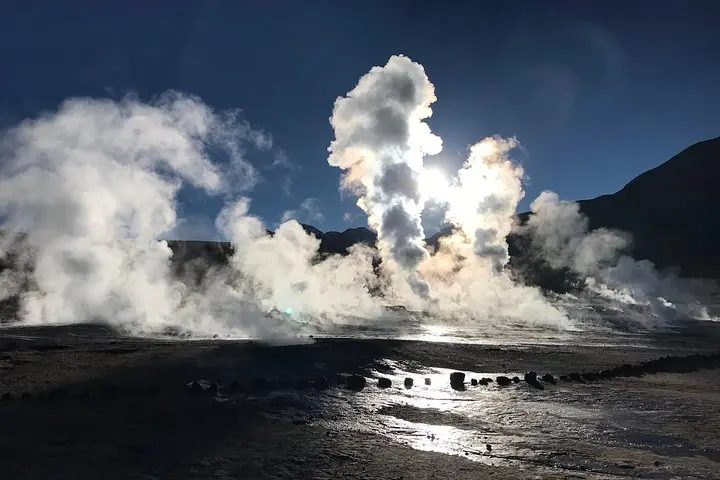
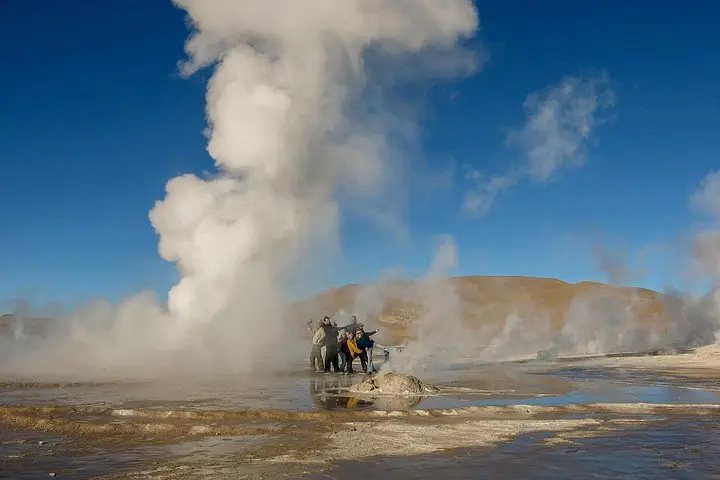
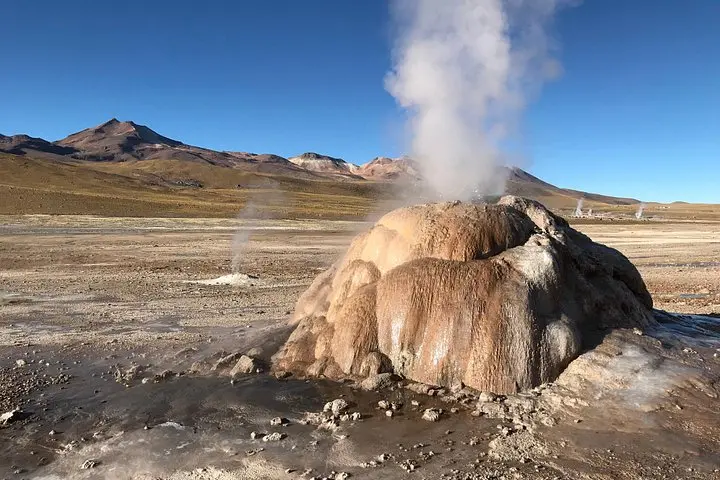
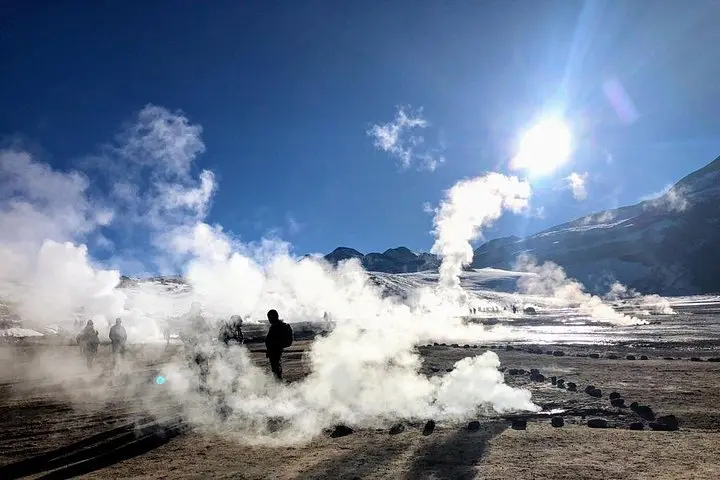
You leave San Pedro de Atacama before first light, windows of the van fogging as the desert night gives way to a brittle blue dawn. The road climbs into the Altiplano and, at 4,320 meters above sea level, the Tatio geothermal field announces itself with steam pillars stabbing into the cold air — some jets rising ten meters — and mineral-streaked pools hissing in the morning chill.
You leave San Pedro de Atacama before first light, windows of the van fogging as the desert night gives way to a brittle blue dawn. The road climbs into the Altiplano and, at 4,320 meters above sea level, the Tatio geothermal field announces itself with steam pillars stabbing into the cold air — some jets rising ten meters — and mineral-streaked pools hissing in the morning chill.
The geysers sit where tectonic heat meets high plain, a geological stage set by the Andean uplift and ongoing volcanism. Human history here is sparse but deep: pre-Columbian communities adapted to this altitude, using hot springs and herding camelids; Machuca, a tiny adobe hamlet seen from the road, still keeps traditional cheese- and llama-based livelihoods alive. The Rio Putana wetlands are a counterpoint — a narrow bofedal where sedges and cushion plants survive and where flamingos, Andean geese and other wildlife concentrate at high altitude.
Practically, expect a 7–8 hour excursion with an early pickup, included breakfast at the geysers, and some short walks across uneven, often wet ground. Temperatures before sunrise can be well below freezing; layers and a warm hat matter as much as sunscreen and sunglasses once the sun rises. Altitude is the real variable — move deliberately, hydrate, and avoid heavy meals before the drive up. Bring a camera with extra batteries (cold shortens battery life) and be ready for quick photo stops at Machuca and the Putana wetlands on the return. The tour balances spectacle and ease: a compact way to experience high‑Andes geology, wildlife and resilient local culture in a single morning.