THE ADVENTURE COLLECTIVE® · Independent discovery and booking for outdoor travel

Spend a long day on Kilimanjaro’s Machame Route—through dripping rainforest to highland viewpoints at ~3,000 m. This compact trek packs dramatic scenery, Chagga culture, and real altitude into a single unforgettable outing.
Spend a long day on Kilimanjaro’s Machame Route—through dripping rainforest to highland viewpoints at ~3,000 m. This compact trek packs dramatic scenery, Chagga culture, and real altitude into a single unforgettable outing.
A low cloud clings to the lower slopes as your minibus winds away from Arusha; the road becomes a patchwork of red earth and roadside coffee plots tended by Chagga farmers. At Machame Gate, porters tuck bright blue sleeping bags into packs and a ranger checks your permit. Within an hour the trail falls into the rainforest—giant lobelias and moss-slick trunks surround you, and the mountain breathes in damp, green smells.
Verified experiences and guided adventures in the surrounding area.
Operated by Africa Exhibition Safari Agency · Arusha, Arusha Region
A low cloud clings to the lower slopes as your minibus winds away from Arusha; the road becomes a patchwork of red earth and roadside coffee plots tended by Chagga farmers. At Machame Gate, porters tuck bright blue sleeping bags into packs and a ranger checks your permit. Within an hour the trail falls into the rainforest—giant lobelias and moss-slick trunks surround you, and the mountain breathes in damp, green smells.
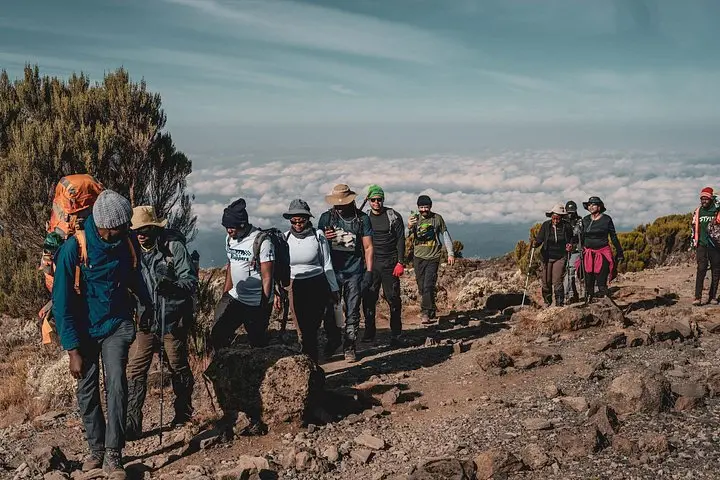
The Machame Route is often called the “Whiskey Route” for its steepness and dramatic profile. Unlike the gentler Marangu, Machame pushes quickly from dense montane forest through heath and moorland, gaining altitude so views arrive in abrupt rewards: a break in the trees reveals Kibo’s fluted summit and the raw expanse above the treeline. This day trip targets Machame Camp (around 2,800–3,000 m) or a nearby scenic viewpoint, allowing hikers to taste the mountain’s variety without an overnight haul.
Geologically, Kilimanjaro is a three-coned stratovolcano—Kibo, Mawenzi and Shira—built of ash and lava over hundreds of thousands of years. Culturally, the slopes are worked and respected by the Chagga people, whose terraces and coffee farms rim the park boundary and whose porters and guides remain the backbone of every climb.
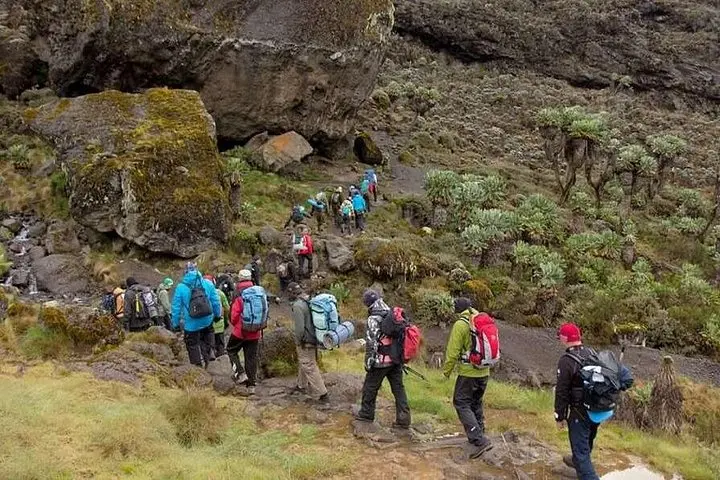
Practicalities decide whether the day delivers or drains. The itinerary is a long day: expect 4–5 hours uphill and 3–4 hours descending, roughly 10 hours total. Trails switch from slick roots and mud in the forest to stony, ericaceous paths higher up; good boots with ankle support matter. Altitude is the quiet variable—2,800–3,000 m produces shortness of breath and headache for some, so hydrate, pace conservatively, and be honest with your guide about symptoms.
Logistics are straightforward: pickup in Arusha, permits handled, and a ranger present for the gate register. Bring layered clothing for shifting temperatures, a warm hat for the lunch stop where wind can bite, and snacks that carry easily. Tipping porters is customary and appreciated; aim for fair pay that reflects their crucial role.
For travelers who want a concentrated mountain day, Machame delivers rainforest, highland scrub, and a real summit silhouette shot—without committing to a multi-day expedition. It’s best suited for fit day hikers who respect altitude and the mountain’s variable moods. Leave no trace, support local guides, and the trail will give you a memorable, compact taste of Kilimanjaro’s wild verticality.
No technical climbing skills are required, but you should be comfortable on steep, uneven trails and capable of a full-day exertion at altitude.
The itinerary reaches roughly 2,800–3,000 meters at Machame Camp or a nearby viewpoint before descending back to the gate.
This tour states that fees and permits are included; the guide and ranger handle park registration at Machame Gate.
Altitude can affect anyone—watch for headache, nausea, dizziness; descend immediately if symptoms worsen and inform your guide.
The operator does not automatically cancel for poor weather; conditions can make the route slippery and colder, so bring rain and warm layers.
Children may join if physically fit for a long day hike, but check with the operator—age ranges and fitness requirements vary and the effort is still demanding.
Africa Exhibition Safari Agency operates guided outdoor trips and adventures with an emphasis on safety, stewardship, and memorable experiences.
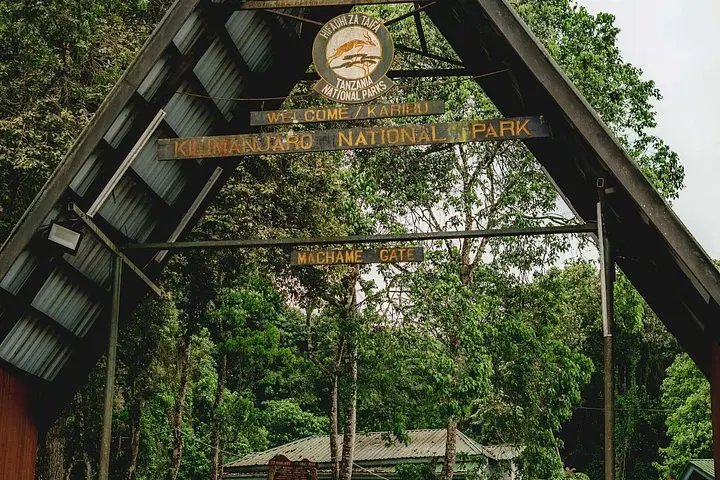
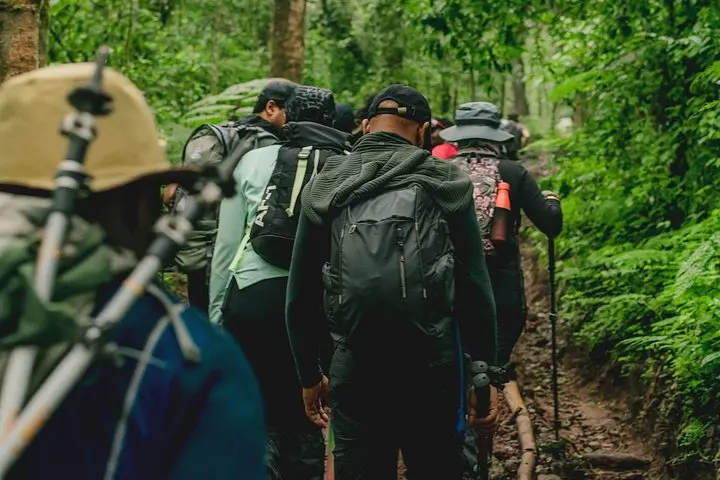
A low cloud clings to the lower slopes as your minibus winds away from Arusha; the road becomes a patchwork of red earth and roadside coffee plots tended by Chagga farmers. At Machame Gate, porters tuck bright blue sleeping bags into packs and a ranger checks your permit. Within an hour the trail falls into the rainforest—giant lobelias and moss-slick trunks surround you, and the mountain breathes in damp, green smells.
A low cloud clings to the lower slopes as your minibus winds away from Arusha; the road becomes a patchwork of red earth and roadside coffee plots tended by Chagga farmers. At Machame Gate, porters tuck bright blue sleeping bags into packs and a ranger checks your permit. Within an hour the trail falls into the rainforest—giant lobelias and moss-slick trunks surround you, and the mountain breathes in damp, green smells.
The Machame Route is often called the “Whiskey Route” for its steepness and dramatic profile. Unlike the gentler Marangu, Machame pushes quickly from dense montane forest through heath and moorland, gaining altitude so views arrive in abrupt rewards: a break in the trees reveals Kibo’s fluted summit and the raw expanse above the treeline. This day trip targets Machame Camp (around 2,800–3,000 m) or a nearby scenic viewpoint, allowing hikers to taste the mountain’s variety without an overnight haul.
Geologically, Kilimanjaro is a three-coned stratovolcano—Kibo, Mawenzi and Shira—built of ash and lava over hundreds of thousands of years. Culturally, the slopes are worked and respected by the Chagga people, whose terraces and coffee farms rim the park boundary and whose porters and guides remain the backbone of every climb.
Practicalities decide whether the day delivers or drains. The itinerary is a long day: expect 4–5 hours uphill and 3–4 hours descending, roughly 10 hours total. Trails switch from slick roots and mud in the forest to stony, ericaceous paths higher up; good boots with ankle support matter. Altitude is the quiet variable—2,800–3,000 m produces shortness of breath and headache for some, so hydrate, pace conservatively, and be honest with your guide about symptoms.
Logistics are straightforward: pickup in Arusha, permits handled, and a ranger present for the gate register. Bring layered clothing for shifting temperatures, a warm hat for the lunch stop where wind can bite, and snacks that carry easily. Tipping porters is customary and appreciated; aim for fair pay that reflects their crucial role.
For travelers who want a concentrated mountain day, Machame delivers rainforest, highland scrub, and a real summit silhouette shot—without committing to a multi-day expedition. It’s best suited for fit day hikers who respect altitude and the mountain’s variable moods. Leave no trace, support local guides, and the trail will give you a memorable, compact taste of Kilimanjaro’s wild verticality.