THE ADVENTURE COLLECTIVE® · Independent discovery and booking for outdoor travel

Spend a compact day on Kilimanjaro’s Marangu Route: a steady climb through rainforest to Mandara Hut, a short loop around Maundi Crater, and a scenic descent back to Marangu Gate. Ideal for travelers short on time who want a true mountain experience without an overnight stay.
Spend a compact day on Kilimanjaro’s Marangu Route: a steady climb through rainforest to Mandara Hut, a short loop around Maundi Crater, and a scenic descent back to Marangu Gate. Ideal for travelers short on time who want a true mountain experience without an overnight stay.
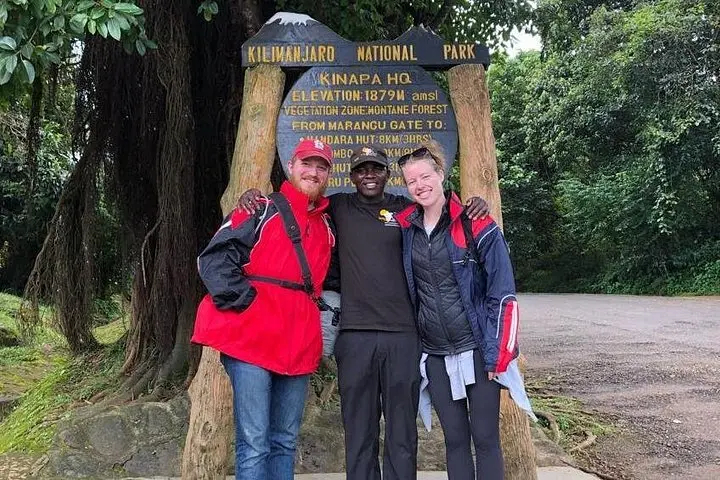
Dawn in Moshi smells of coffee and diesel; the minivan slips through banana groves as Kilimanjaro’s flanks grow taller on the horizon. By the time the guide checks permits at Marangu Gate, the rainforest is already vibrating with cicadas and the smell of wet earth. The trail threads upward through ferns and giant lobelias, climbs past dripping tree roots and moss-laced saddle rock, and opens at Mandara Hut—your high-point for the day—where the roof-line slices the sky and the Moshi plain stretches out below.
Verified experiences and guided adventures in the surrounding area.
Operated by Taste Of Afrika Safaris · Marangu, Kilimanjaro Region
Dawn in Moshi smells of coffee and diesel; the minivan slips through banana groves as Kilimanjaro’s flanks grow taller on the horizon. By the time the guide checks permits at Marangu Gate, the rainforest is already vibrating with cicadas and the smell of wet earth. The trail threads upward through ferns and giant lobelias, climbs past dripping tree roots and moss-laced saddle rock, and opens at Mandara Hut—your high-point for the day—where the roof-line slices the sky and the Moshi plain stretches out below.
Marangu is the classic, gradual approach on Kilimanjaro. Historically favored by colonial and early European expeditions for its direct route and hut accommodations, Marangu follows an old pack path used by Chagga porters and farmers. Geologically, you walk on the eastern flank of a dormant stratovolcano made of three cones—Shira, Mawenzi and Kibo—where ancient lava flows are visible in the heath zone and Maundi Crater offers a compact lesson in past eruptions.
Culturally the walk plugs you into Chagga country: coffee terraces line the lower roads, and guides will often point out traditional stone terraces and water channels that have shaped these slopes for generations. Plant life plays an active role on this route—giant groundsels and heather seem to loom with intent, and the forest can feel like a living corridor that nudges you upward.
Practically, this is a day-design hike: you begin in the rainforest, climb 3–4 hours to Mandara Hut for lunch and views, take a short loop to Maundi Crater, then descend back to Marangu Gate. The path is well-defined but steep in sections; expect muddy patches after rain and slippery roots. Altitude is the principal variable—Mandara Hut sits around 2,700–2,800 meters, so symptoms are usually mild but real. Guides on this tour manage pacing (pole pole—slowly) and will brief you at the gate; park fees and a boxed lunch are included.
Timing is everything: start early to avoid heat and afternoon cloud build-up that can hide the summit. Footwear with good grip, layered clothing for rapidly changing temperatures, and 1–2 liters of water will keep the day comfortable. If you’re short on time or not aiming for Uhuru Peak, this is an efficient way to experience Kilimanjaro’s forest, alpine heath and crater views without committing to an overnight.
Expect birds, occasional colobus monkeys and sweeping vistas; bring a camera, an appetite for local chatter, and a respect for the mountain’s slow, deliberate pace. The route is straightforward but honest—Kilimanjaro may not demand technical gear on this day trip, but it rewards patience and preparation.
You should be able to sustain several hours of steady uphill walking; the route isn’t technical but requires cardiovascular fitness and basic stamina.
Mandara Hut is around 2,700–2,800 m—most people feel only mild effects, but monitor for headache, nausea or dizziness and inform your guide immediately.
The tour includes a boxed lunch and one bottle of water; bring extra water and snacks for personal needs.
Park entry fees are included with this tour; your guide will handle permits and sign-in at Marangu Gate.
There are basic pit/toilet facilities at Marangu Gate and around the hut area; bring hand sanitizer and toilet paper.
Pickup is offered from hotels in Moshi, Arusha and Kilimanjaro Airport—confirm pickup location and time when booking.
Taste Of Afrika Safaris operates guided outdoor trips and adventures with an emphasis on safety, stewardship, and memorable experiences.
Dawn in Moshi smells of coffee and diesel; the minivan slips through banana groves as Kilimanjaro’s flanks grow taller on the horizon. By the time the guide checks permits at Marangu Gate, the rainforest is already vibrating with cicadas and the smell of wet earth. The trail threads upward through ferns and giant lobelias, climbs past dripping tree roots and moss-laced saddle rock, and opens at Mandara Hut—your high-point for the day—where the roof-line slices the sky and the Moshi plain stretches out below.
Dawn in Moshi smells of coffee and diesel; the minivan slips through banana groves as Kilimanjaro’s flanks grow taller on the horizon. By the time the guide checks permits at Marangu Gate, the rainforest is already vibrating with cicadas and the smell of wet earth. The trail threads upward through ferns and giant lobelias, climbs past dripping tree roots and moss-laced saddle rock, and opens at Mandara Hut—your high-point for the day—where the roof-line slices the sky and the Moshi plain stretches out below.
Marangu is the classic, gradual approach on Kilimanjaro. Historically favored by colonial and early European expeditions for its direct route and hut accommodations, Marangu follows an old pack path used by Chagga porters and farmers. Geologically, you walk on the eastern flank of a dormant stratovolcano made of three cones—Shira, Mawenzi and Kibo—where ancient lava flows are visible in the heath zone and Maundi Crater offers a compact lesson in past eruptions.
Culturally the walk plugs you into Chagga country: coffee terraces line the lower roads, and guides will often point out traditional stone terraces and water channels that have shaped these slopes for generations. Plant life plays an active role on this route—giant groundsels and heather seem to loom with intent, and the forest can feel like a living corridor that nudges you upward.
Practically, this is a day-design hike: you begin in the rainforest, climb 3–4 hours to Mandara Hut for lunch and views, take a short loop to Maundi Crater, then descend back to Marangu Gate. The path is well-defined but steep in sections; expect muddy patches after rain and slippery roots. Altitude is the principal variable—Mandara Hut sits around 2,700–2,800 meters, so symptoms are usually mild but real. Guides on this tour manage pacing (pole pole—slowly) and will brief you at the gate; park fees and a boxed lunch are included.
Timing is everything: start early to avoid heat and afternoon cloud build-up that can hide the summit. Footwear with good grip, layered clothing for rapidly changing temperatures, and 1–2 liters of water will keep the day comfortable. If you’re short on time or not aiming for Uhuru Peak, this is an efficient way to experience Kilimanjaro’s forest, alpine heath and crater views without committing to an overnight.
Expect birds, occasional colobus monkeys and sweeping vistas; bring a camera, an appetite for local chatter, and a respect for the mountain’s slow, deliberate pace. The route is straightforward but honest—Kilimanjaro may not demand technical gear on this day trip, but it rewards patience and preparation.