THE ADVENTURE COLLECTIVE® · Independent discovery and booking for outdoor travel

Short on time but eager to experience Kilimanjaro’s forests and wildlife? This full-day hike to Mandara Hut from Moshi delivers montane views, colobus and blue monkeys, and a genuine mountain-day without the multi-day commitment.
Short on time but eager to experience Kilimanjaro’s forests and wildlife? This full-day hike to Mandara Hut from Moshi delivers montane views, colobus and blue monkeys, and a genuine mountain-day without the multi-day commitment.
The van eases out of Moshi before dawn, and the plain peels away into a green wall—the lower slopes of Kilimanjaro pushing up through coffee farms and eucalyptus. By the time the Marangu gate appears, an hour later, the air has a clean, damp bite; the mountain smells of moss and loam. The day hike to Mandara Hut is a concentrated portrait of Kilimanjaro’s lower ecology: towering trees, a chorus of birds, and occasional pockets of primates that regard walkers as passing weather.
Verified experiences and guided adventures in the surrounding area.
Operated by Tarry Adventures and Safaris · Moshi, Kilimanjaro Region
The van eases out of Moshi before dawn, and the plain peels away into a green wall—the lower slopes of Kilimanjaro pushing up through coffee farms and eucalyptus. By the time the Marangu gate appears, an hour later, the air has a clean, damp bite; the mountain smells of moss and loam. The day hike to Mandara Hut is a concentrated portrait of Kilimanjaro’s lower ecology: towering trees, a chorus of birds, and occasional pockets of primates that regard walkers as passing weather.
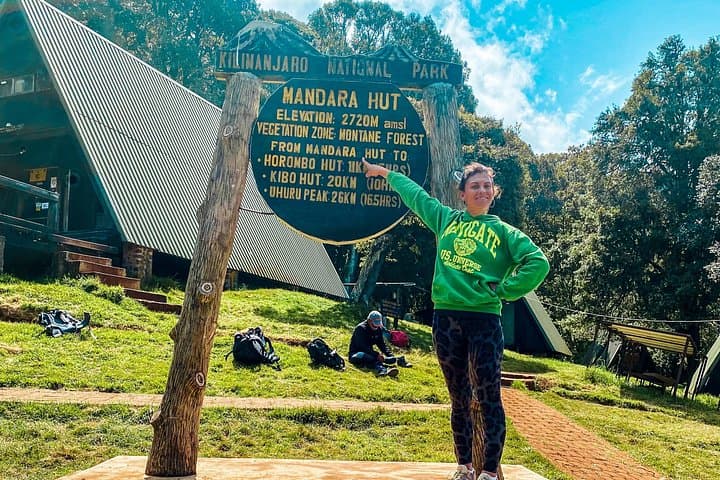
You’re walking the mountain the Marangu way: a trail that threads through montane forest, climbs old volcanic scarps and opens at Maundi crater, where, on a clear day, you can read the horizon across northern Tanzania and into Kenya. Mandara Hut sits near 2,700 meters—enough altitude to feel thinner air and a different temperature band—making this an excellent option for travelers short on time or budget who still want a substantial mountain day.
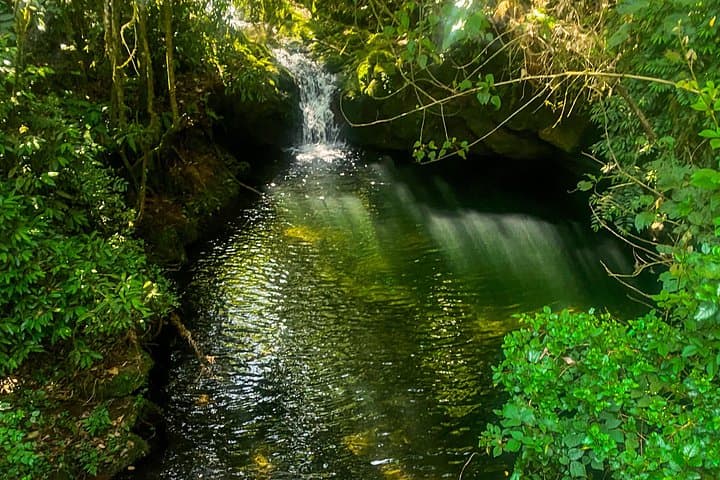
Geology here is straightforward and compelling. Kilimanjaro is a three-peaked stratovolcano; the Marangu flank you traverse is a product of long lava flows and ash deposits weathering into deep soils that support dense forest. Culturally, the trail threads Chagga farmland and small villages where coffee drying racks and wooden porches indicate livelihoods tightly linked to the mountain’s water and soils.
Expect roughly 3–4 hours of uphill hiking to the hut (return makes the active portion 6–8 hours including breaks), with an elevation gain of about 800–900 meters from the gate. Trails alternate between well-trodden dirt, wooden steps in boggy sections, and exposed roots; in wet seasons the tread can be slippery. Wildlife is a highlight—black-and-white colobus and blue monkeys move like punctuation through the canopy, while sunbirds and turacos add color and sound.
Practically: the operator provides pickup from Moshi, lunch and water, and a local guide—this is a private tour, so pacing is flexible. Comfortable, broken-in hiking boots and layers are non-negotiable; temperatures can swing from warm at the gate to cool and gusty near the hut. Take it steady to reduce altitude stress and carry a small daypack with additional water, a rain layer and snacks even though lunch is supplied.
This hike is as much about atmosphere as summit ambitions. The route offers a compact, walkable narrative of Kilimanjaro’s lower ecosystems—trees that push at the sky, primates that claim the branches, and viewpoints that shape a sudden sense of scale. For many travelers, it’s the clearest, most immediate way to meet the mountain.
The uphill section typically takes 3–4 hours; total active hiking for the round-trip is about 4–6 hours depending on pace and stops.
Older children and inexperienced hikers in reasonable shape can manage the trail, but expect slower pacing and frequent rests; the operator requires a moderate fitness level.
Yes—black-and-white colobus and blue monkeys are commonly sighted, along with numerous forest birds; sightings depend on season and noise level.
Mandara Hut sits at approximately 2,700 meters (8,860 ft), so expect cooler, thinner air than in Moshi.
This tour typically includes park access, a local guide, lunch and some water—confirm specifics with the operator before booking.
The operator can cancel in poor conditions; bring a waterproof layer and warm mid-layer and follow guide instructions—descending early is the safest option if visibility or trail safety deteriorates.
Tarry Adventures and Safaris operates guided outdoor trips and adventures with an emphasis on safety, stewardship, and memorable experiences.
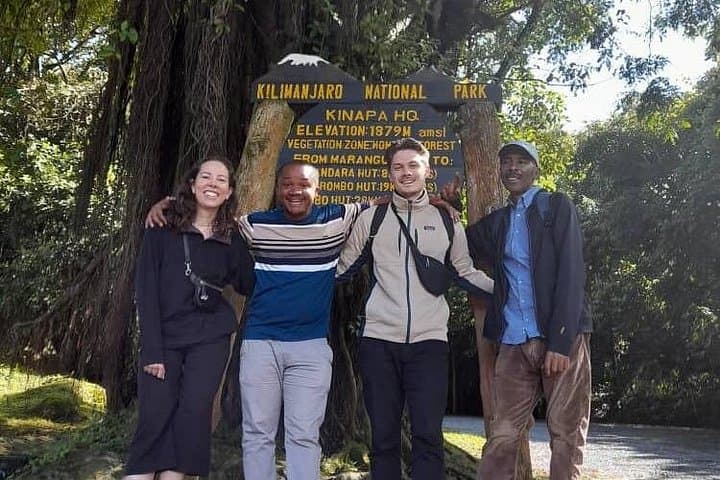
The van eases out of Moshi before dawn, and the plain peels away into a green wall—the lower slopes of Kilimanjaro pushing up through coffee farms and eucalyptus. By the time the Marangu gate appears, an hour later, the air has a clean, damp bite; the mountain smells of moss and loam. The day hike to Mandara Hut is a concentrated portrait of Kilimanjaro’s lower ecology: towering trees, a chorus of birds, and occasional pockets of primates that regard walkers as passing weather.
The van eases out of Moshi before dawn, and the plain peels away into a green wall—the lower slopes of Kilimanjaro pushing up through coffee farms and eucalyptus. By the time the Marangu gate appears, an hour later, the air has a clean, damp bite; the mountain smells of moss and loam. The day hike to Mandara Hut is a concentrated portrait of Kilimanjaro’s lower ecology: towering trees, a chorus of birds, and occasional pockets of primates that regard walkers as passing weather.
You’re walking the mountain the Marangu way: a trail that threads through montane forest, climbs old volcanic scarps and opens at Maundi crater, where, on a clear day, you can read the horizon across northern Tanzania and into Kenya. Mandara Hut sits near 2,700 meters—enough altitude to feel thinner air and a different temperature band—making this an excellent option for travelers short on time or budget who still want a substantial mountain day.
Geology here is straightforward and compelling. Kilimanjaro is a three-peaked stratovolcano; the Marangu flank you traverse is a product of long lava flows and ash deposits weathering into deep soils that support dense forest. Culturally, the trail threads Chagga farmland and small villages where coffee drying racks and wooden porches indicate livelihoods tightly linked to the mountain’s water and soils.
Expect roughly 3–4 hours of uphill hiking to the hut (return makes the active portion 6–8 hours including breaks), with an elevation gain of about 800–900 meters from the gate. Trails alternate between well-trodden dirt, wooden steps in boggy sections, and exposed roots; in wet seasons the tread can be slippery. Wildlife is a highlight—black-and-white colobus and blue monkeys move like punctuation through the canopy, while sunbirds and turacos add color and sound.
Practically: the operator provides pickup from Moshi, lunch and water, and a local guide—this is a private tour, so pacing is flexible. Comfortable, broken-in hiking boots and layers are non-negotiable; temperatures can swing from warm at the gate to cool and gusty near the hut. Take it steady to reduce altitude stress and carry a small daypack with additional water, a rain layer and snacks even though lunch is supplied.
This hike is as much about atmosphere as summit ambitions. The route offers a compact, walkable narrative of Kilimanjaro’s lower ecosystems—trees that push at the sky, primates that claim the branches, and viewpoints that shape a sudden sense of scale. For many travelers, it’s the clearest, most immediate way to meet the mountain.