THE ADVENTURE COLLECTIVE® · Independent discovery and booking for outdoor travel

A single-day walk on the Marangu Route that climbs into Kilimanjaro’s mossy upper forest to Mandara Hut. Expect steep switchbacks, rainforest canopy, coffee-country views and solid altitude gain without attempting the summit.
A single-day walk on the Marangu Route that climbs into Kilimanjaro’s mossy upper forest to Mandara Hut. Expect steep switchbacks, rainforest canopy, coffee-country views and solid altitude gain without attempting the summit.
You step off the minivan at Marangu Gate while dawn pulls a cool gray across the forest. The trail immediately narrows into a moss-draped corridor; leaves hush underfoot and the mountain feels expectant. Guides knot their packs, check poles, and point up the trail where Mandara Hut sits, a wooden silhouette caught in the mid-mountain clouds.
Verified experiences and guided adventures in the surrounding area.
Operated by Safarivista Adventures · Moshi, Kilimanjaro Region
You step off the minivan at Marangu Gate while dawn pulls a cool gray across the forest. The trail immediately narrows into a moss-draped corridor; leaves hush underfoot and the mountain feels expectant. Guides knot their packs, check poles, and point up the trail where Mandara Hut sits, a wooden silhouette caught in the mid-mountain clouds.
The Marangu Route is the oldest, most gradual path up Kilimanjaro and the section to Mandara Hut is a concentrated taste of why the mountain draws walkers. Geologically, Kilimanjaro is a dormant stratovolcano made of three cones — Shira, Mawenzi and Kibo — with the ridge above Mandara showing volcanic soils that feed the dense montane rainforest. Historically the slopes have been home to the Chagga people for centuries; their terraced farms and coffee plantations cloak the lower flanks and frame the first half hour of the hike.
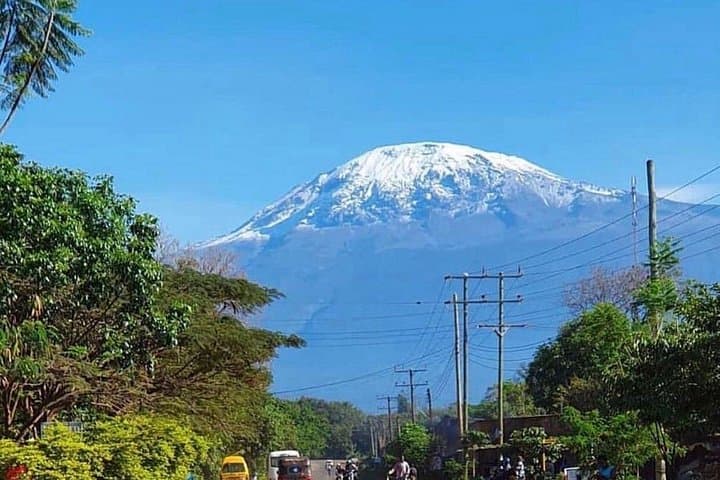
On this outing expect roughly 10 hours total door-to-door, with about 12 km round-trip on trail and an elevation gain near 800–900 m (from Marangu Gate ~1,860 m to Mandara Hut at roughly 2,700 m). The path alternates: root-strewn rainforest that drinks your boots, steep switchbacks cut into packed volcanic scree, and occasional muddy stretches after rain. Mandara Hut sits in the upper forest zone — you won’t reach the alpine desert on this day trip, but you’ll get clear views of Kibo’s broad flank on a good day.
Culture and conservation thread through the walk: your certified guide explains Chagga land use, points out coffee terraces, and manages permits — all trekkers require a guide and park fees that fund conservation. Wildlife is shy but present; colobus monkeys can rattle through the canopy and antelope like bushbuck sometimes browse the understory.
Practical edge: bring layered clothing for a wide temperature swing, gaiters for muddy patches, and hydration for steady uphill work. The operator offers hotel pickup in Arusha or Moshi, bottled water, lunch, and hiking poles — useful, since the descent can be quick on tired knees. Mandara is a day-hike destination that suits hikers in decent cardio shape who want altitude exposure without summit logistics.
Timing matters: after the long rains (March–May) trails are heavier and slippery; the clearest views come in the drier months (late June–September and January–February). Be prepared for rapid weather shifts and respect park rules: stick to the trail, carry out trash, and let the forest keep its quiet. In ten hours you’ll return with mud on your boots, a clearer sense of Kilimanjaro’s scale, and a slice of the mountain’s high forest that many visitors miss.
No — the day hike reaches Mandara Hut on the Marangu Route and returns; it provides high-forest exposure and views but not the summit.
Yes — a certified Kilimanjaro guide and all park admission fees are managed by the operator and included in the trip.
Expect roughly 800–900 m of elevation gain round-trip between Marangu Gate (~1,860 m) and Mandara Hut (~2,700 m).
Yes — although milder than summit attempts, some people feel effects above 2,000 m; acclimatize in Moshi/Arusha and signal your guide if you feel unwell.
Waterproof, broken-in hiking boots with good ankle support and lugged soles are recommended; sandals or running shoes are not ideal.
The operator picks up from hotels in Arusha or Moshi (confirm your pickup point when booking); allow about 1–2 hours drive time to Marangu Gate depending on traffic.
Safarivista Adventures operates guided outdoor trips and adventures with an emphasis on safety, stewardship, and memorable experiences.


You step off the minivan at Marangu Gate while dawn pulls a cool gray across the forest. The trail immediately narrows into a moss-draped corridor; leaves hush underfoot and the mountain feels expectant. Guides knot their packs, check poles, and point up the trail where Mandara Hut sits, a wooden silhouette caught in the mid-mountain clouds.
You step off the minivan at Marangu Gate while dawn pulls a cool gray across the forest. The trail immediately narrows into a moss-draped corridor; leaves hush underfoot and the mountain feels expectant. Guides knot their packs, check poles, and point up the trail where Mandara Hut sits, a wooden silhouette caught in the mid-mountain clouds.
The Marangu Route is the oldest, most gradual path up Kilimanjaro and the section to Mandara Hut is a concentrated taste of why the mountain draws walkers. Geologically, Kilimanjaro is a dormant stratovolcano made of three cones — Shira, Mawenzi and Kibo — with the ridge above Mandara showing volcanic soils that feed the dense montane rainforest. Historically the slopes have been home to the Chagga people for centuries; their terraced farms and coffee plantations cloak the lower flanks and frame the first half hour of the hike.
On this outing expect roughly 10 hours total door-to-door, with about 12 km round-trip on trail and an elevation gain near 800–900 m (from Marangu Gate ~1,860 m to Mandara Hut at roughly 2,700 m). The path alternates: root-strewn rainforest that drinks your boots, steep switchbacks cut into packed volcanic scree, and occasional muddy stretches after rain. Mandara Hut sits in the upper forest zone — you won’t reach the alpine desert on this day trip, but you’ll get clear views of Kibo’s broad flank on a good day.
Culture and conservation thread through the walk: your certified guide explains Chagga land use, points out coffee terraces, and manages permits — all trekkers require a guide and park fees that fund conservation. Wildlife is shy but present; colobus monkeys can rattle through the canopy and antelope like bushbuck sometimes browse the understory.
Practical edge: bring layered clothing for a wide temperature swing, gaiters for muddy patches, and hydration for steady uphill work. The operator offers hotel pickup in Arusha or Moshi, bottled water, lunch, and hiking poles — useful, since the descent can be quick on tired knees. Mandara is a day-hike destination that suits hikers in decent cardio shape who want altitude exposure without summit logistics.
Timing matters: after the long rains (March–May) trails are heavier and slippery; the clearest views come in the drier months (late June–September and January–February). Be prepared for rapid weather shifts and respect park rules: stick to the trail, carry out trash, and let the forest keep its quiet. In ten hours you’ll return with mud on your boots, a clearer sense of Kilimanjaro’s scale, and a slice of the mountain’s high forest that many visitors miss.