THE ADVENTURE COLLECTIVE® · Independent discovery and booking for outdoor travel

Skip the multi-day expedition but not the mountain: this one-day trek from Moshi delivers rainforest, wildlife, and sweeping views from Mandara Hut at 2,700 m. Ideal for travelers short on time who want a meaningful Kilimanjaro encounter with professional guides and seamless logistics.
Skip the multi-day expedition but not the mountain: this one-day trek from Moshi delivers rainforest, wildlife, and sweeping views from Mandara Hut at 2,700 m. Ideal for travelers short on time who want a meaningful Kilimanjaro encounter with professional guides and seamless logistics.
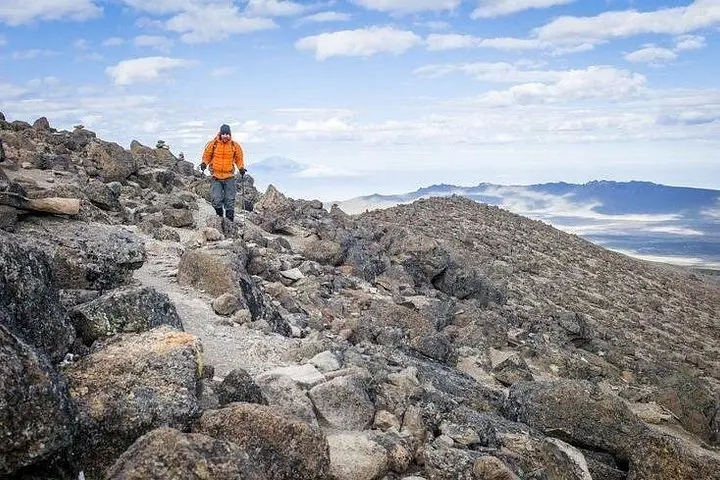
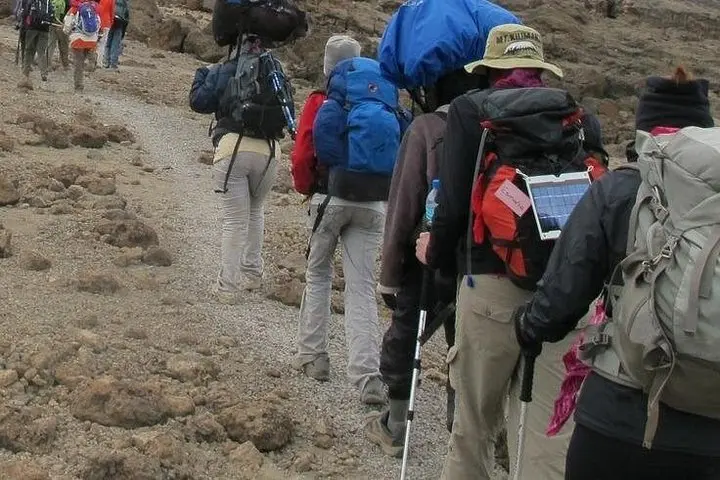
A dawn hush hangs over Moshi as the van threads its way toward Marangu Gate, the park gate yawning into forest that soon swallows the road. By the time you step under the park sign, the rainforest has a presence: heavy air, the chatter of birds, and a high, green ceiling of moss-draped trees. The trail climbs steadily, at first soft with leaf litter and roots, then opening into clearings where Kilimanjaro’s upper slopes start to reveal themselves—an enormous, slow-moving ridge that seems to wear its glaciers like a distant crown.
Verified experiences and guided adventures in the surrounding area.
Operated by Explore Green Africa Safaris · Moshi, Kilimanjaro Region
A dawn hush hangs over Moshi as the van threads its way toward Marangu Gate, the park gate yawning into forest that soon swallows the road. By the time you step under the park sign, the rainforest has a presence: heavy air, the chatter of birds, and a high, green ceiling of moss-draped trees. The trail climbs steadily, at first soft with leaf litter and roots, then opening into clearings where Kilimanjaro’s upper slopes start to reveal themselves—an enormous, slow-moving ridge that seems to wear its glaciers like a distant crown.
This is not the summit bid; it’s a carefully paced introduction to Kilimanjaro’s ecology and culture. The Marangu route to Mandara Hut follows paths once used by Chagga farmers and early German porters; the Chagga remain the mountain’s human backbone, running guesthouses and guiding visitors while harvesting banana terraces below. Geologically, Kilimanjaro is a layered volcano—three cones stacked over millennia—whose erosion and glacial retreat have carved the dramatic profiles visible from the hut’s clearing.
Wildlife is discrete but present: blue monkeys and colobus slip through canopy, sunbirds flash color on flowering heathers, and rock hyraxes claim the boulder fields. Local guides point out key plants—giant heather and lobelia—that evolved to survive the mountain’s harsh vertical climate zones, a living record of isolation reflected in every twisted trunk and silver bark.
Practically, the day delivers roughly 6–10 hours from hotel pickup to return, with about 800–900 meters of elevation gain between Marangu Gate (~1,860 m) and Mandara Hut (2,700 m). Expect 2.5–3.5 hours ascending at a steady pace and 1.5–2.5 hours descending. An armed park guide accompanies all groups as required by Kilimanjaro National Park; your operator handles permits and gate formalities.
Prepare for rapid weather shifts: mornings can be warm in the rainforest but cool sharply above 2,000 meters. Bring layers, waterproof outerwear, and at least 2 liters of water; altitude is gradual but real—watch for persistent headache or nausea and communicate with your guide. Footwear should be solid, ankle-supporting, and broken-in; trekking poles help on rooty ascents and slippery descents.
Timing matters: earlier departures mean better light, calmer weather, and quieter trails. If you have energy and the group allows, a short scramble to Maundi Crater adds sweeping views across Tanzania and, on clear days, into Kenya’s Amboseli plains.
This day trip delivers a focused, sensory encounter with Kilimanjaro—forest, endemic flora, and wide mountain vistas—without the commitment of a multi-day climb. It’s first contact with a summit that keeps calling climbers back, and a compact way to feel why the mountain matters to East Africa’s people and ecosystems.
Expect about 2.5–3.5 hours up and 1.5–2.5 hours down, depending on pace; total door-to-door time including transport is typically 6–10 hours.
Yes—an armed Kilimanjaro National Park guide is required and park fees are included by most operators.
Altitude is moderate (up to ~2,700 m); while severe AMS is unlikely, bring layers, hydrate, and inform your guide of any symptoms.
Moderate fitness: regular walkers who can sustain uphill effort for a few hours will be comfortable.
Policies vary—check with the operator; children should be fit enough for steady uphill walking and comfortable with long outings.
Pack snacks and energy-rich food; bottled water is usually provided but bring a refillable bottle for comfort.
Explore Green Africa Safaris operates guided outdoor trips and adventures with an emphasis on safety, stewardship, and memorable experiences.
A dawn hush hangs over Moshi as the van threads its way toward Marangu Gate, the park gate yawning into forest that soon swallows the road. By the time you step under the park sign, the rainforest has a presence: heavy air, the chatter of birds, and a high, green ceiling of moss-draped trees. The trail climbs steadily, at first soft with leaf litter and roots, then opening into clearings where Kilimanjaro’s upper slopes start to reveal themselves—an enormous, slow-moving ridge that seems to wear its glaciers like a distant crown.
A dawn hush hangs over Moshi as the van threads its way toward Marangu Gate, the park gate yawning into forest that soon swallows the road. By the time you step under the park sign, the rainforest has a presence: heavy air, the chatter of birds, and a high, green ceiling of moss-draped trees. The trail climbs steadily, at first soft with leaf litter and roots, then opening into clearings where Kilimanjaro’s upper slopes start to reveal themselves—an enormous, slow-moving ridge that seems to wear its glaciers like a distant crown.
This is not the summit bid; it’s a carefully paced introduction to Kilimanjaro’s ecology and culture. The Marangu route to Mandara Hut follows paths once used by Chagga farmers and early German porters; the Chagga remain the mountain’s human backbone, running guesthouses and guiding visitors while harvesting banana terraces below. Geologically, Kilimanjaro is a layered volcano—three cones stacked over millennia—whose erosion and glacial retreat have carved the dramatic profiles visible from the hut’s clearing.
Wildlife is discrete but present: blue monkeys and colobus slip through canopy, sunbirds flash color on flowering heathers, and rock hyraxes claim the boulder fields. Local guides point out key plants—giant heather and lobelia—that evolved to survive the mountain’s harsh vertical climate zones, a living record of isolation reflected in every twisted trunk and silver bark.
Practically, the day delivers roughly 6–10 hours from hotel pickup to return, with about 800–900 meters of elevation gain between Marangu Gate (~1,860 m) and Mandara Hut (2,700 m). Expect 2.5–3.5 hours ascending at a steady pace and 1.5–2.5 hours descending. An armed park guide accompanies all groups as required by Kilimanjaro National Park; your operator handles permits and gate formalities.
Prepare for rapid weather shifts: mornings can be warm in the rainforest but cool sharply above 2,000 meters. Bring layers, waterproof outerwear, and at least 2 liters of water; altitude is gradual but real—watch for persistent headache or nausea and communicate with your guide. Footwear should be solid, ankle-supporting, and broken-in; trekking poles help on rooty ascents and slippery descents.
Timing matters: earlier departures mean better light, calmer weather, and quieter trails. If you have energy and the group allows, a short scramble to Maundi Crater adds sweeping views across Tanzania and, on clear days, into Kenya’s Amboseli plains.
This day trip delivers a focused, sensory encounter with Kilimanjaro—forest, endemic flora, and wide mountain vistas—without the commitment of a multi-day climb. It’s first contact with a summit that keeps calling climbers back, and a compact way to feel why the mountain matters to East Africa’s people and ecosystems.