THE ADVENTURE COLLECTIVE® · Independent discovery and booking for outdoor travel

Take a day from Cusco to hike Vinicunca — the Rainbow Mountain — a high-altitude trek across vividly banded slopes shaped by minerals and ice. This practical guide covers what to expect, altitude realities, and how to prepare for the full-day outing.
Take a day from Cusco to hike Vinicunca — the Rainbow Mountain — a high-altitude trek across vividly banded slopes shaped by minerals and ice. This practical guide covers what to expect, altitude realities, and how to prepare for the full-day outing.
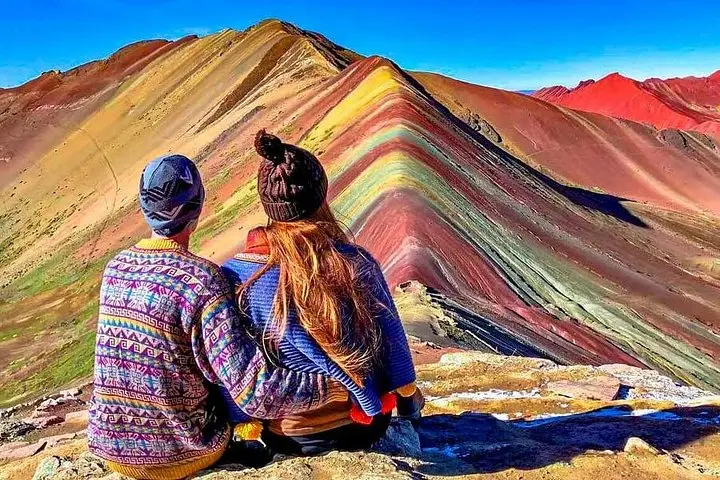
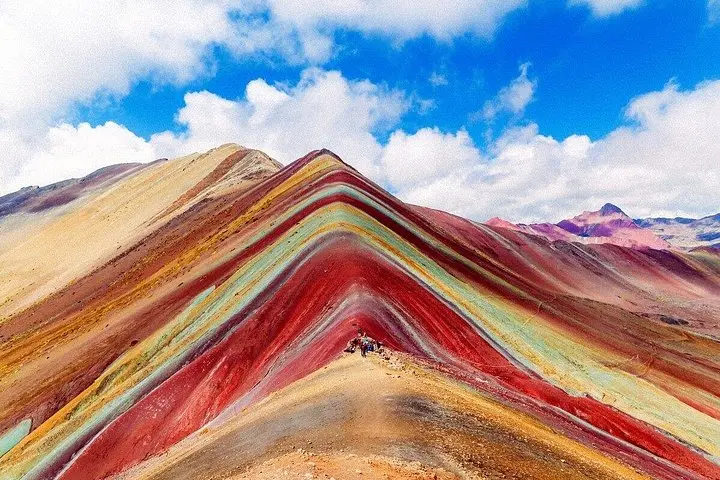
Dawn on the Altiplano arrives cold and clear; bus headlights cut across fields as the Andes yawn into view. By midmorning you step out at the high trailhead, thin air tasting sharp, and begin the steady pull toward Vinicunca — the Mountain of Colors. The slope unfolds in switchbacks, puna grass brushing knees, and every hundred steps the stratified bands of iron, copper and clay assert themselves like a painted cliff daring you to keep climbing.
Verified experiences and guided adventures in the surrounding area.
Operated by Milenario Tours · Cusco, Cusco Region
Dawn on the Altiplano arrives cold and clear; bus headlights cut across fields as the Andes yawn into view. By midmorning you step out at the high trailhead, thin air tasting sharp, and begin the steady pull toward Vinicunca — the Mountain of Colors. The slope unfolds in switchbacks, puna grass brushing knees, and every hundred steps the stratified bands of iron, copper and clay assert themselves like a painted cliff daring you to keep climbing.
This ridge is young in tourism but ancient in geology: mineral-rich sediments uplifted by the collision of the Nazca and South American plates, then sculpted by freeze-thaw cycles and glacial retreat. Local Quechua communities have grazed alpacas here for generations; guides will often share stories of seasonal herding and the sacred relationship many locals hold with the mountains.
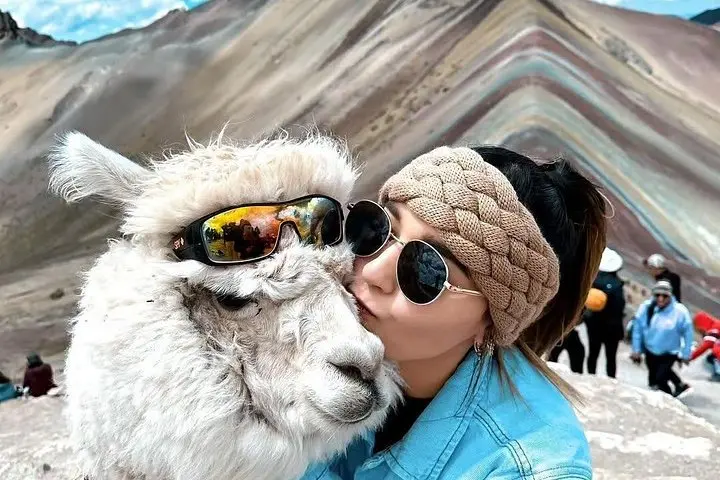
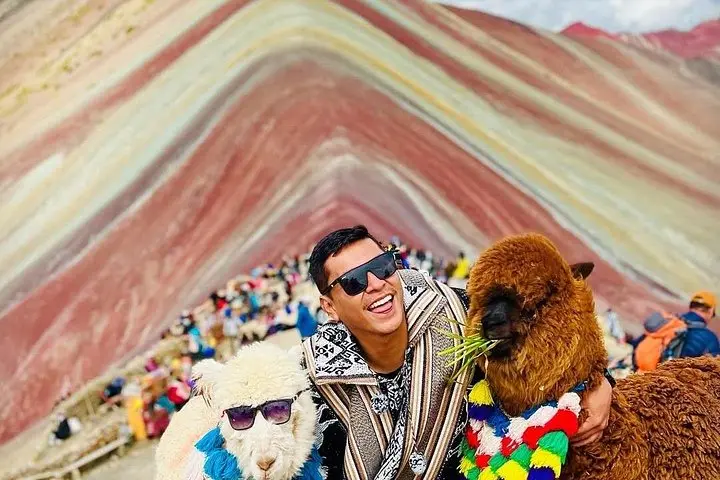
Expect a high-altitude day hike of roughly 6 km round trip with ~400–500 m of elevation gain, topping out near 5,000–5,200 m (16,400–17,060 ft). Terrain is compacted dirt with occasional scree; weather shifts quickly—sun, wind and sudden snow are all possible. Photographic opportunities are immediate: colored bands, distant summits like Ausangate, and herds of llamas that punctuate the plains.
Practical note: acclimatize in Cusco for 48+ hours, bring layered windproof clothing, sun protection, and water. Many tours include breakfast, a bilingual guide, and lunch back in the valley. Move deliberately, respect local rules, and leave no trace: the mountain’s colors hold their power only if visitors tread lightly.
The hike is roughly 6 km round trip with 400–500 m elevation gain; trekking time is usually 1.5–3 hours round trip depending on pace and acclimatization.
Yes—Vinicunca sits near 5,000 m. Spend 48+ hours in Cusco (3,400 m) and avoid heavy exertion beforehand to lower altitude sickness risk.
Local riders sometimes offer horse or mule assistance for steeper sections, but availability varies; horses reduce exertion but do not eliminate altitude effects.
Typical inclusions are hotel pickup, breakfast, bilingual guide, entrance fees, and a buffet lunch; confirm specifics with your operator before booking.
Milenario Tours operates guided outdoor trips and adventures with an emphasis on safety, stewardship, and memorable experiences.
Dawn on the Altiplano arrives cold and clear; bus headlights cut across fields as the Andes yawn into view. By midmorning you step out at the high trailhead, thin air tasting sharp, and begin the steady pull toward Vinicunca — the Mountain of Colors. The slope unfolds in switchbacks, puna grass brushing knees, and every hundred steps the stratified bands of iron, copper and clay assert themselves like a painted cliff daring you to keep climbing.
Dawn on the Altiplano arrives cold and clear; bus headlights cut across fields as the Andes yawn into view. By midmorning you step out at the high trailhead, thin air tasting sharp, and begin the steady pull toward Vinicunca — the Mountain of Colors. The slope unfolds in switchbacks, puna grass brushing knees, and every hundred steps the stratified bands of iron, copper and clay assert themselves like a painted cliff daring you to keep climbing.
This ridge is young in tourism but ancient in geology: mineral-rich sediments uplifted by the collision of the Nazca and South American plates, then sculpted by freeze-thaw cycles and glacial retreat. Local Quechua communities have grazed alpacas here for generations; guides will often share stories of seasonal herding and the sacred relationship many locals hold with the mountains.
Expect a high-altitude day hike of roughly 6 km round trip with ~400–500 m of elevation gain, topping out near 5,000–5,200 m (16,400–17,060 ft). Terrain is compacted dirt with occasional scree; weather shifts quickly—sun, wind and sudden snow are all possible. Photographic opportunities are immediate: colored bands, distant summits like Ausangate, and herds of llamas that punctuate the plains.
Practical note: acclimatize in Cusco for 48+ hours, bring layered windproof clothing, sun protection, and water. Many tours include breakfast, a bilingual guide, and lunch back in the valley. Move deliberately, respect local rules, and leave no trace: the mountain’s colors hold their power only if visitors tread lightly.