THE ADVENTURE COLLECTIVE® · Independent discovery and booking for outdoor travel

Spend a long day traveling north from Colombo to Anuradhapura to walk among monumental stupas, the Jaya Sri Maha Bodhi, and monastery ruins. This guided day trip pairs cultural context with practical logistics so you can maximize time at the site.
Spend a long day traveling north from Colombo to Anuradhapura to walk among monumental stupas, the Jaya Sri Maha Bodhi, and monastery ruins. This guided day trip pairs cultural context with practical logistics so you can maximize time at the site.
You arrive before the midday heat, the road thinning into scrub and rice fields until low, whitewashed stupas punctuate the plain. The air smells of sun-baked earth and frangipani; ancient bricks sit under the shadow of towering jacaranda trees as groups of pilgrims move quietly toward the Jaya Sri Maha Bodhi.
Verified experiences and guided adventures in the surrounding area.
Operated by Asni Tours & Travel (M) Sdn Bhd · Anuradhapura, North Central Province
You arrive before the midday heat, the road thinning into scrub and rice fields until low, whitewashed stupas punctuate the plain. The air smells of sun-baked earth and frangipani; ancient bricks sit under the shadow of towering jacaranda trees as groups of pilgrims move quietly toward the Jaya Sri Maha Bodhi.
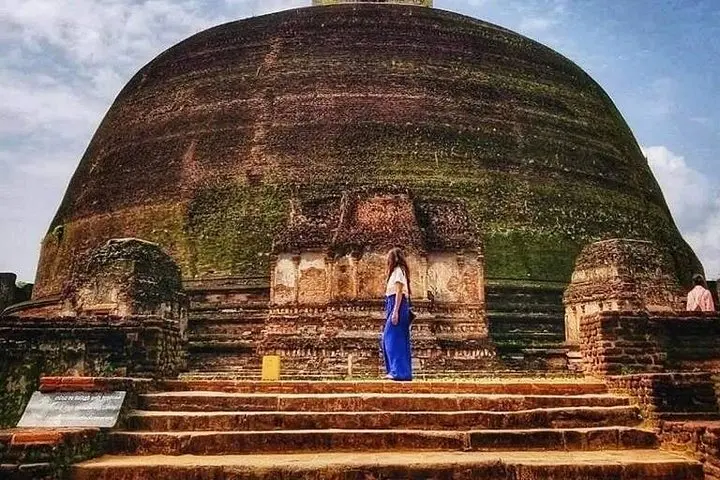
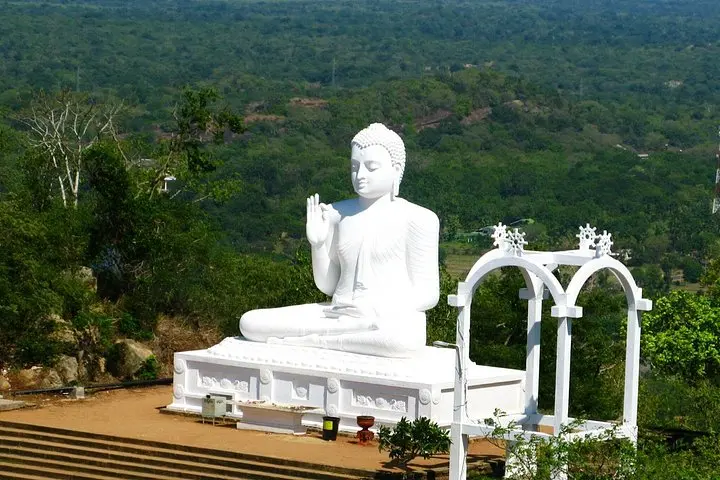
Anuradhapura was Sri Lanka's first great capital, a center of Theravada Buddhism from about the 3rd century BCE. The complex spreads across a flat, fossil-rich plain where laterite and Miocene sediments supported early hydraulic constructions—large tanks and irrigation channels that still define the landscape. Cultural continuity is visible: dagobas (stupas) rising like geometric hills, monastic courtyards, and the sacred fig planted from a cutting of the Bodhi tree under which the Buddha attained enlightenment.
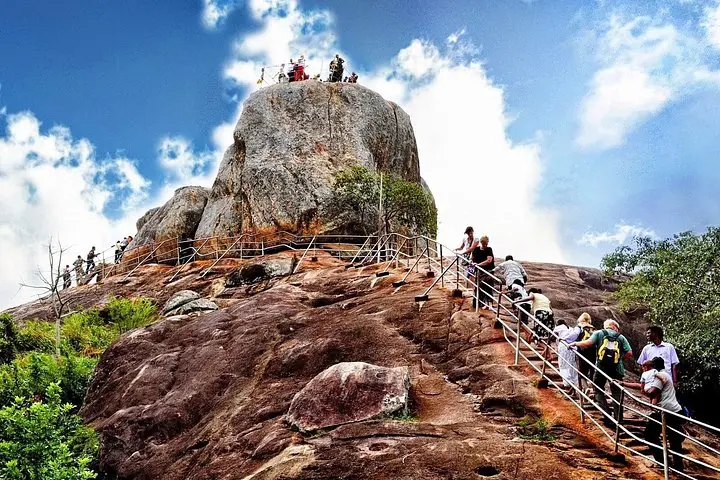
A guided day tour from Colombo condenses this material and spiritual history into timed stops: Mihintale’s stair-climb and shrine, the serene Mahamewna Gardens housing the Jaya Sri Maha Bodhi, the brick platforms of Thuparamaya, and the twin baths at Kuttam Pokuna. Expect uneven paths, shaded groves, and pockets of intense sun.
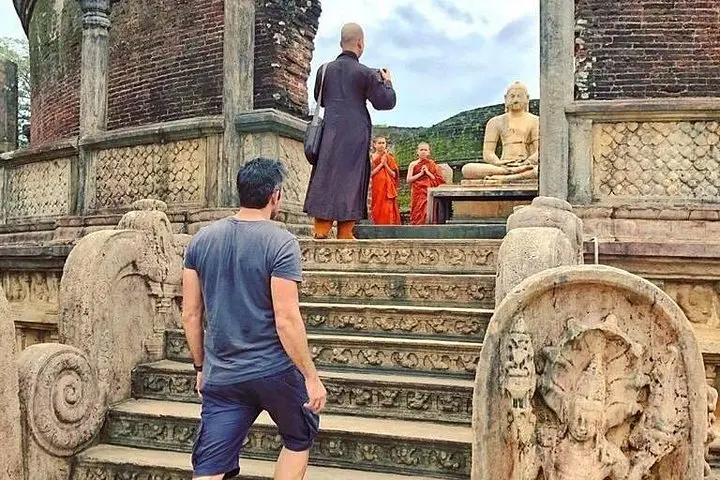
Practical notes: start early to avoid heat, wear a hat and breathable clothing, and bring an insulating layer for air‑conditioned travel. Respect temple etiquette—remove shoes and hats where required—and carry small change for local offerings and restroom facilities. Hydrate often; bottled water is usually provided on day tours, but having your own refillable bottle helps the environment. Time on site is limited on a single-day itinerary, so prioritize the Bodhi tree and a walk through the main dagoba cluster if you must choose.
The drive is roughly 200–220 km and typically takes 4.5–6 hours each way depending on traffic and route.
Day tours vary; check the booking inclusions—many cover transportation but not archaeological site entrance fees, which are paid locally.
Yes—walking is moderate and largely flat; however, there are stair climbs (Mihintale) and some long time-on-foot so consider mobility and heat tolerance.
Basic cafeterias and vendors operate near major sites, but offerings are limited; bringing snacks is advisable, and bottled water is often provided on tour vehicles.
Asni Tours & Travel (M) Sdn Bhd operates guided outdoor trips and adventures with an emphasis on safety, stewardship, and memorable experiences.
You arrive before the midday heat, the road thinning into scrub and rice fields until low, whitewashed stupas punctuate the plain. The air smells of sun-baked earth and frangipani; ancient bricks sit under the shadow of towering jacaranda trees as groups of pilgrims move quietly toward the Jaya Sri Maha Bodhi.
You arrive before the midday heat, the road thinning into scrub and rice fields until low, whitewashed stupas punctuate the plain. The air smells of sun-baked earth and frangipani; ancient bricks sit under the shadow of towering jacaranda trees as groups of pilgrims move quietly toward the Jaya Sri Maha Bodhi.
Anuradhapura was Sri Lanka's first great capital, a center of Theravada Buddhism from about the 3rd century BCE. The complex spreads across a flat, fossil-rich plain where laterite and Miocene sediments supported early hydraulic constructions—large tanks and irrigation channels that still define the landscape. Cultural continuity is visible: dagobas (stupas) rising like geometric hills, monastic courtyards, and the sacred fig planted from a cutting of the Bodhi tree under which the Buddha attained enlightenment.
A guided day tour from Colombo condenses this material and spiritual history into timed stops: Mihintale’s stair-climb and shrine, the serene Mahamewna Gardens housing the Jaya Sri Maha Bodhi, the brick platforms of Thuparamaya, and the twin baths at Kuttam Pokuna. Expect uneven paths, shaded groves, and pockets of intense sun.
Practical notes: start early to avoid heat, wear a hat and breathable clothing, and bring an insulating layer for air‑conditioned travel. Respect temple etiquette—remove shoes and hats where required—and carry small change for local offerings and restroom facilities. Hydrate often; bottled water is usually provided on day tours, but having your own refillable bottle helps the environment. Time on site is limited on a single-day itinerary, so prioritize the Bodhi tree and a walk through the main dagoba cluster if you must choose.