THE ADVENTURE COLLECTIVE® · Independent discovery and booking for outdoor travel

A full-day drive from Sarajevo that pairs Travnik’s Ottoman fortress with Jajce’s dramatic central waterfall and storybook Pliva watermills. Expect clear karst springs, historic layers from medieval to Austro-Hungarian, and easy walks between riverside viewpoints.
A full-day drive from Sarajevo that pairs Travnik’s Ottoman fortress with Jajce’s dramatic central waterfall and storybook Pliva watermills. Expect clear karst springs, historic layers from medieval to Austro-Hungarian, and easy walks between riverside viewpoints.
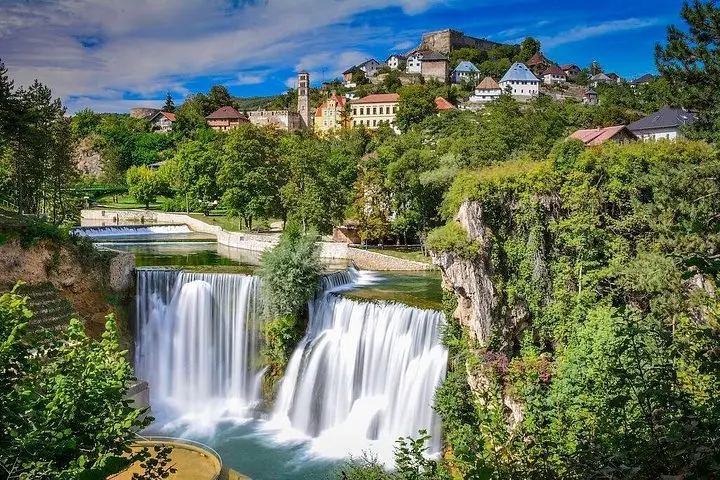
A minibus eases out of Sarajevo and the landscape opens: limestone ridges, scattered villages, and the cool hush of river valleys. By midday you’re standing above Jajce’s Pliva waterfall—17 meters of water folding into the town center—while the river seems to dare you to follow its course downstream.
Verified experiences and guided adventures in the surrounding area.
Operated by Adventure in Bosnia | Tour Agency | Tours and Excursions · Jajce, Central Bosnia Canton
A minibus eases out of Sarajevo and the landscape opens: limestone ridges, scattered villages, and the cool hush of river valleys. By midday you’re standing above Jajce’s Pliva waterfall—17 meters of water folding into the town center—while the river seems to dare you to follow its course downstream.
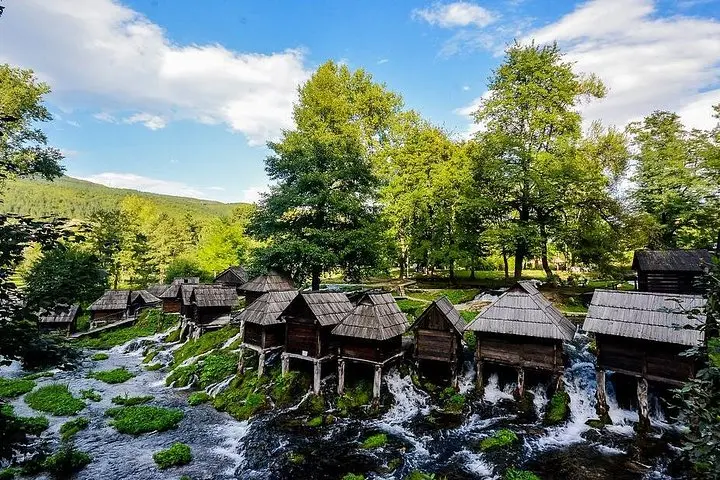
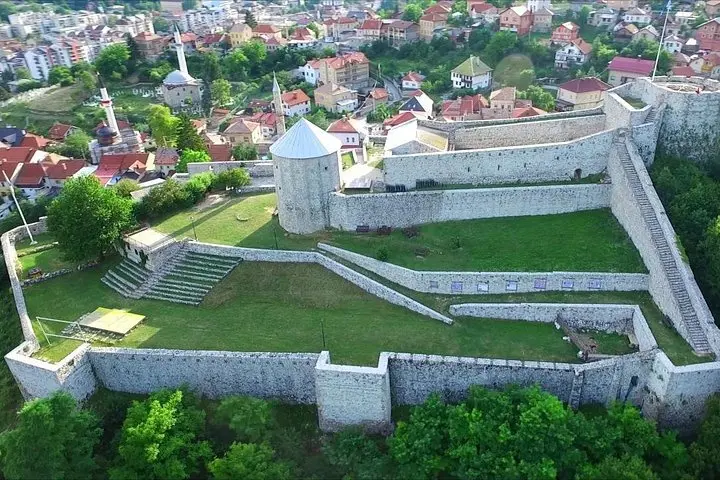
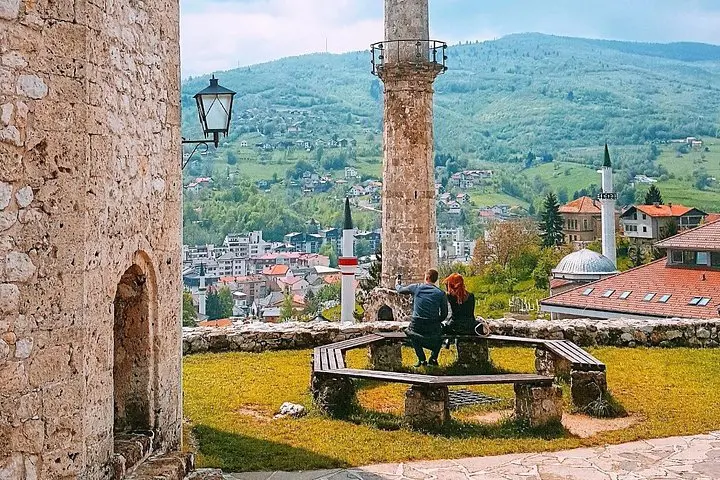
This route stitches together eras. Travnik’s fortress and narrow streets recall its role as an Ottoman provincial capital and a residence for Bosnian viziers from 1699. Jajce carries older marks: a medieval fortified capital, a Romanesque church reworked in Gothic lines, and Ottoman-era mosques that reflect shifting rule. Geology is on display in the clear springs and plunge pools carved from karst limestone; the Pliva Lakes and clustered wooden watermills date largely to the Austro-Hungarian period and show traditional small-scale engineering.
Local culture is immediate—riverside cafés serving Bosnian coffee, trout grilled from nearby lakes, and mill huts that feel like working folklore. The mills are fragile; their value depends on careful visitors.
Practical guide: expect a full 8–10 hour day with short walks on uneven stone, stairs inside fortifications, and limited long-distance hiking. Comfortable walking shoes, a layered waterproof shell, and a refillable bottle are essential. Morning light favors Travnik; late afternoon casts the waterfall in warmer tones. Carry local currency (BAM) for small cafés and modest admissions, and allow time to move slowly through Jajce’s central streets—this tour rewards pauses as much as viewpoints.
Typical duration is 8–10 hours with an early morning departure from Sarajevo (around 8:00); exact times vary by operator.
The tour is family-friendly but includes uneven surfaces and stairs; travelers with limited mobility should check specific stop accessibility with the operator.
The tour usually includes bottled water but not lunch; there’s a lakeside lunch break where you can buy local dishes like grilled trout.
The tour provides transport and a guide; some site admissions may not be included—confirm details when booking.
Adventure in Bosnia | Tour Agency | Tours and Excursions operates guided outdoor trips and adventures with an emphasis on safety, stewardship, and memorable experiences.
A minibus eases out of Sarajevo and the landscape opens: limestone ridges, scattered villages, and the cool hush of river valleys. By midday you’re standing above Jajce’s Pliva waterfall—17 meters of water folding into the town center—while the river seems to dare you to follow its course downstream.
A minibus eases out of Sarajevo and the landscape opens: limestone ridges, scattered villages, and the cool hush of river valleys. By midday you’re standing above Jajce’s Pliva waterfall—17 meters of water folding into the town center—while the river seems to dare you to follow its course downstream.
This route stitches together eras. Travnik’s fortress and narrow streets recall its role as an Ottoman provincial capital and a residence for Bosnian viziers from 1699. Jajce carries older marks: a medieval fortified capital, a Romanesque church reworked in Gothic lines, and Ottoman-era mosques that reflect shifting rule. Geology is on display in the clear springs and plunge pools carved from karst limestone; the Pliva Lakes and clustered wooden watermills date largely to the Austro-Hungarian period and show traditional small-scale engineering.
Local culture is immediate—riverside cafés serving Bosnian coffee, trout grilled from nearby lakes, and mill huts that feel like working folklore. The mills are fragile; their value depends on careful visitors.
Practical guide: expect a full 8–10 hour day with short walks on uneven stone, stairs inside fortifications, and limited long-distance hiking. Comfortable walking shoes, a layered waterproof shell, and a refillable bottle are essential. Morning light favors Travnik; late afternoon casts the waterfall in warmer tones. Carry local currency (BAM) for small cafés and modest admissions, and allow time to move slowly through Jajce’s central streets—this tour rewards pauses as much as viewpoints.