THE ADVENTURE COLLECTIVE® · Independent discovery and booking for outdoor travel

A compact, full-day outing from Hanoi that pairs the 10th-century ruins of Hoa Lư with a UNESCO-listed boat trip through Trang An’s limestone caves. Expect easy cycling, close-up karst cave passages and a hands-on look at rural life.
A compact, full-day outing from Hanoi that pairs the 10th-century ruins of Hoa Lư with a UNESCO-listed boat trip through Trang An’s limestone caves. Expect easy cycling, close-up karst cave passages and a hands-on look at rural life.
You step off the limousine bus into a low, humid light where limestone towers rise from flat rice plains and a narrow river threads between them. A wooden skiff waits; the boatman guides you into a green tunnel of water and shade, and the karst caves close behind like pages turning.
Verified experiences and guided adventures in the surrounding area.
Operated by Authentic HALONG · Ninh Binh, Ninh Binh Province
You step off the limousine bus into a low, humid light where limestone towers rise from flat rice plains and a narrow river threads between them. A wooden skiff waits; the boatman guides you into a green tunnel of water and shade, and the karst caves close behind like pages turning.
This route pairs two different histories: Hoa Lư, the 10th–11th century capital where stone temples mark the seats of the Dinh and Le dynasties, and Trang An, a UNESCO-designated landscape of flooded caves cut into karst over millions of years. The geology is stark—towering pinnacles, sinkholes and submerged passages sculpted in soluble limestone—while the human story is immediate: farmers tending rice on raised ridges, families drying chilies on patios, and small village temples that still host local rites.
Culturally the area is quiet and hands-on. Boat trips are performed by experienced local rowers; cycling routes are flat and unhurried, designed for observing daily life more than speed. Expect close-up river caves, low cave mouths where your boat must duck, and long stretches of rice paddies broken by single-track lanes.
Practical guide: it’s a full day (10–12 hours) from Hanoi with hotel pickup. Wear quick-dry clothes, bring sun protection and plenty of water, and pack a light rain layer in the wet season. Modest dress is required for temple visits; comfortable walking shoes are useful for short climbs. If you’re sensitive to low ceilings or confined spaces, consider staying on the riverbank—some cave passages are snug. Timing your visit for early morning reduces heat and crowds and gives the rock faces a soft, photographic light.
Some cave passages are low and require the boat to pass through narrow tunnels; if you are highly claustrophobic, stay near the ends of the route or skip cave segments.
Bring a copy or a photo of your passport for booking verification, but keep the original secure at your hotel in Hanoi unless requested by authorities.
Cycling is part of the itinerary and generally flat and easy—appropriate for casual riders; electric bikes may be unavailable, so be prepared for manual pedaling.
The tour includes a buffet lunch featuring local Vietnamese dishes; vegetarian options are typically available if requested in advance.
Authentic HALONG operates guided outdoor trips and adventures with an emphasis on safety, stewardship, and memorable experiences.


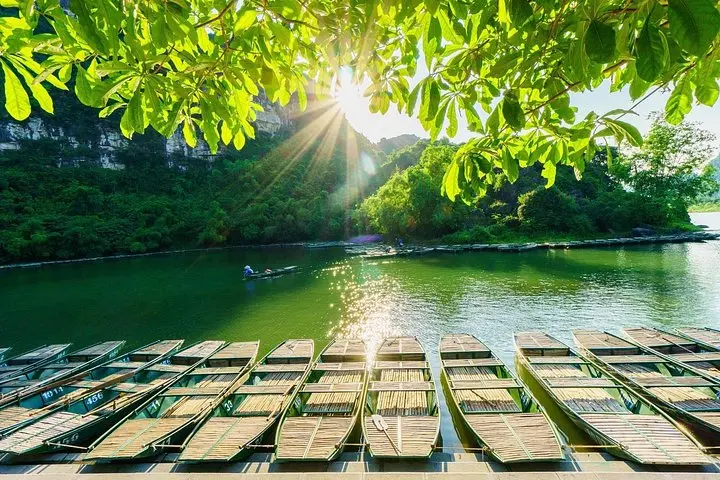

You step off the limousine bus into a low, humid light where limestone towers rise from flat rice plains and a narrow river threads between them. A wooden skiff waits; the boatman guides you into a green tunnel of water and shade, and the karst caves close behind like pages turning.
You step off the limousine bus into a low, humid light where limestone towers rise from flat rice plains and a narrow river threads between them. A wooden skiff waits; the boatman guides you into a green tunnel of water and shade, and the karst caves close behind like pages turning.
This route pairs two different histories: Hoa Lư, the 10th–11th century capital where stone temples mark the seats of the Dinh and Le dynasties, and Trang An, a UNESCO-designated landscape of flooded caves cut into karst over millions of years. The geology is stark—towering pinnacles, sinkholes and submerged passages sculpted in soluble limestone—while the human story is immediate: farmers tending rice on raised ridges, families drying chilies on patios, and small village temples that still host local rites.
Culturally the area is quiet and hands-on. Boat trips are performed by experienced local rowers; cycling routes are flat and unhurried, designed for observing daily life more than speed. Expect close-up river caves, low cave mouths where your boat must duck, and long stretches of rice paddies broken by single-track lanes.
Practical guide: it’s a full day (10–12 hours) from Hanoi with hotel pickup. Wear quick-dry clothes, bring sun protection and plenty of water, and pack a light rain layer in the wet season. Modest dress is required for temple visits; comfortable walking shoes are useful for short climbs. If you’re sensitive to low ceilings or confined spaces, consider staying on the riverbank—some cave passages are snug. Timing your visit for early morning reduces heat and crowds and gives the rock faces a soft, photographic light.