THE ADVENTURE COLLECTIVE® · Independent discovery and booking for outdoor travel

A 4‑hour easy trek through the shaded third section of Vikos Gorge, starting from Papigo or Aristi and finishing at the 1853 Kleidonia stone bridge. Expect limestone cliffs, clear Voidomatis waters and historic stone churches along the way.
A 4‑hour easy trek through the shaded third section of Vikos Gorge, starting from Papigo or Aristi and finishing at the 1853 Kleidonia stone bridge. Expect limestone cliffs, clear Voidomatis waters and historic stone churches along the way.
The trail opens with the river's voice — Voidomatis pushing clear, cold water through a narrow cleft of limestone as you step off the stone bridge at Papigko.
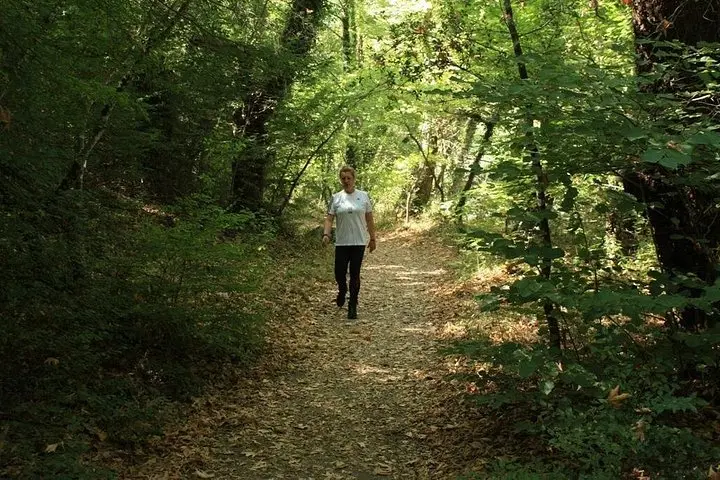
Sunlight filters through beech and fir above you; the path slopes gently into the third and more shaded section of Vikos Gorge, where the canyon walls pull close and the air smells of wet rock.
Verified experiences and guided adventures in the surrounding area.
Operated by Epirus Traveller · Papigo, Epirus
The trail opens with the river's voice — Voidomatis pushing clear, cold water through a narrow cleft of limestone as you step off the stone bridge at Papigko.
Sunlight filters through beech and fir above you; the path slopes gently into the third and more shaded section of Vikos Gorge, where the canyon walls pull close and the air smells of wet rock.
Vikos Gorge sits inside the Vikos–Aoos National Park and is a UNESCO-recognized geopark, carved from Jurassic limestone over millions of years. Local villages like Aristi and Papigo grew on a network of stone bridges and mule tracks; many of the small churches and the cliff‑perched monastery of Spiliotissa date back centuries and speak to a subsistence life tied to the gorge and river.
Geology reveals itself in vertical strata and talus fields; the Voidomatis springs feed a lively stream that once powered local mills. Culture here is pragmatic — shepherding, stonework and recipes that favor lamb, local greens and river trout — and the afternoon meal beside the river is part of that rhythm.
Practical guidance: this is an easy, mostly shaded 4‑hour trek suitable for most fitness levels. Expect narrow rocky steps, occasional loose scree and single‑arch stone bridges. Wear grippy hiking shoes, bring layers, a waterproof, sun protection and 1–2 liters of water. Morning departures avoid heat and offer better light through the gorge; late spring brings peak wildflowers while autumn colors add contrast to the gray limestone.
Respect trail markings, keep to established paths to protect fragile karst soil, and plan for a relaxed riverside meal at the trail’s end near Kleidonia bridge.
The route is rated easy and suitable for most fitness levels; paths are mostly well-trodden but include short rocky or uneven sections.
Typical starts are at Aristi or Papigko Bridge and the route finishes near the single‑arched Kleidonia stone bridge.
A guide isn’t required but recommended if you want local history, geology interpretation, and navigation through lesser‑marked sections.
Bottled water is usually included and many operators provide a traditional riverside meal at the end; bring snacks for the trail.
Epirus Traveller operates guided outdoor trips and adventures with an emphasis on safety, stewardship, and memorable experiences.
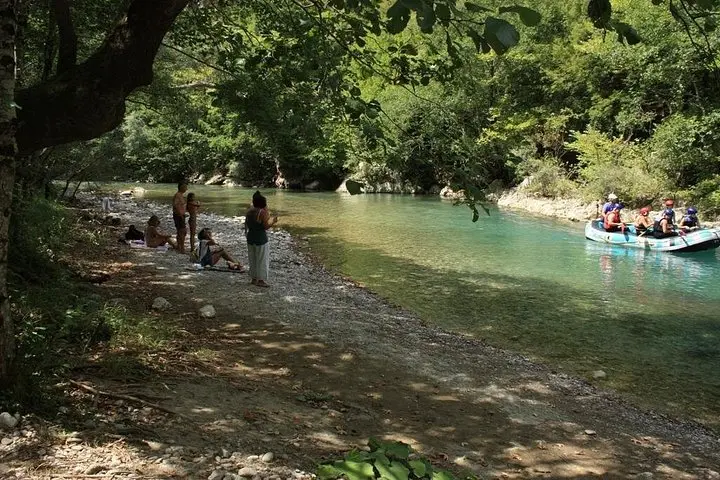
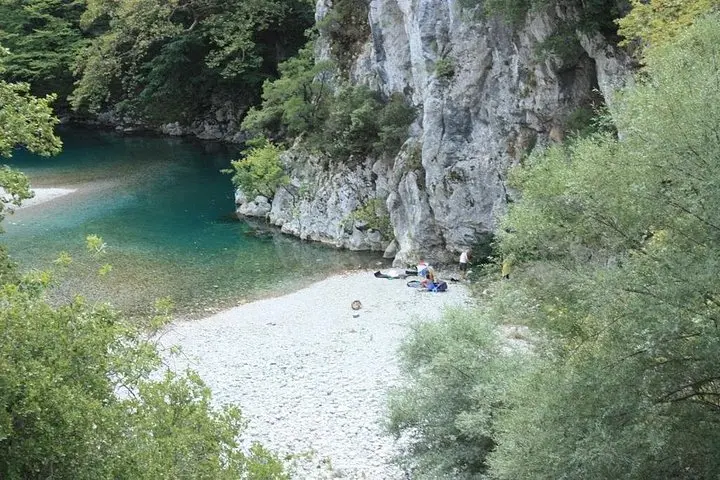
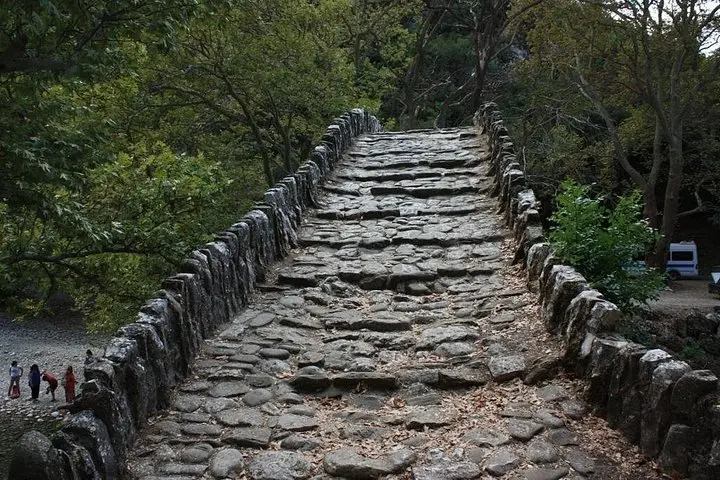
The trail opens with the river's voice — Voidomatis pushing clear, cold water through a narrow cleft of limestone as you step off the stone bridge at Papigko.
Sunlight filters through beech and fir above you; the path slopes gently into the third and more shaded section of Vikos Gorge, where the canyon walls pull close and the air smells of wet rock.
Vikos Gorge sits inside the Vikos–Aoos National Park and is a UNESCO-recognized geopark, carved from Jurassic limestone over millions of years. Local villages like Aristi and Papigo grew on a network of stone bridges and mule tracks; many of the small churches and the cliff‑perched monastery of Spiliotissa date back centuries and speak to a subsistence life tied to the gorge and river.
Geology reveals itself in vertical strata and talus fields; the Voidomatis springs feed a lively stream that once powered local mills. Culture here is pragmatic — shepherding, stonework and recipes that favor lamb, local greens and river trout — and the afternoon meal beside the river is part of that rhythm.
Practical guidance: this is an easy, mostly shaded 4‑hour trek suitable for most fitness levels. Expect narrow rocky steps, occasional loose scree and single‑arch stone bridges. Wear grippy hiking shoes, bring layers, a waterproof, sun protection and 1–2 liters of water. Morning departures avoid heat and offer better light through the gorge; late spring brings peak wildflowers while autumn colors add contrast to the gray limestone.
Respect trail markings, keep to established paths to protect fragile karst soil, and plan for a relaxed riverside meal at the trail’s end near Kleidonia bridge.