THE ADVENTURE COLLECTIVE® · Independent discovery and booking for outdoor travel

A full-day trip from Marrakech to the High Atlas that pairs a steady village walk to Aremd with panoramic views of Jbel Toubkal and an intimate Berber lunch. Ideal for active travelers who want mountain scenery and cultural insight without technical climbing.
A full-day trip from Marrakech to the High Atlas that pairs a steady village walk to Aremd with panoramic views of Jbel Toubkal and an intimate Berber lunch. Ideal for active travelers who want mountain scenery and cultural insight without technical climbing.
Morning light peels across the High Atlas as the minivan leaves Marrakech; the city’s heat gives way to a cooler, stone-scented air as the road climbs toward Imlil. By midmorning you’re on a trail that threads through terraced fields and low stone houses, the path stepping steadily upward toward Aremd (≈1,900 m). The mountain calls with a quiet insistence: gullies that once carried snowmelt now braid the valley, and Jbel Toubkal—North Africa’s highest peak—hovers on the skyline, often capped in winter.
Verified experiences and guided adventures in the surrounding area.
Operated by Toubkal Guide · Imlil, Marrakesh-Safi
Morning light peels across the High Atlas as the minivan leaves Marrakech; the city’s heat gives way to a cooler, stone-scented air as the road climbs toward Imlil. By midmorning you’re on a trail that threads through terraced fields and low stone houses, the path stepping steadily upward toward Aremd (≈1,900 m). The mountain calls with a quiet insistence: gullies that once carried snowmelt now braid the valley, and Jbel Toubkal—North Africa’s highest peak—hovers on the skyline, often capped in winter.
The High Atlas range is geologically young, formed by tectonic uplift that pushed ancient sea beds skyward; you’ll notice folded sediments and metamorphic outcrops along the route. Culturally, this is Amazigh (Berber) country: villages here preserve a centuries-old agrarian rhythm, communal guesthouses and argan cooperatives linking fieldwork to trade. A local guesthouse lunch is both culinary and social immersion—slow bread, stews, tea—and a chance to study valley life at close range.
Practically, the walk from Imlil to Aremd is moderate and well-trodden: expect mule tracks, stone steps and occasional steep switchbacks. Elevation gain from Imlil to Aremd is modest (roughly 150–200 m) and the outbound leg is about 1 hour of steady hiking; the full-day tour runs roughly eight hours including transfers. Footwear with grip, layered clothing, sun protection and 1–2 liters of water are sensible. Morning departures avoid the midday heat and maximize views; in winter bring insulated layers for snow at higher elevations.
This day trip mixes accessible walking, engraved mountain geology and close-up cultural exchange—ideal for travelers who want a grounded mountain experience without technical climbing.
The trail to Aremd is roughly a one-hour steady walk from Imlil with an elevation gain of about 150–200 meters on well-marked mule tracks.
Yes—this is classified as easy and designed for most fitness levels; there are no technical sections or climbing skills required.
Yes—round-trip transfers from accommodations in Marrakech are included, typically in an air-conditioned vehicle.
Lunch is a traditional Berber meal at a local guesthouse featuring stews, bread and mint tea; vegetarian options are usually available with advance notice.
Toubkal Guide operates guided outdoor trips and adventures with an emphasis on safety, stewardship, and memorable experiences.
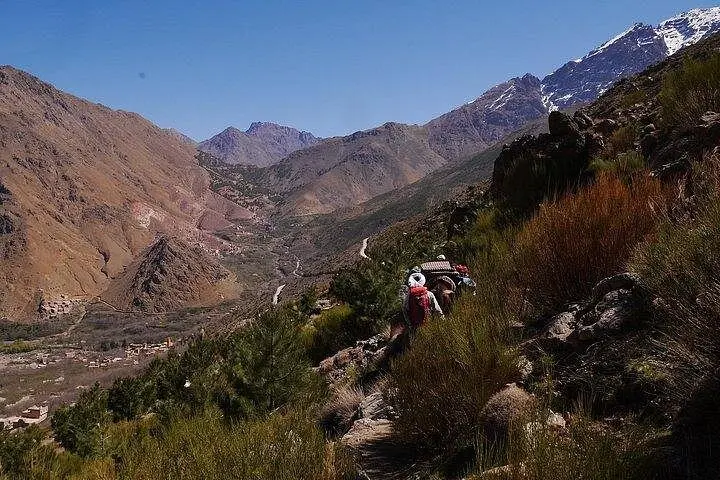
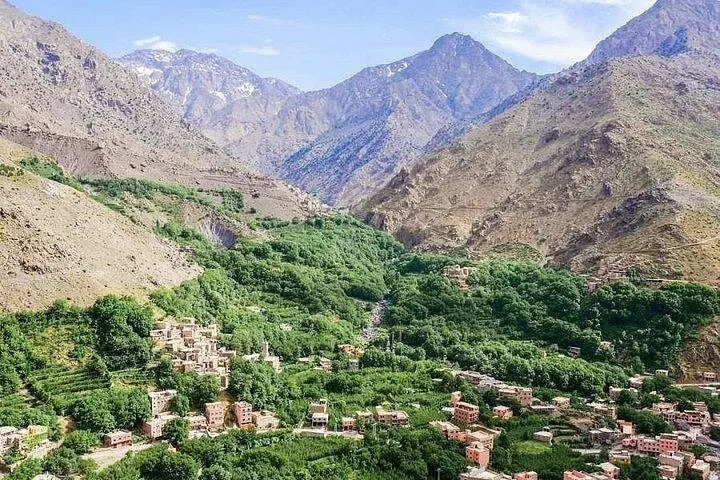
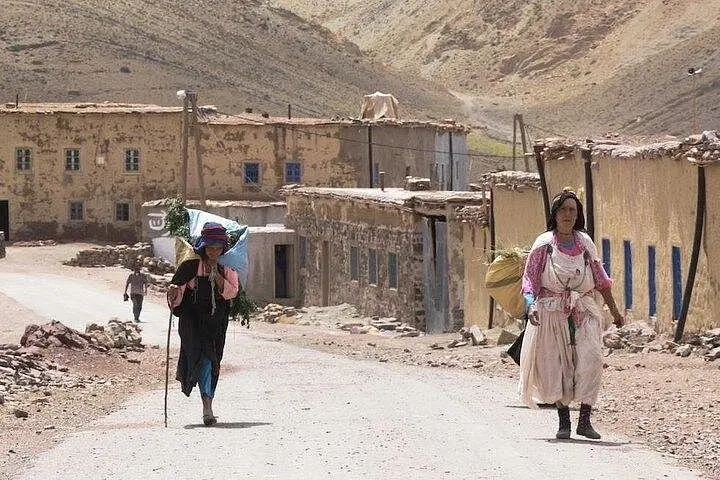
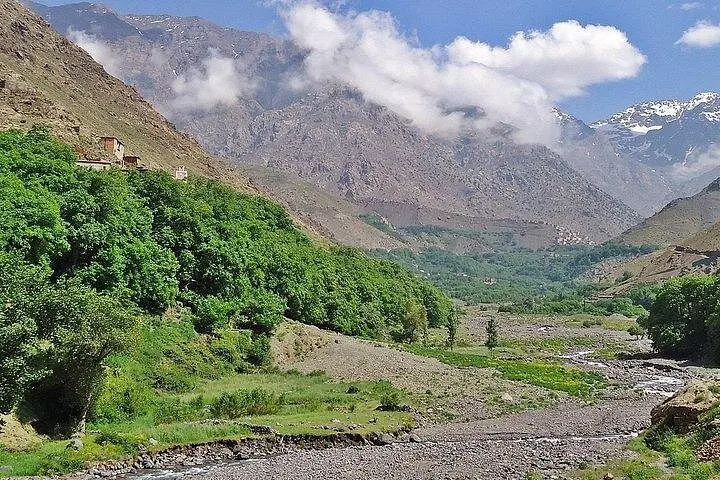
Morning light peels across the High Atlas as the minivan leaves Marrakech; the city’s heat gives way to a cooler, stone-scented air as the road climbs toward Imlil. By midmorning you’re on a trail that threads through terraced fields and low stone houses, the path stepping steadily upward toward Aremd (≈1,900 m). The mountain calls with a quiet insistence: gullies that once carried snowmelt now braid the valley, and Jbel Toubkal—North Africa’s highest peak—hovers on the skyline, often capped in winter.
Morning light peels across the High Atlas as the minivan leaves Marrakech; the city’s heat gives way to a cooler, stone-scented air as the road climbs toward Imlil. By midmorning you’re on a trail that threads through terraced fields and low stone houses, the path stepping steadily upward toward Aremd (≈1,900 m). The mountain calls with a quiet insistence: gullies that once carried snowmelt now braid the valley, and Jbel Toubkal—North Africa’s highest peak—hovers on the skyline, often capped in winter.
The High Atlas range is geologically young, formed by tectonic uplift that pushed ancient sea beds skyward; you’ll notice folded sediments and metamorphic outcrops along the route. Culturally, this is Amazigh (Berber) country: villages here preserve a centuries-old agrarian rhythm, communal guesthouses and argan cooperatives linking fieldwork to trade. A local guesthouse lunch is both culinary and social immersion—slow bread, stews, tea—and a chance to study valley life at close range.
Practically, the walk from Imlil to Aremd is moderate and well-trodden: expect mule tracks, stone steps and occasional steep switchbacks. Elevation gain from Imlil to Aremd is modest (roughly 150–200 m) and the outbound leg is about 1 hour of steady hiking; the full-day tour runs roughly eight hours including transfers. Footwear with grip, layered clothing, sun protection and 1–2 liters of water are sensible. Morning departures avoid the midday heat and maximize views; in winter bring insulated layers for snow at higher elevations.
This day trip mixes accessible walking, engraved mountain geology and close-up cultural exchange—ideal for travelers who want a grounded mountain experience without technical climbing.