
Day Trip from Baku: Gobustan Petroglyphs, Mud Volcanoes, Ateshgah & Yanar Dag
Drive east from Baku for an eight-hour day that fast-forwards through Azerbaijan’s deep past: prehistoric rock art at Gobustan, quivering mud volcanoes, the fire temple of Ateshgah and the perpetual flame of Yanar Dag. Practical, guided and transport-ready, it’s a compact education in landscape and belief.
An Adventure In Baku.
Drive east from Baku for an eight-hour day that fast-forwards through Azerbaijan’s deep past: prehistoric rock art at Gobustan, quivering mud volcanoes, the fire temple of Ateshgah and the perpetual flame of Yanar Dag. Practical, guided and transport-ready, it’s a compact education in landscape and belief.
Read the full experience
You set out from Baku before the sun climbs fully over the Caspian, and the city slides behind you like a modern mirage. The road narrows, oil derricks rattle in the distance and the land begins to show its older stories—rocks scored with human hands, pitted moons of mud, and flames that refuse to be put out. On this full-day route, the region’s geology and faith sit side-by-side with the industrial history that made modern Azerbaijan.
You set out from Baku before the sun climbs fully over the Caspian, and the city slides behind you like a modern mirage. The road narrows, oil derricks rattle in the distance and the land begins to show its older stories—rocks scored with human hands, pitted moons of mud, and flames that refuse to be put out. On this full-day route, the region’s geology and faith sit side-by-side with the industrial history that made modern Azerbaijan.
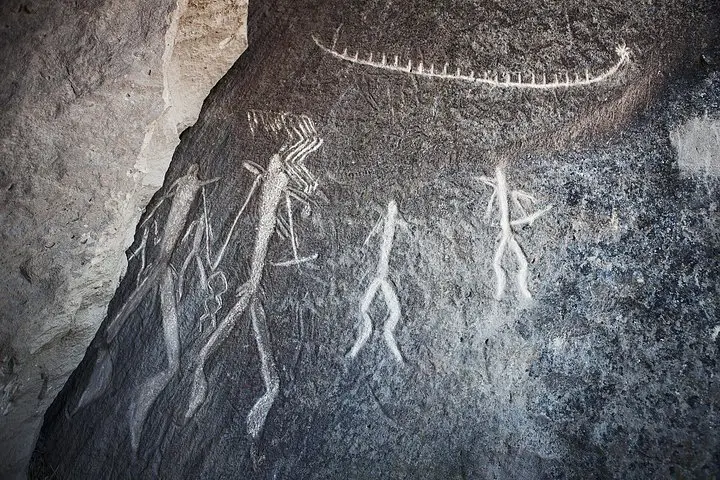
Gobustan National Park arrives as a wind-swept open gallery. The petroglyphs here, some dating back tens of thousands of years, are carved into volcanic tuff: human figures, leaping ibex, boats and hunting scenes frozen in simple, deliberate strokes. Geologically the area is a record of sea regressions and frequent seismic activity; the same subterranean pressure that buckled rocks also forces hydrocarbons toward the surface, creating Azerbaijan’s famous mud volcanoes and the ‘‘eternal’’ flames of Yanar Dag.
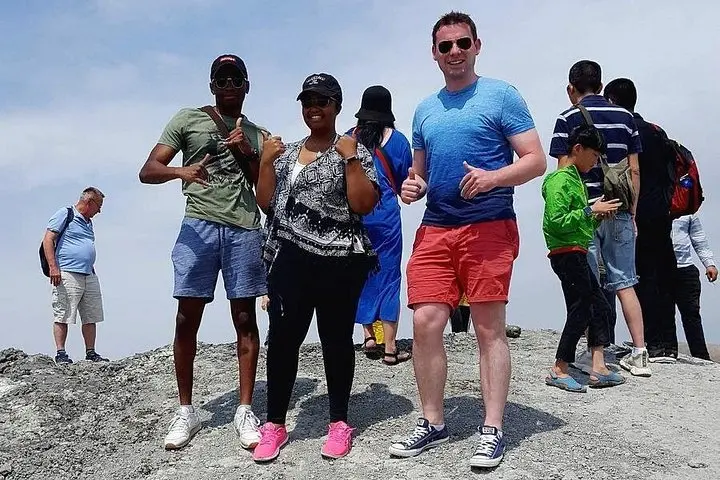
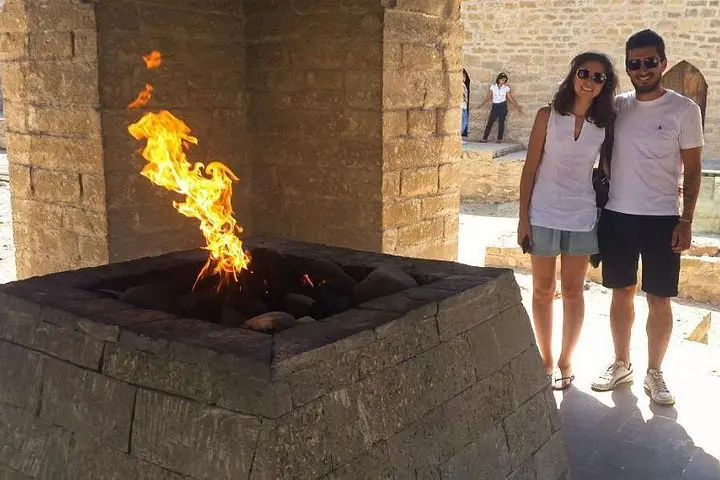
A short drive opens to bubbling domes of grey mud. These volcanoes don’t roar like magmatic cones; they sigh, spit and dare you to get closer. Locals have long attributed curative qualities to the mud—tour guides will mention this, but treat it as an experiment, not a remedy. After the raw geology comes Ateshgah, the Fire Temple: a square of stone where Zoroastrian and Hindu pilgrims once lit lamps over vents of natural gas. The whitewashed courtyard and inscribed cells speak to a once-international pilgrimage route, while the interpreter’s voice ties ritual to geology in one sentence.
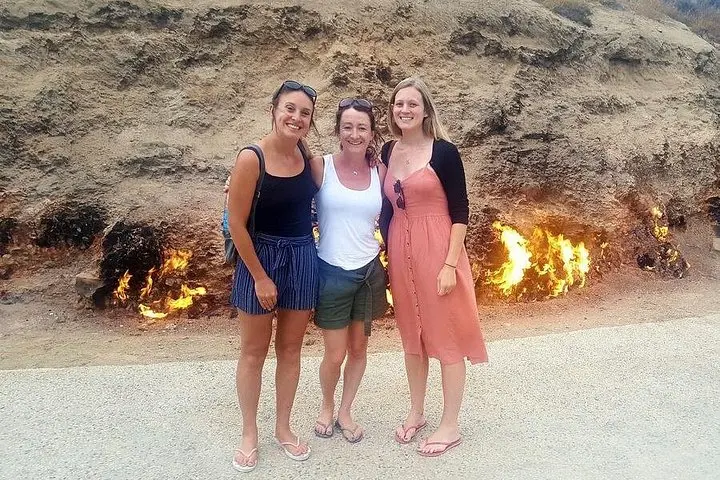
The day closes with Yanar Dag, a low escarpment where gas leaks feed a continuous flame on the hillside. At dusk the fire looks theatrical, a steady orange lip against the night. It’s small but uncanny—an elemental echo of the oil-soaked history you passed on the shore road earlier.
Practical edge: this is a full, eight-hour loop with multiple short walks across uneven ground and dusty tracks. Expect wind, sun and quick changes in temperature near the shoreline and at the park. Bring sturdy hiking shoes, sun protection, and a charged camera. The tour runs with an English-speaking guide, pickup from Sahil metro or many hotels, and typically includes bottled water, entrance fees and a local lunch.
If you want a concentrated day that stitches natural geology, prehistoric human art and living religious tradition into one coherent route, this drive out of Baku delivers—equal parts explanation and spectacle, best taken with a guide who points the way through the landscape’s long story.
Frequently asked questions
The tour runs about eight hours (480 minutes) including transport, site visits and a lunch break.
Default meeting point is the exit of Sahil metro station in Baku; hotel pickup is available if requested at booking.
Yes—entrance to Gobustan Museum, Ateshgah and Yanar Dag are included in the tour price.
Families are welcome; infant seats are available, but children should be supervised around mud volcanoes and open flames.
Some visitors try the mud, but organizers don’t provide facilities—be mindful of skin sensitivities and avoid getting mud in eyes or open wounds.
Wear comfortable walking shoes, sun protection, and quick-dry clothing; layers are useful for changing temperatures.
About This Experience
Baku Explorer operates guided outdoor trips and adventures with an emphasis on safety, stewardship, and memorable experiences.
Adventure tips
Recommended gear
- Sturdy hiking shoes: Protects feet on rocky petroglyph trails and loose mud around volcanoes.
- Sun protection (hat, sunscreen, sunglasses): Open terrain and reflective surfaces mean strong sun exposure most months.
- Light windproof jacket: Useful for cool, windy mornings or sudden gusts near the shoreline.
- Spare camera battery or power bank: Multiple sites and low-light Yanar Dag photos will drain batteries quickly.
Photos of the experience
Related adventures & guides
Read the full experience
You set out from Baku before the sun climbs fully over the Caspian, and the city slides behind you like a modern mirage. The road narrows, oil derricks rattle in the distance and the land begins to show its older stories—rocks scored with human hands, pitted moons of mud, and flames that refuse to be put out. On this full-day route, the region’s geology and faith sit side-by-side with the industrial history that made modern Azerbaijan.
You set out from Baku before the sun climbs fully over the Caspian, and the city slides behind you like a modern mirage. The road narrows, oil derricks rattle in the distance and the land begins to show its older stories—rocks scored with human hands, pitted moons of mud, and flames that refuse to be put out. On this full-day route, the region’s geology and faith sit side-by-side with the industrial history that made modern Azerbaijan.
Gobustan National Park arrives as a wind-swept open gallery. The petroglyphs here, some dating back tens of thousands of years, are carved into volcanic tuff: human figures, leaping ibex, boats and hunting scenes frozen in simple, deliberate strokes. Geologically the area is a record of sea regressions and frequent seismic activity; the same subterranean pressure that buckled rocks also forces hydrocarbons toward the surface, creating Azerbaijan’s famous mud volcanoes and the ‘‘eternal’’ flames of Yanar Dag.
A short drive opens to bubbling domes of grey mud. These volcanoes don’t roar like magmatic cones; they sigh, spit and dare you to get closer. Locals have long attributed curative qualities to the mud—tour guides will mention this, but treat it as an experiment, not a remedy. After the raw geology comes Ateshgah, the Fire Temple: a square of stone where Zoroastrian and Hindu pilgrims once lit lamps over vents of natural gas. The whitewashed courtyard and inscribed cells speak to a once-international pilgrimage route, while the interpreter’s voice ties ritual to geology in one sentence.
The day closes with Yanar Dag, a low escarpment where gas leaks feed a continuous flame on the hillside. At dusk the fire looks theatrical, a steady orange lip against the night. It’s small but uncanny—an elemental echo of the oil-soaked history you passed on the shore road earlier.
Practical edge: this is a full, eight-hour loop with multiple short walks across uneven ground and dusty tracks. Expect wind, sun and quick changes in temperature near the shoreline and at the park. Bring sturdy hiking shoes, sun protection, and a charged camera. The tour runs with an English-speaking guide, pickup from Sahil metro or many hotels, and typically includes bottled water, entrance fees and a local lunch.
If you want a concentrated day that stitches natural geology, prehistoric human art and living religious tradition into one coherent route, this drive out of Baku delivers—equal parts explanation and spectacle, best taken with a guide who points the way through the landscape’s long story.
Make a day of it nearby.
Verified experiences and guided adventures in the surrounding area.