
Day Trip from Baku: Gobustan Petroglyphs, Mud Volcanoes, Yanar Dag & Ateshgah
A single day from Baku takes you from ancient petroglyphs to burning hills and bubbling mud cones. This guided loop through Gobustan and Absheron compresses geology, faith and oil-era history into a vivid eight-hour experience.
An Adventure In Baku.
A single day from Baku takes you from ancient petroglyphs to burning hills and bubbling mud cones. This guided loop through Gobustan and Absheron compresses geology, faith and oil-era history into a vivid eight-hour experience.
Read the full experience
You push through the Gosha Gala Gapysy, the double gates of Icherisheher, and the city’s glass towers shrink behind you. Within an hour the coastline flattens into scrubby steppe and the air takes on a mineral tang—the Caspian Sea and the hydrocarbons beneath it make themselves known. This is Absheron: a place where stone remembers people and the ground occasionally decides to bubble.
You push through the Gosha Gala Gapysy, the double gates of Icherisheher, and the city’s glass towers shrink behind you. Within an hour the coastline flattens into scrubby steppe and the air takes on a mineral tang—the Caspian Sea and the hydrocarbons beneath it make themselves known. This is Absheron: a place where stone remembers people and the ground occasionally decides to bubble.
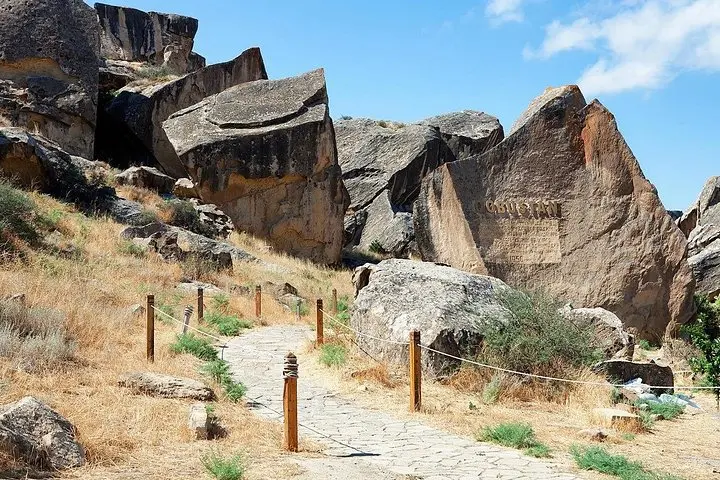
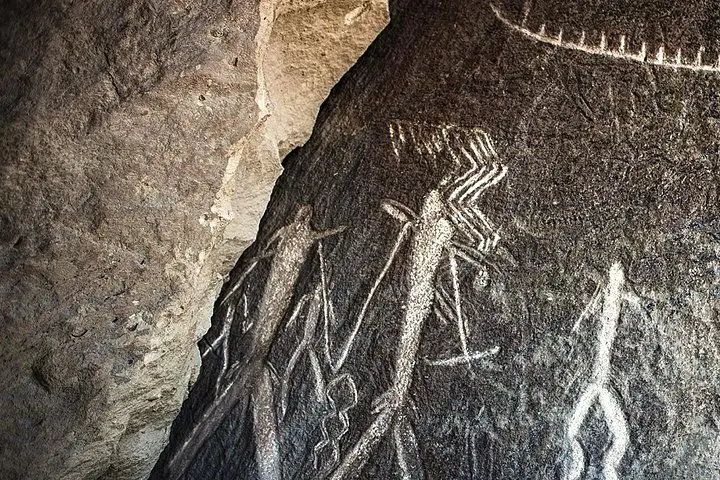
First stop is Bibiheybat Mosque, an elegant curve of domes that looks out over the Caspian. It feels like a pause for breath before you head inland to sites that read like chapters from Azerbaijan’s long history. At Gobustan you walk among engraved rocks older than many civilizations: horses, hunting scenes and geometric marks carved into the limestone by people who hunted this same plain 5,000–40,000 years ago. The panels are a direct line to prehistoric life—compact, blunt, and striking in the open light.
A few kilometers on, the landscape changes again. The mud volcanoes here are not scenic follies but geological actors—cones that belch grey mud and a sulfurous scent, shaping a moonscape of cracked clay and ridged domes. They move in fits: a gentle seep one hour, a bubbly upheaval the next. Nearby, Yanar Dag puts on its quieter spectacle—natural gas seeping through a hillside and burning in steady orange tongues that, in daylight, still look like an argument the earth refuses to lose.
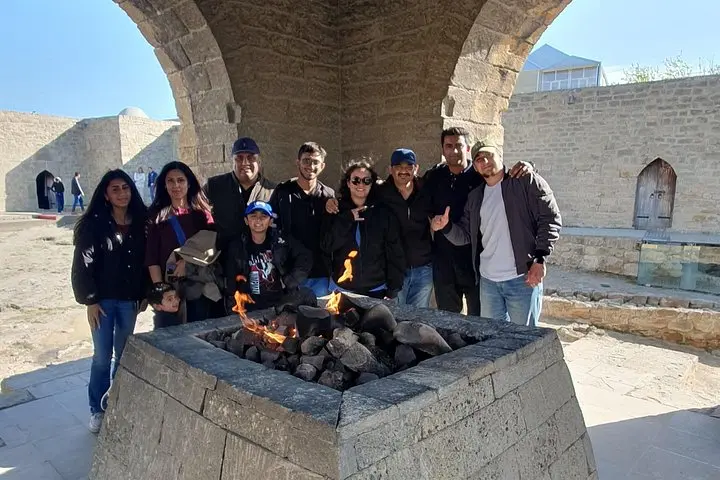
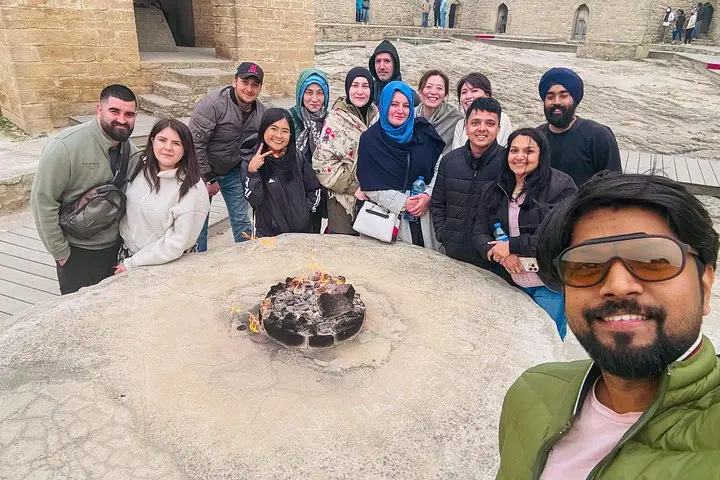
The final stop is Ateshgah, a compact temple whose sandstone courtyards and fire pits tell stories of Zoroastrian rites and later Hindu pilgrims. The complex is both museum and place of ritual, where flame and faith have intersected for centuries.
Practical guidance: this is a vehicle-led day tour with short walks over uneven terrain—expect 8 hours door-to-door. Wear sturdy shoes for rocky paths and mud fields; sunscreen and a wide-brim hat are non-negotiable in summer. Water is scarce at the sites, so carry at least 1.5 liters per person. Photography is excellent at midday for petroglyph contrast, but sunrise/sunset softens the fires and adds warmth to the stone.
Cultural notes: these sites sit on the meeting line between nomadic, Persian, Turkic and Russian histories; guides typically explain how trade, oil and faith shaped modern Baku. Respect signs and fenced areas—many carvings and delicate features are fragile.
Timing tip: visit in spring or fall to avoid summer heat and winter winds. If you want depth, book a small-group or private option so the guide can linger at Gobustan’s lesser panels. The day is a compact lesson in how geology and human history can share a single horizon.
Frequently asked questions
The full itinerary is approximately 8 hours from the meeting point in Icherisheher and returns to the same location.
Roundtrip transportation and guide are included; check booking details or ask the operator for any site admission fees that may apply.
Yes—it's family-friendly with short, supervised walks; bring extra water and sun protection for young children.
Photography is allowed at most sites, but avoid flash or touching panels; follow posted signage and guide instructions.
Expect short walks up to 20–30 minutes at each site on uneven ground; most of the day is driven between stops.
Tours are typically offered in English and may include multilingual guides depending on the option chosen—verify when you book.
About This Experience
Alov Travel operates guided outdoor trips and adventures with an emphasis on safety, stewardship, and memorable experiences.
Adventure tips
Recommended gear
- Sturdy walking shoes: Protects ankles and provides traction on rock and mud surfaces.
- Sun hat and sunscreen: Shields you from intense sun across open plains and reflective mud.
- Reusable water bottle: Keeps you hydrated during long stretches with no services.
- Light wind shell: Useful for coastal breezes and sudden temperature shifts during spring and fall.
Photos of the experience
Related adventures & guides
Read the full experience
You push through the Gosha Gala Gapysy, the double gates of Icherisheher, and the city’s glass towers shrink behind you. Within an hour the coastline flattens into scrubby steppe and the air takes on a mineral tang—the Caspian Sea and the hydrocarbons beneath it make themselves known. This is Absheron: a place where stone remembers people and the ground occasionally decides to bubble.
You push through the Gosha Gala Gapysy, the double gates of Icherisheher, and the city’s glass towers shrink behind you. Within an hour the coastline flattens into scrubby steppe and the air takes on a mineral tang—the Caspian Sea and the hydrocarbons beneath it make themselves known. This is Absheron: a place where stone remembers people and the ground occasionally decides to bubble.
First stop is Bibiheybat Mosque, an elegant curve of domes that looks out over the Caspian. It feels like a pause for breath before you head inland to sites that read like chapters from Azerbaijan’s long history. At Gobustan you walk among engraved rocks older than many civilizations: horses, hunting scenes and geometric marks carved into the limestone by people who hunted this same plain 5,000–40,000 years ago. The panels are a direct line to prehistoric life—compact, blunt, and striking in the open light.
A few kilometers on, the landscape changes again. The mud volcanoes here are not scenic follies but geological actors—cones that belch grey mud and a sulfurous scent, shaping a moonscape of cracked clay and ridged domes. They move in fits: a gentle seep one hour, a bubbly upheaval the next. Nearby, Yanar Dag puts on its quieter spectacle—natural gas seeping through a hillside and burning in steady orange tongues that, in daylight, still look like an argument the earth refuses to lose.
The final stop is Ateshgah, a compact temple whose sandstone courtyards and fire pits tell stories of Zoroastrian rites and later Hindu pilgrims. The complex is both museum and place of ritual, where flame and faith have intersected for centuries.
Practical guidance: this is a vehicle-led day tour with short walks over uneven terrain—expect 8 hours door-to-door. Wear sturdy shoes for rocky paths and mud fields; sunscreen and a wide-brim hat are non-negotiable in summer. Water is scarce at the sites, so carry at least 1.5 liters per person. Photography is excellent at midday for petroglyph contrast, but sunrise/sunset softens the fires and adds warmth to the stone.
Cultural notes: these sites sit on the meeting line between nomadic, Persian, Turkic and Russian histories; guides typically explain how trade, oil and faith shaped modern Baku. Respect signs and fenced areas—many carvings and delicate features are fragile.
Timing tip: visit in spring or fall to avoid summer heat and winter winds. If you want depth, book a small-group or private option so the guide can linger at Gobustan’s lesser panels. The day is a compact lesson in how geology and human history can share a single horizon.
Make a day of it nearby.
Verified experiences and guided adventures in the surrounding area.