THE ADVENTURE COLLECTIVE® · Independent discovery and booking for outdoor travel

Escape Cairo for a full‑day journey into Egypt’s Western Desert. Visit volcanic Black Desert hills, glittering Crystal Mountain, and the otherworldly chalk formations of the White Desert, with springs and Bedouin insights along the way.
Escape Cairo for a full‑day journey into Egypt’s Western Desert. Visit volcanic Black Desert hills, glittering Crystal Mountain, and the otherworldly chalk formations of the White Desert, with springs and Bedouin insights along the way.
Before the sun clears Cairo’s haze, you slip into an air‑conditioned van and the city shrinks behind you—road, desert, and an open sky unrolling for hours. The drive to Bahariya Oasis is part of the trip: a gradual exchange of asphalt for ochre plains, then the first rugged dunes where a 4x4 takes over and the landscape begins to talk in stone.
Verified experiences and guided adventures in the surrounding area.
Operated by Saray El-Nile · Bahariya Oasis (Bawiti), Giza Governorate
Before the sun clears Cairo’s haze, you slip into an air‑conditioned van and the city shrinks behind you—road, desert, and an open sky unrolling for hours. The drive to Bahariya Oasis is part of the trip: a gradual exchange of asphalt for ochre plains, then the first rugged dunes where a 4x4 takes over and the landscape begins to talk in stone.
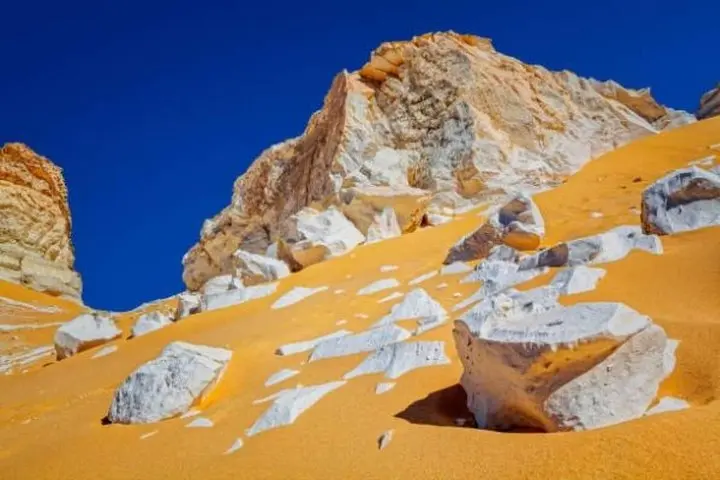
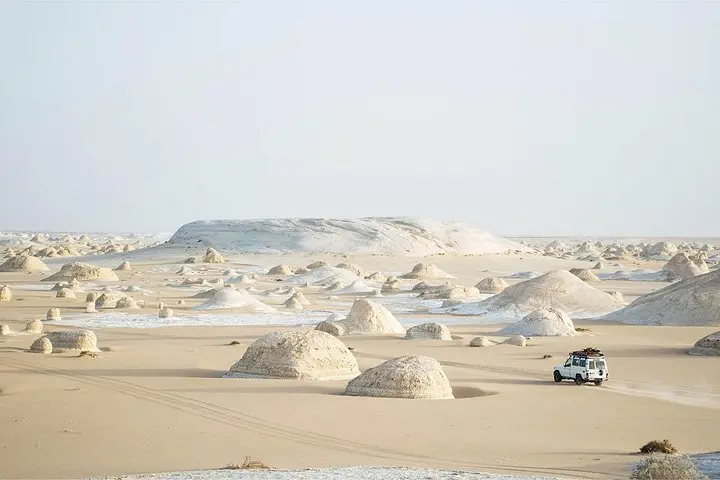
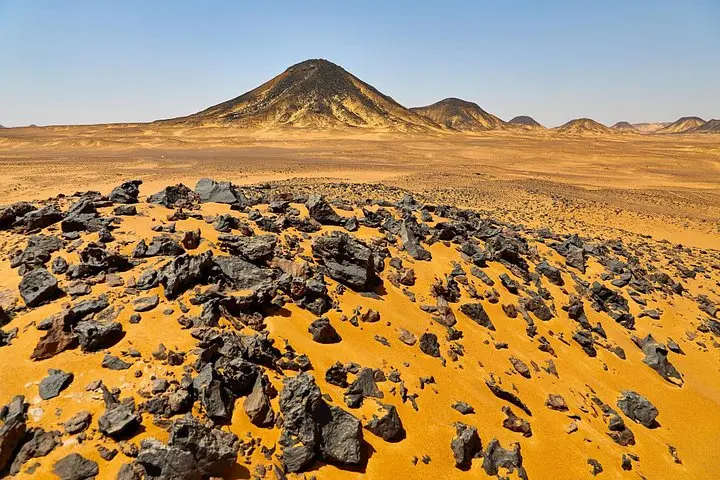
Geology dominates: black volcanic hills peppered with scoria give way to quartz‑laced ridges at Crystal Mountain, then to the stark, wind‑carved chalk of the White Desert National Park. Bedouin culture threads the route—small villages, simple springs, and centuries of desert life where water still defines settlement.
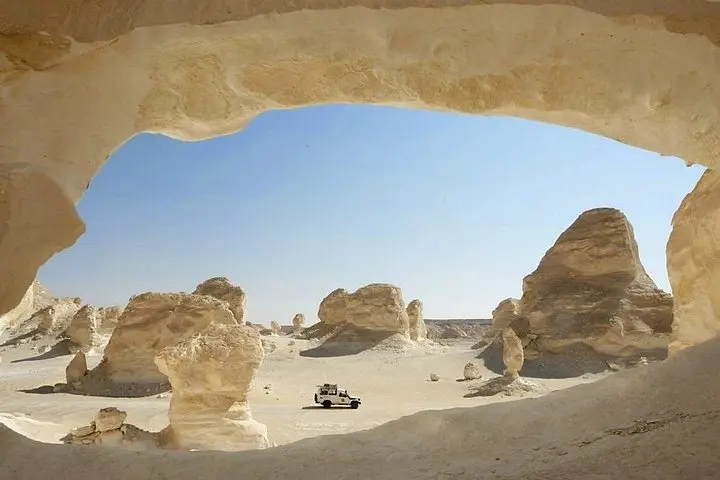
Expect mushroom‑shaped pillars, towering chalk sculptures, and crystal faces that catch the sun like cooled fire. The day also pauses at natural hot and cold springs—small, restorative pockets of water that locals have long used.
Practical side: this is a full‑day shared tour (about 16 hours, including transfers). Wear sturdy, closed shoes for walking on loose gypsum and rock; sun protection is essential. Bring a refillable water bottle—organizers supply bottled water, but extra is wise. Photography opportunities are constant, so plan batteries and memory.
Timing matters: morning departures avoid midday heat and afternoon glare for the best light on formations. Be prepared for dust, brief hikes over uneven ground, and short, informal stops at springs and villages. The experience balances dramatic scenery with calm oasis moments—an accessible, high‑value window into Egypt’s lesser‑seen desert heart.
The itinerary lists about a 4‑hour drive (~150 miles) to Bahariya Oasis each way; expect a full‑day schedule with on‑site stops.
Yes—local guide services and entrance fees to the listed sites are included, per the tour inclusions.
The tour is rated easy and suitable for most ages, but it involves long vehicle time and short walks on uneven terrain—consider mobility and heat tolerance.
Some natural springs allow wading or brief swims; facilities are basic, so bring a towel and plan for quick, refreshing dips rather than long swims.
Saray El-Nile operates guided outdoor trips and adventures with an emphasis on safety, stewardship, and memorable experiences.
Before the sun clears Cairo’s haze, you slip into an air‑conditioned van and the city shrinks behind you—road, desert, and an open sky unrolling for hours. The drive to Bahariya Oasis is part of the trip: a gradual exchange of asphalt for ochre plains, then the first rugged dunes where a 4x4 takes over and the landscape begins to talk in stone.
Before the sun clears Cairo’s haze, you slip into an air‑conditioned van and the city shrinks behind you—road, desert, and an open sky unrolling for hours. The drive to Bahariya Oasis is part of the trip: a gradual exchange of asphalt for ochre plains, then the first rugged dunes where a 4x4 takes over and the landscape begins to talk in stone.
Geology dominates: black volcanic hills peppered with scoria give way to quartz‑laced ridges at Crystal Mountain, then to the stark, wind‑carved chalk of the White Desert National Park. Bedouin culture threads the route—small villages, simple springs, and centuries of desert life where water still defines settlement.
Expect mushroom‑shaped pillars, towering chalk sculptures, and crystal faces that catch the sun like cooled fire. The day also pauses at natural hot and cold springs—small, restorative pockets of water that locals have long used.
Practical side: this is a full‑day shared tour (about 16 hours, including transfers). Wear sturdy, closed shoes for walking on loose gypsum and rock; sun protection is essential. Bring a refillable water bottle—organizers supply bottled water, but extra is wise. Photography opportunities are constant, so plan batteries and memory.
Timing matters: morning departures avoid midday heat and afternoon glare for the best light on formations. Be prepared for dust, brief hikes over uneven ground, and short, informal stops at springs and villages. The experience balances dramatic scenery with calm oasis moments—an accessible, high‑value window into Egypt’s lesser‑seen desert heart.