THE ADVENTURE COLLECTIVE® · Independent discovery and booking for outdoor travel

Walk among 2,000-year-old mosaics and imperial gateways on a full-day loop from Fez to Volubilis and Meknes. This accessible cultural day trip combines open-air archaeology with an imperial city walk—ideal for history-minded travelers who prefer their sightseeing outdoors.
Walk among 2,000-year-old mosaics and imperial gateways on a full-day loop from Fez to Volubilis and Meknes. This accessible cultural day trip combines open-air archaeology with an imperial city walk—ideal for history-minded travelers who prefer their sightseeing outdoors.
You step onto a sun-warmed stone path and the wind from the Saiss Plain pushes the dust at your boots as if nudging you deeper into history. The ruins of Volubilis unfold across a low plateau: columns stand like interrupted sentences, mosaics glitter where olive oil once financed empire, and distant hills cradle the white-washed minarets of a medieval town.
Verified experiences and guided adventures in the surrounding area.
Operated by Morocco Pleasure Travel · Meknes, Fès-Meknès
You step onto a sun-warmed stone path and the wind from the Saiss Plain pushes the dust at your boots as if nudging you deeper into history. The ruins of Volubilis unfold across a low plateau: columns stand like interrupted sentences, mosaics glitter where olive oil once financed empire, and distant hills cradle the white-washed minarets of a medieval town.
Volubilis began as a Punic and Berber settlement before becoming a prosperous Roman provincial capital, its wealth built largely on olive presses and trade. The geology is simple—limestone bedrock and alluvial soils—yet that plain supported monumental architecture and elaborate baths. Nearby Meknes, one of Morocco’s imperial cities, adds a later layer of Moroccan and Ottoman-era grandeur: ramparts, gates, and a medina that contrast Roman order with living urban culture.
Expect open archaeological slopes, intermittent shade from isolated olive trees, and close-up mosaics—Labors of Hercules, Orpheus and the Dolphin—that give real texture to a 2,000-year arc of occupation. Local guides often point out medallions and the Gordian Palace, then drive you into Meknes for a brisk walk through imperial gateways and a quieter, authentic medina experience.
Practical edge: bring sun protection, water and shoes with grip—many paths are uneven flagstone. Timing matters—mornings are cooler and light best for photography; late afternoon returns pick out the warm tones of the ruins. The tour is low-impact but stick to marked paths to protect fragile mosaics and follow local guide instructions for access and photography.
Entrance fees are typically not included in tour price—expect to pay the site fee on arrival or confirm inclusion with your operator.
Yes, most day-trip operators provide hotel pickup and drop-off within Fez; check your booking confirmation for the exact pickup point and time.
Some paths and viewpoints are wheelchair accessible, but mosaic areas and uneven surfaces limit full access—contact your operator in advance to plan accommodations.
Infants can join; the tour lists infant seats and requires infants to sit on laps for transport—confirm needs when booking.
Morocco Pleasure Travel operates guided outdoor trips and adventures with an emphasis on safety, stewardship, and memorable experiences.
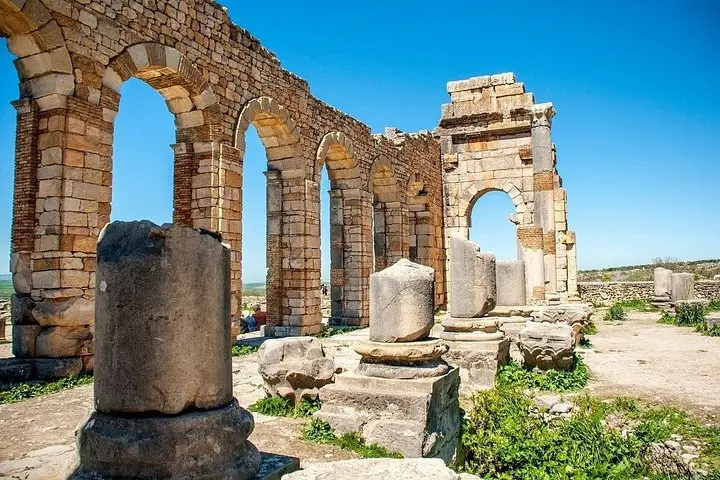
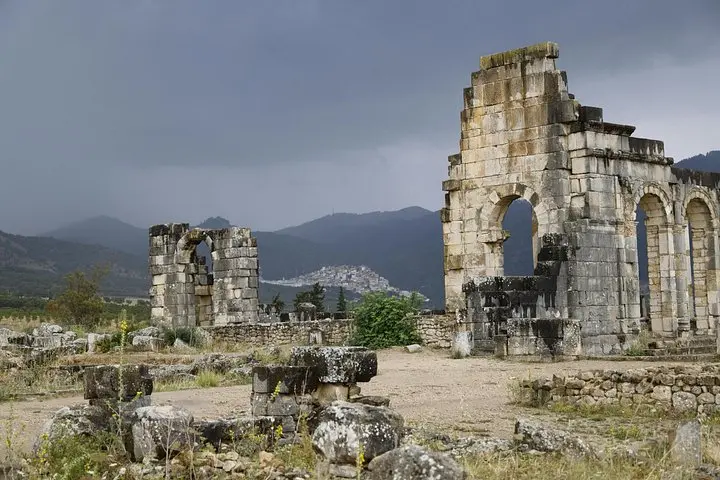
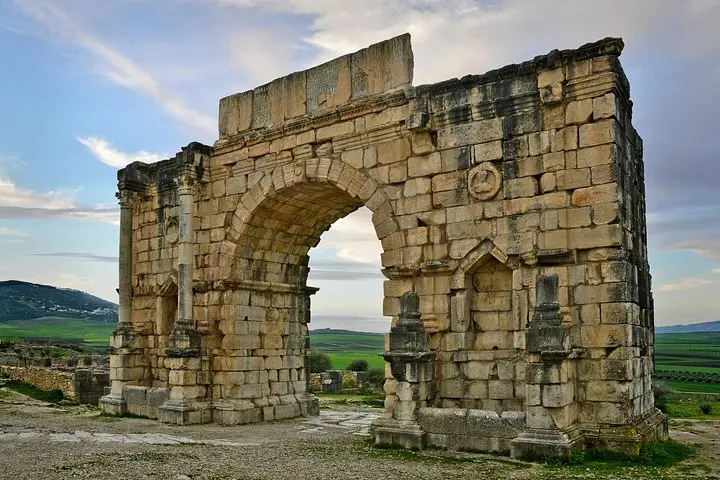
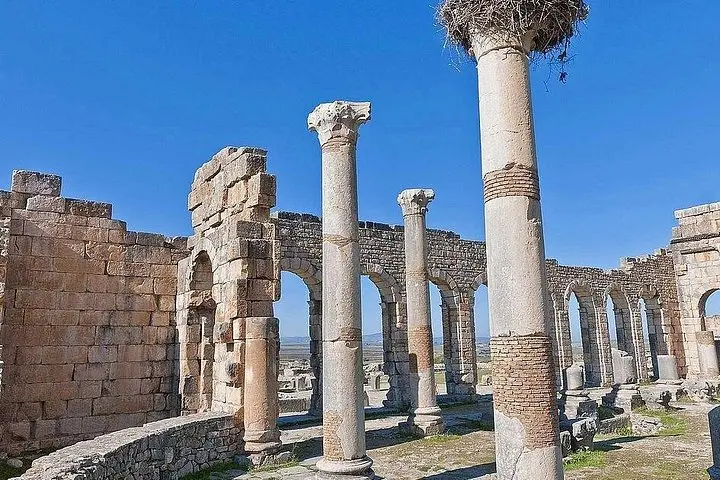
You step onto a sun-warmed stone path and the wind from the Saiss Plain pushes the dust at your boots as if nudging you deeper into history. The ruins of Volubilis unfold across a low plateau: columns stand like interrupted sentences, mosaics glitter where olive oil once financed empire, and distant hills cradle the white-washed minarets of a medieval town.
You step onto a sun-warmed stone path and the wind from the Saiss Plain pushes the dust at your boots as if nudging you deeper into history. The ruins of Volubilis unfold across a low plateau: columns stand like interrupted sentences, mosaics glitter where olive oil once financed empire, and distant hills cradle the white-washed minarets of a medieval town.
Volubilis began as a Punic and Berber settlement before becoming a prosperous Roman provincial capital, its wealth built largely on olive presses and trade. The geology is simple—limestone bedrock and alluvial soils—yet that plain supported monumental architecture and elaborate baths. Nearby Meknes, one of Morocco’s imperial cities, adds a later layer of Moroccan and Ottoman-era grandeur: ramparts, gates, and a medina that contrast Roman order with living urban culture.
Expect open archaeological slopes, intermittent shade from isolated olive trees, and close-up mosaics—Labors of Hercules, Orpheus and the Dolphin—that give real texture to a 2,000-year arc of occupation. Local guides often point out medallions and the Gordian Palace, then drive you into Meknes for a brisk walk through imperial gateways and a quieter, authentic medina experience.
Practical edge: bring sun protection, water and shoes with grip—many paths are uneven flagstone. Timing matters—mornings are cooler and light best for photography; late afternoon returns pick out the warm tones of the ruins. The tour is low-impact but stick to marked paths to protect fragile mosaics and follow local guide instructions for access and photography.