THE ADVENTURE COLLECTIVE® · Independent discovery and booking for outdoor travel

A full-day coastal escape from Marrakech to Essaouira that pairs a UNESCO-listed medina with Atlantic beaches, fortified walls, and working fishing harbors. Expect easy walking, cobblestone streets, strong winds, and fresh seafood by the port.
A full-day coastal escape from Marrakech to Essaouira that pairs a UNESCO-listed medina with Atlantic beaches, fortified walls, and working fishing harbors. Expect easy walking, cobblestone streets, strong winds, and fresh seafood by the port.
You step out of the van and the Atlantic breeze immediately rearranges your plans: hair, scarf, and the notion that Morocco ends at the souk. Essaouira’s whitewashed ramparts loom low and geometric, seaworn and blunt against the horizon while the harbor bristles with blue fishing boats and gulls arguing over the morning catch.
Verified experiences and guided adventures in the surrounding area.
Operated by Dades Adventure Tours · Essaouira, Marrakesh-Safi
You step out of the van and the Atlantic breeze immediately rearranges your plans: hair, scarf, and the notion that Morocco ends at the souk. Essaouira’s whitewashed ramparts loom low and geometric, seaworn and blunt against the horizon while the harbor bristles with blue fishing boats and gulls arguing over the morning catch.
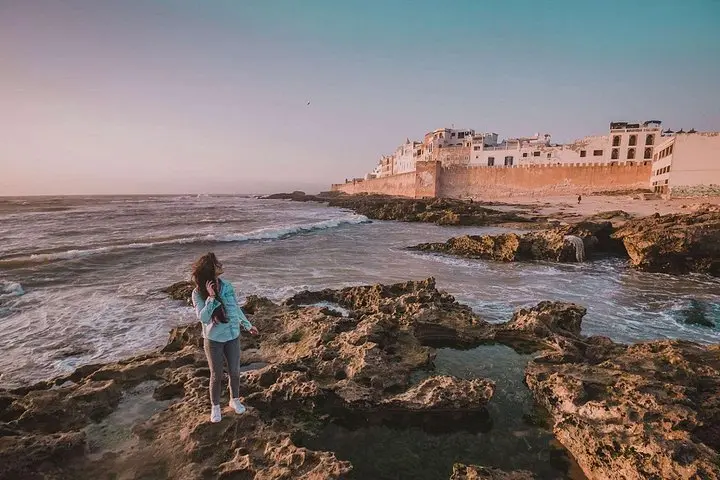
The town—once called Mogador—was refortified by Europeans in the 18th century; its star-shaped battlements and broad, walkable seawall reflect a blend of Portuguese military geometry and local craft traditions. Geologically, the coast is a mix of sandy beaches and shallow rocky outcrops, protected in part by the nearby Iles Purpuraires that dampen Atlantic swell and create calmer waters alongside broad exposed beaches.
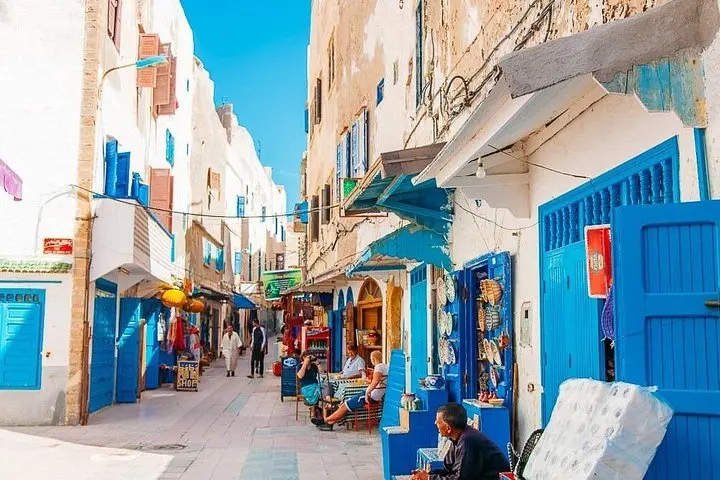
Culturally, Essaouira is compact: a UNESCO-listed medina of narrow lanes, cedar and argan oil sellers, and woodworkers who carve the famed thuya wood. Expect the rhythm to shift from market bustle to wind-swept calm as you move from souk to seaside.
Practical guidance: this is a full 12-hour day from Marrakech with long stretches of driving and easy walking around the medina, ramps, and beach. Cobblestones and low steps are constant; sturdy shoes and sun protection matter. If you plan to eat, try the harbour’s grilled sardines and arrive early at viewpoints to avoid the stiff afternoon wind. Respect local rules—motorbikes are common in the medina—and keep valuables close.
A day here is sensory and manageable: part history lesson, part seaside reset, and a clear reminder that Morocco’s coastline plays by Atlantic rules.
Expect about 2.5–3 hours each way depending on traffic and stops—this tour is typically a full 12-hour day.
Yes—walking is gentle and distances are short, but watch uneven cobbles and step heights; bring a stroller-friendly plan for narrow lanes.
You can swim, but conditions vary; wind and currents can be strong, so choose protected areas and heed local warnings.
Meals are usually not included; the harbor offers fresh seafood and casual restaurants where you can eat at your own expense.
Dades Adventure Tours operates guided outdoor trips and adventures with an emphasis on safety, stewardship, and memorable experiences.
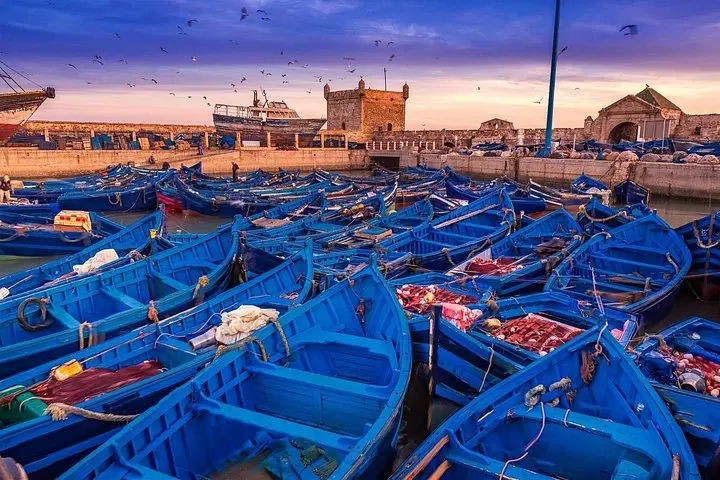
You step out of the van and the Atlantic breeze immediately rearranges your plans: hair, scarf, and the notion that Morocco ends at the souk. Essaouira’s whitewashed ramparts loom low and geometric, seaworn and blunt against the horizon while the harbor bristles with blue fishing boats and gulls arguing over the morning catch.
You step out of the van and the Atlantic breeze immediately rearranges your plans: hair, scarf, and the notion that Morocco ends at the souk. Essaouira’s whitewashed ramparts loom low and geometric, seaworn and blunt against the horizon while the harbor bristles with blue fishing boats and gulls arguing over the morning catch.
The town—once called Mogador—was refortified by Europeans in the 18th century; its star-shaped battlements and broad, walkable seawall reflect a blend of Portuguese military geometry and local craft traditions. Geologically, the coast is a mix of sandy beaches and shallow rocky outcrops, protected in part by the nearby Iles Purpuraires that dampen Atlantic swell and create calmer waters alongside broad exposed beaches.
Culturally, Essaouira is compact: a UNESCO-listed medina of narrow lanes, cedar and argan oil sellers, and woodworkers who carve the famed thuya wood. Expect the rhythm to shift from market bustle to wind-swept calm as you move from souk to seaside.
Practical guidance: this is a full 12-hour day from Marrakech with long stretches of driving and easy walking around the medina, ramps, and beach. Cobblestones and low steps are constant; sturdy shoes and sun protection matter. If you plan to eat, try the harbour’s grilled sardines and arrive early at viewpoints to avoid the stiff afternoon wind. Respect local rules—motorbikes are common in the medina—and keep valuables close.
A day here is sensory and manageable: part history lesson, part seaside reset, and a clear reminder that Morocco’s coastline plays by Atlantic rules.