THE ADVENTURE COLLECTIVE® · Independent discovery and booking for outdoor travel

Trade Marrakech’s ochre city for an Atlantic day: Essaouira’s fortified harbor, argan co-ops and compact medina offer history, coastal views and fresh seafood on an eight-hour loop. Learn what to expect—and what to pack—for a practical, memorable day trip.
Trade Marrakech’s ochre city for an Atlantic day: Essaouira’s fortified harbor, argan co-ops and compact medina offer history, coastal views and fresh seafood on an eight-hour loop. Learn what to expect—and what to pack—for a practical, memorable day trip.
A salt wind meets the windshield as the minivan peels away from Marrakech at 8:00 a.m., the Atlas foothills giving way to scrubby argan landscapes and, finally, the flat blue of the Atlantic. By mid-morning the ramparts of Essaouira come into view—whitewashed walls scoring the coastline while breakers pound the rocks below.
Verified experiences and guided adventures in the surrounding area.
Operated by Trendy Travel · Essaouira, Marrakech-Safi
A salt wind meets the windshield as the minivan peels away from Marrakech at 8:00 a.m., the Atlas foothills giving way to scrubby argan landscapes and, finally, the flat blue of the Atlantic. By mid-morning the ramparts of Essaouira come into view—whitewashed walls scoring the coastline while breakers pound the rocks below.
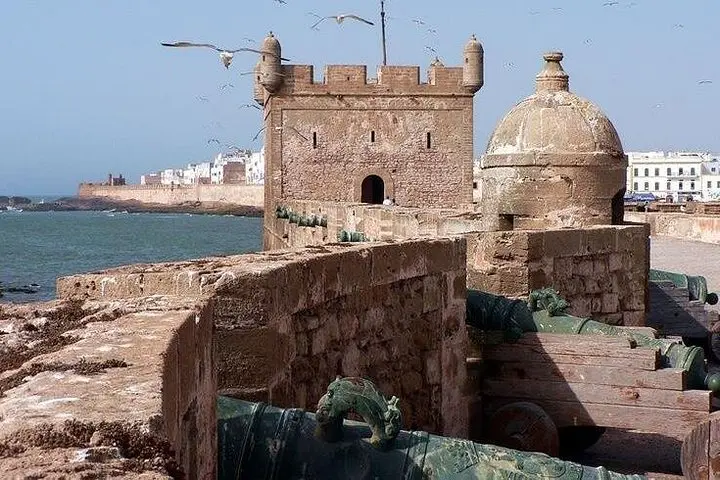
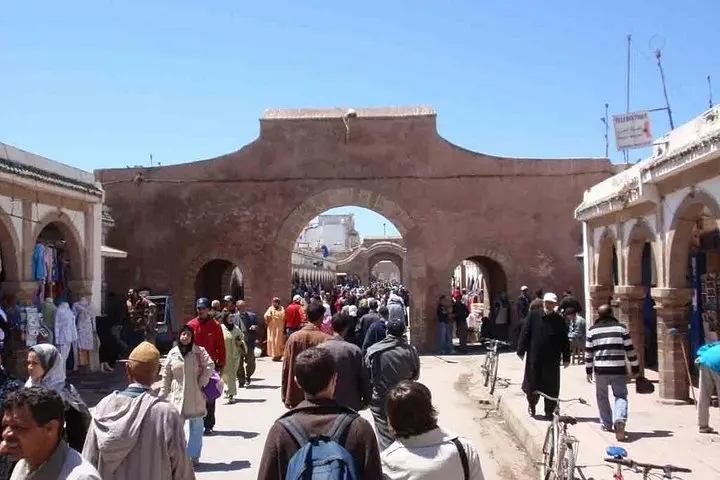
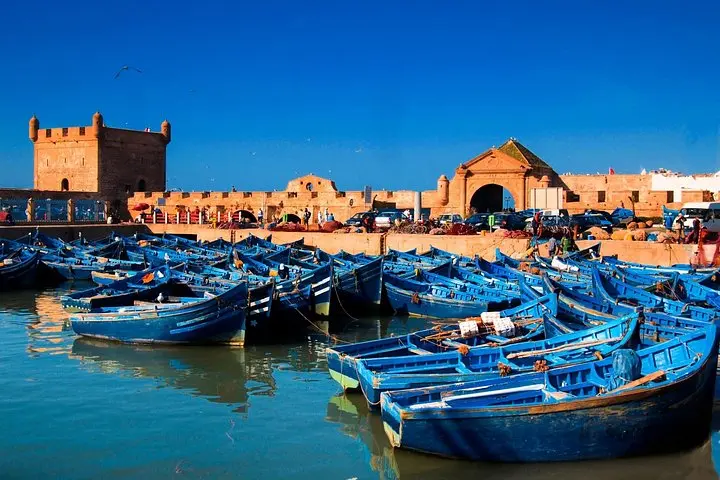
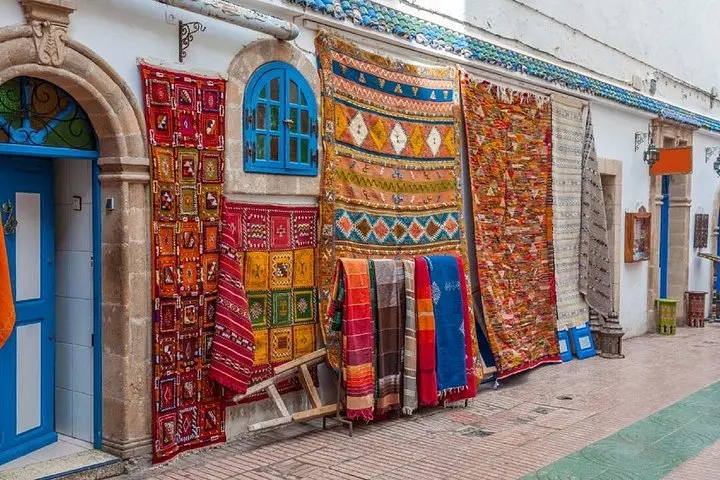
Essaouira’s streets carry layered histories: a Phoenician and Roman past, a 16th-century Portuguese fortification and the 18th-century rebuild under Sultan Sidi Mohammed ben Abdallah that shaped the city’s low, sea-facing ramparts. Geologically the town sits on a rocky Atlantic shelf; the docks and quays were carved to withstand heavy surf, which also made Essaouira a strategic port and a magnet for fishermen and craftsmen. Culturally the medina is compact and walkable, famous for thuya wood carving, silver jewelry and open-air fish markets at the harbor.
The typical day trip includes a stop at an argan cooperative—argan trees are endemic to the region and local women’s cooperatives produce the oil—followed by wandering the souk, a seafood lunch by the port, a look from the Scala fortress over the surf and a final stroll along the wide beach before returning toward Marrakech in the late afternoon.
Practical notes: expect roughly 2.5–3 hours of driving each way, cobbled streets underfoot, and stiff coastal wind most days. Bring sun protection, cash for small purchases, comfortable shoes for uneven lanes and a light wind layer; pace the visit to allow time for the harbor and medina without rushing.
Expect about 2.5–3 hours each way depending on traffic and stops; the full trip is scheduled as an eight-hour day.
Lunch is not included; the itinerary allows time to choose a harbor restaurant or café for fresh seafood.
The supplier lists wheelchair accessibility for vehicle transfer, but medina streets and ramparts have uneven surfaces—access to some areas may be limited.
Yes—most day trips include a visit to an argan cooperative to see production and sample products; purchases support local producers.
Trendy Travel operates guided outdoor trips and adventures with an emphasis on safety, stewardship, and memorable experiences.
A salt wind meets the windshield as the minivan peels away from Marrakech at 8:00 a.m., the Atlas foothills giving way to scrubby argan landscapes and, finally, the flat blue of the Atlantic. By mid-morning the ramparts of Essaouira come into view—whitewashed walls scoring the coastline while breakers pound the rocks below.
A salt wind meets the windshield as the minivan peels away from Marrakech at 8:00 a.m., the Atlas foothills giving way to scrubby argan landscapes and, finally, the flat blue of the Atlantic. By mid-morning the ramparts of Essaouira come into view—whitewashed walls scoring the coastline while breakers pound the rocks below.
Essaouira’s streets carry layered histories: a Phoenician and Roman past, a 16th-century Portuguese fortification and the 18th-century rebuild under Sultan Sidi Mohammed ben Abdallah that shaped the city’s low, sea-facing ramparts. Geologically the town sits on a rocky Atlantic shelf; the docks and quays were carved to withstand heavy surf, which also made Essaouira a strategic port and a magnet for fishermen and craftsmen. Culturally the medina is compact and walkable, famous for thuya wood carving, silver jewelry and open-air fish markets at the harbor.
The typical day trip includes a stop at an argan cooperative—argan trees are endemic to the region and local women’s cooperatives produce the oil—followed by wandering the souk, a seafood lunch by the port, a look from the Scala fortress over the surf and a final stroll along the wide beach before returning toward Marrakech in the late afternoon.
Practical notes: expect roughly 2.5–3 hours of driving each way, cobbled streets underfoot, and stiff coastal wind most days. Bring sun protection, cash for small purchases, comfortable shoes for uneven lanes and a light wind layer; pace the visit to allow time for the harbor and medina without rushing.