THE ADVENTURE COLLECTIVE® · Independent discovery and booking for outdoor travel

A full-day loop from Negombo that pairs the vertiginous climb of Sigiriya’s Lion Rock with the painted sanctuaries of Dambulla Cave Temple. Expect steep steps, sweeping views and living history across roughly 10–12 hours.
A full-day loop from Negombo that pairs the vertiginous climb of Sigiriya’s Lion Rock with the painted sanctuaries of Dambulla Cave Temple. Expect steep steps, sweeping views and living history across roughly 10–12 hours.
You arrive before noon at a roadside tea stall outside the dusty town of Sigiriya, the air heavy with fried coconut and the hum of tuk-tuks. The first thing the rock does is reorient you: a blunt, vertical island of stone rising from flat rice paddies, a cliff face that insists you look up. By midmorning the climb to the fortress crown will feel less like tourism and more like joining a very old river of pilgrims and soldiers who have pressed these stairs for centuries.
Verified experiences and guided adventures in the surrounding area.
Operated by Ishan Tours and Holidays · Sigiriya, Central Province
You arrive before noon at a roadside tea stall outside the dusty town of Sigiriya, the air heavy with fried coconut and the hum of tuk-tuks. The first thing the rock does is reorient you: a blunt, vertical island of stone rising from flat rice paddies, a cliff face that insists you look up. By midmorning the climb to the fortress crown will feel less like tourism and more like joining a very old river of pilgrims and soldiers who have pressed these stairs for centuries.
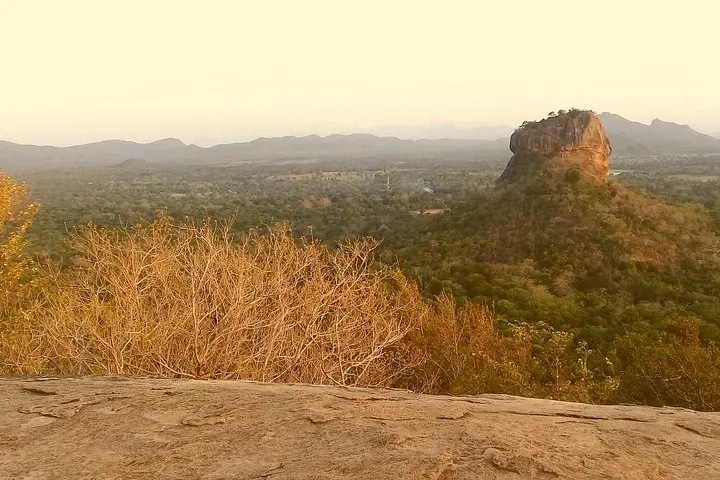
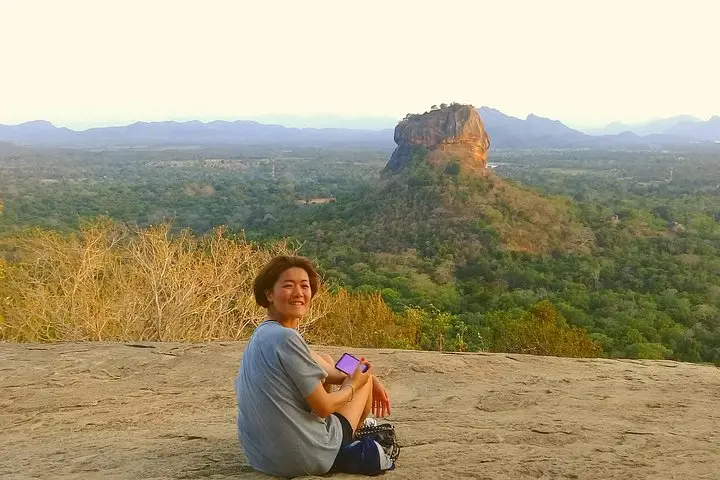
Sigiriya—Lion Rock—was a royal experiment in the fifth century AD: a fortified palace hewn into column, terraces and mirrored pools cut into bedrock. The story is human and abrupt—an usurped throne, a king hiding from his brother, the palace constructed atop the stone to command the plains. Pidurangala, a few hundred meters north, offers a counterpoint: a monk's refuge with a raw, wind-swept summit and one of the best panoramas of the lion's profile.
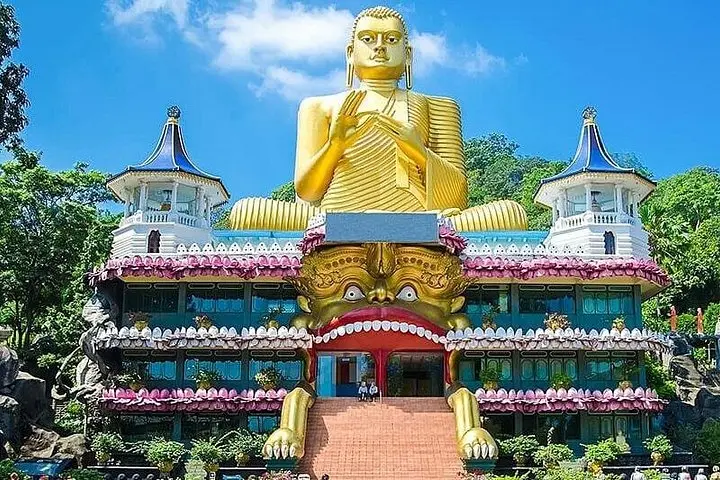
A short drive away, the Dambulla Cave Temple rides a different kind of geology. The cave complex sits under a 160-meter outcrop and shelters more than 150 Buddha statues and murals stretching across roughly 2,100 square meters. These painted walls, some repainted by Kandyan-era artists, are not merely decoration; they're a sequence of devotional chapters that chart Sri Lanka's shift from palace to monastery and back again.
Culturally the route folds together Sinhala Buddhism, colonial-era rediscovery and rural village life. Vendors sell jaggery and fresh king coconut at trailheads; monks walk in orange robes between sites. The land is limestone and granite, scarred by ancient quarrying and smoothed by centuries of monsoon.
Practical guide: plan for a long day—expect 10–12 hours total, including transport from Negombo. Climbs are steep: Sigiriya involves about 200 meters of elevation gain over stone steps and later metal staircases; Pidurangala is steeper but shorter, often 20–40 minutes to the top. Dambulla has several stone stair sections and uneven cave floors. Wear closed shoes with good grip, sun protection, and conservative clothing for shrines.
Timing matters—start early to beat crowds and mid-afternoon heat. Bottled water and cash for entry fees and local purchases are essential; the tour provides two bottles but you may need more. The route is accessible to most fit travelers but those with limited mobility should note the stair-heavy sections. Respect temple rules: remove shoes, cover shoulders and knees, and keep photography to respectful distances inside caves.
Together these sites form a day that balances raw rock, religious art and historical intrigue—a compact dive into Sri Lanka's layered past that rewards steady pacing, plenty of water and an appetite for both views and stories.
Expect roughly 3–3.5 hours each way depending on traffic; tours typically start early to maximize time on-site.
Admission is not included in this booking—tickets to Sigiriya and Dambulla are purchased on site.
Older children who are comfortable with long stair climbs and heat will manage, but keep younger kids in mind for safety and sun exposure.
Shorts and tank tops are fine for the outdoor climbs, but you must cover shoulders and knees when entering temple areas.
The tour includes a driver and guide who coordinate logistics; on-site licensed guides at Sigiriya or Dambulla can be hired separately for deeper archaeological context.
The tour provides bottled water; plan for local restaurant stops or carry snacks—vegetarian options are widely available at village eateries.
Ishan Tours and Holidays operates guided outdoor trips and adventures with an emphasis on safety, stewardship, and memorable experiences.
You arrive before noon at a roadside tea stall outside the dusty town of Sigiriya, the air heavy with fried coconut and the hum of tuk-tuks. The first thing the rock does is reorient you: a blunt, vertical island of stone rising from flat rice paddies, a cliff face that insists you look up. By midmorning the climb to the fortress crown will feel less like tourism and more like joining a very old river of pilgrims and soldiers who have pressed these stairs for centuries.
You arrive before noon at a roadside tea stall outside the dusty town of Sigiriya, the air heavy with fried coconut and the hum of tuk-tuks. The first thing the rock does is reorient you: a blunt, vertical island of stone rising from flat rice paddies, a cliff face that insists you look up. By midmorning the climb to the fortress crown will feel less like tourism and more like joining a very old river of pilgrims and soldiers who have pressed these stairs for centuries.
Sigiriya—Lion Rock—was a royal experiment in the fifth century AD: a fortified palace hewn into column, terraces and mirrored pools cut into bedrock. The story is human and abrupt—an usurped throne, a king hiding from his brother, the palace constructed atop the stone to command the plains. Pidurangala, a few hundred meters north, offers a counterpoint: a monk's refuge with a raw, wind-swept summit and one of the best panoramas of the lion's profile.
A short drive away, the Dambulla Cave Temple rides a different kind of geology. The cave complex sits under a 160-meter outcrop and shelters more than 150 Buddha statues and murals stretching across roughly 2,100 square meters. These painted walls, some repainted by Kandyan-era artists, are not merely decoration; they're a sequence of devotional chapters that chart Sri Lanka's shift from palace to monastery and back again.
Culturally the route folds together Sinhala Buddhism, colonial-era rediscovery and rural village life. Vendors sell jaggery and fresh king coconut at trailheads; monks walk in orange robes between sites. The land is limestone and granite, scarred by ancient quarrying and smoothed by centuries of monsoon.
Practical guide: plan for a long day—expect 10–12 hours total, including transport from Negombo. Climbs are steep: Sigiriya involves about 200 meters of elevation gain over stone steps and later metal staircases; Pidurangala is steeper but shorter, often 20–40 minutes to the top. Dambulla has several stone stair sections and uneven cave floors. Wear closed shoes with good grip, sun protection, and conservative clothing for shrines.
Timing matters—start early to beat crowds and mid-afternoon heat. Bottled water and cash for entry fees and local purchases are essential; the tour provides two bottles but you may need more. The route is accessible to most fit travelers but those with limited mobility should note the stair-heavy sections. Respect temple rules: remove shoes, cover shoulders and knees, and keep photography to respectful distances inside caves.
Together these sites form a day that balances raw rock, religious art and historical intrigue—a compact dive into Sri Lanka's layered past that rewards steady pacing, plenty of water and an appetite for both views and stories.