THE ADVENTURE COLLECTIVE® · Independent discovery and booking for outdoor travel

Spend a full day from Oaxaca exploring the Árbol del Tule, Mitla’s intricate stonework, Teotitlán del Valle’s weaving studios, the petrified cascades of Hierve el Agua and a traditional mezcal palenque. This balanced itinerary blends geology, craft and tasting in one immersive day trip.
Spend a full day from Oaxaca exploring the Árbol del Tule, Mitla’s intricate stonework, Teotitlán del Valle’s weaving studios, the petrified cascades of Hierve el Agua and a traditional mezcal palenque. This balanced itinerary blends geology, craft and tasting in one immersive day trip.
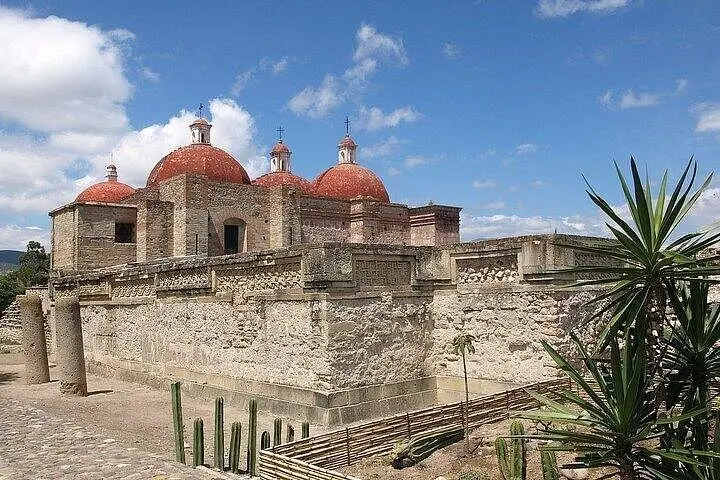
You step onto the air-conditioned van in downtown Oaxaca as morning light cuts across colonial facades; the city shrinks behind you and the valley opens up, volcanic ridges folding into terraces and small Zapotec villages. The itinerary threads geology and culture: a stop beneath the colossal Árbol del Tule, then Mitla’s tightly ordered geometric façades, Teotitlán del Valle’s smoky weaving workshops, the mineral-calcified cascades of Hierve el Agua, and a family-run mezcal distillery where roasted agave scents the air.
Verified experiences and guided adventures in the surrounding area.
Operated by Oaxacatours · Oaxaca City, Oaxaca
You step onto the air-conditioned van in downtown Oaxaca as morning light cuts across colonial facades; the city shrinks behind you and the valley opens up, volcanic ridges folding into terraces and small Zapotec villages. The itinerary threads geology and culture: a stop beneath the colossal Árbol del Tule, then Mitla’s tightly ordered geometric façades, Teotitlán del Valle’s smoky weaving workshops, the mineral-calcified cascades of Hierve el Agua, and a family-run mezcal distillery where roasted agave scents the air.
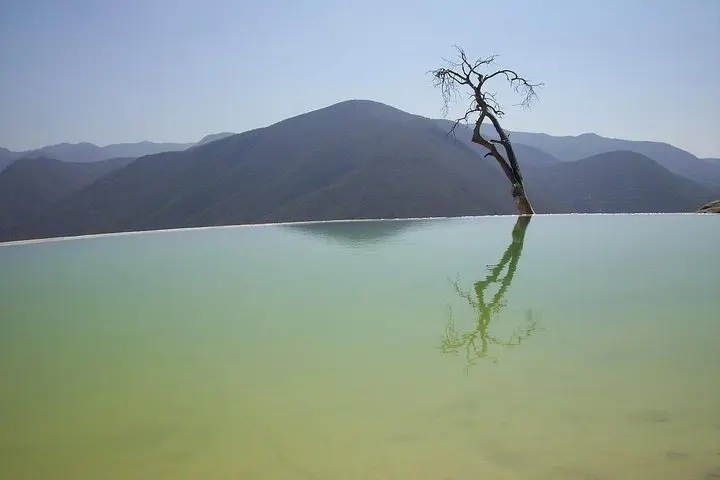
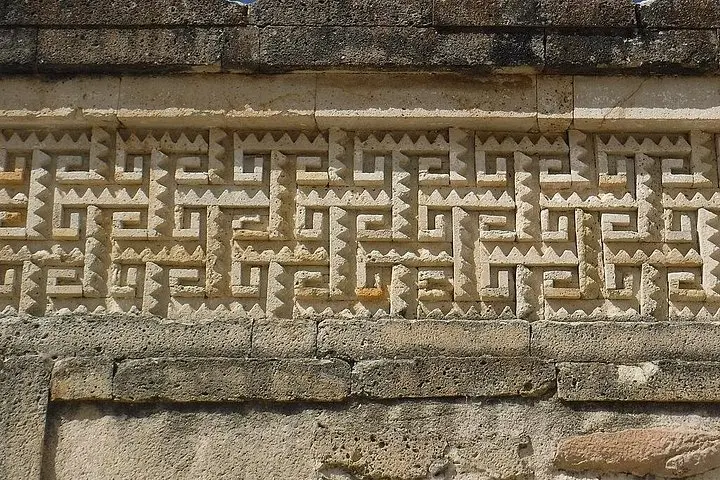
Mitla’s masonry reflects Mixtec and Zapotec ritual architecture — stone panels arranged in complex geometric greys that once marked funerary space. Hierve el Agua is a geological oddity: calcium-rich springs deposit travertine over cliff edges, creating petrified falls and shallow pools that reveal ancient hydrology and long-term mineral precipitation.
Teotitlán preserves living textile craft: domestic looms, natural indigo and cochineal dyes, and designs passed through generations. The mezcal visit exposes traditional production—pit ovens, tahona mills and small copper stills—followed by cautious tastings.
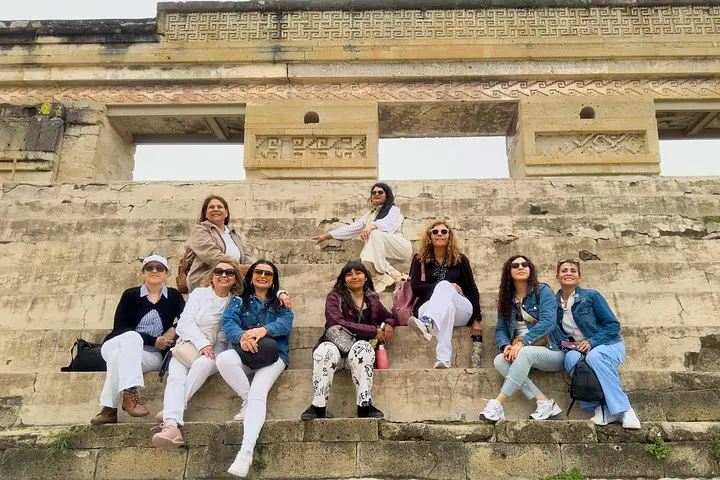
Practically: expect an 11-hour day with multiple short walks on uneven ground, light stair climbs at Mitla and slippery stone near the petrified falls. Bring cash for village purchases and gratuities, sunscreen, a refillable water bottle and sturdy shoes. The tour suits travelers comfortable with long days, moderate altitude and stop-and-go exploration. Photography is rich at every turn; be respectful in workshops and during tastings. This is a compact way to sample Oaxaca’s natural wonder, artisan culture and rural distilling traditions in one revealing day.
The tour is approximately 11 hours; pickup is typically at 8:30 a.m. from downtown Oaxaca (Quinta Real area).
The guide allows time to eat at a local restaurant; meals are not generally included so bring cash for lunch and snacks.
The tour notes wheelchair and stroller accessibility in parts, but some archaeological zones and terraces involve uneven terrain and steps that may limit full access.
A guided mezcal distillery visit and sampling are included; tastings are intended for adults—children can attend but should not partake in alcohol.
Oaxacatours operates guided outdoor trips and adventures with an emphasis on safety, stewardship, and memorable experiences.
You step onto the air-conditioned van in downtown Oaxaca as morning light cuts across colonial facades; the city shrinks behind you and the valley opens up, volcanic ridges folding into terraces and small Zapotec villages. The itinerary threads geology and culture: a stop beneath the colossal Árbol del Tule, then Mitla’s tightly ordered geometric façades, Teotitlán del Valle’s smoky weaving workshops, the mineral-calcified cascades of Hierve el Agua, and a family-run mezcal distillery where roasted agave scents the air.
You step onto the air-conditioned van in downtown Oaxaca as morning light cuts across colonial facades; the city shrinks behind you and the valley opens up, volcanic ridges folding into terraces and small Zapotec villages. The itinerary threads geology and culture: a stop beneath the colossal Árbol del Tule, then Mitla’s tightly ordered geometric façades, Teotitlán del Valle’s smoky weaving workshops, the mineral-calcified cascades of Hierve el Agua, and a family-run mezcal distillery where roasted agave scents the air.
Mitla’s masonry reflects Mixtec and Zapotec ritual architecture — stone panels arranged in complex geometric greys that once marked funerary space. Hierve el Agua is a geological oddity: calcium-rich springs deposit travertine over cliff edges, creating petrified falls and shallow pools that reveal ancient hydrology and long-term mineral precipitation.
Teotitlán preserves living textile craft: domestic looms, natural indigo and cochineal dyes, and designs passed through generations. The mezcal visit exposes traditional production—pit ovens, tahona mills and small copper stills—followed by cautious tastings.
Practically: expect an 11-hour day with multiple short walks on uneven ground, light stair climbs at Mitla and slippery stone near the petrified falls. Bring cash for village purchases and gratuities, sunscreen, a refillable water bottle and sturdy shoes. The tour suits travelers comfortable with long days, moderate altitude and stop-and-go exploration. Photography is rich at every turn; be respectful in workshops and during tastings. This is a compact way to sample Oaxaca’s natural wonder, artisan culture and rural distilling traditions in one revealing day.