THE ADVENTURE COLLECTIVE® · Independent discovery and booking for outdoor travel

Cross the High Atlas via the Tizi n’Tichka pass to reach the earthen towers of Aït Ben Haddou and the storied kasbahs of Ouarzazate. This full-day drive blends dramatic mountain scenery, Berber architecture and film-history highlights into a single, memorable outing.
Cross the High Atlas via the Tizi n’Tichka pass to reach the earthen towers of Aït Ben Haddou and the storied kasbahs of Ouarzazate. This full-day drive blends dramatic mountain scenery, Berber architecture and film-history highlights into a single, memorable outing.
You leave Marrakech before dawn and the city’s heat peels away as the road climbs into the High Atlas. The asphalt winds up to Tizi n’Tichka—the pass itself seems to push the mountains into view—where stony ridgelines and terraced fields give way to broad, wind-scoured valleys. By midmorning the earthen towers of Aït Ben Haddou rise out of the plain, their clay walls catching a sharp light that made this place irresistible to filmmakers.
Verified experiences and guided adventures in the surrounding area.
Operated by Morocco Desert VIP · Marrakech, Marrakesh-Safi
You leave Marrakech before dawn and the city’s heat peels away as the road climbs into the High Atlas. The asphalt winds up to Tizi n’Tichka—the pass itself seems to push the mountains into view—where stony ridgelines and terraced fields give way to broad, wind-scoured valleys. By midmorning the earthen towers of Aït Ben Haddou rise out of the plain, their clay walls catching a sharp light that made this place irresistible to filmmakers.
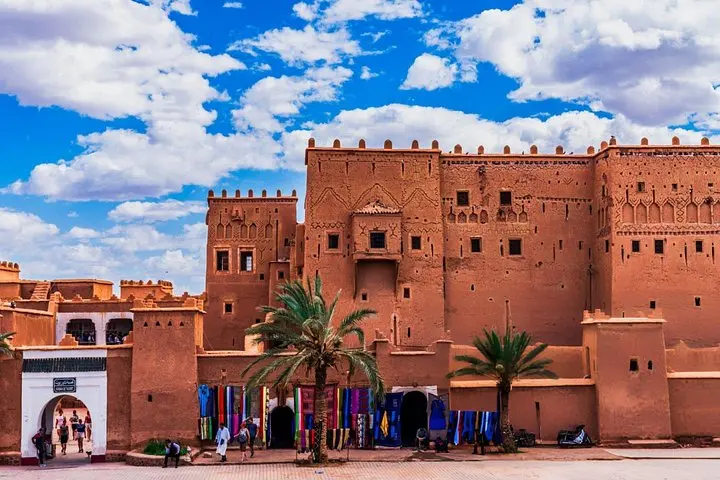
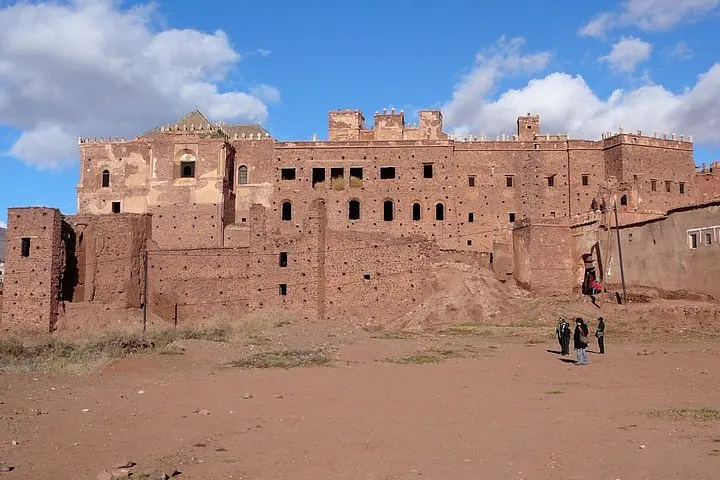
This route follows old caravan corridors between Marrakech and the Sahara; kasbahs like Taourirt and the ksar at Aït Ben Haddou grew where trade and strategic lines met. Geologically the High Atlas is young and uplifted, with folded limestone and volcanic outcrops cleaving into steep passes and deep wadis. Culturally you’ll pass small Berber villages where mud-brick architecture and rooftop storage remain practical responses to a dry, seasonal climate.
Expect a long but straightforward day: 10–12 hours round-trip, with several hours spent driving and roughly 1–2 hours exploring Aït Ben Haddou. The Tizi n’Tichka tops out near 2,260 m, so temperature and wind can change fast. Sturdy shoes are useful for uneven alleyways; carry water, sun protection and local currency for small purchases. Photography is easy but be respectful at private homes and ask before photographing people. The tour combines cinematic highlights, compact cultural stops and a high-altitude mountain drive—an efficient, cinematic introduction to southern Morocco with practical trade-route context and exposure to highland weather and terrain.
Expect a full 10–12 hour day; driving one-way is roughly 3–4 hours depending on stops and traffic.
This tour includes entry to Aït Ben Haddou per the itinerary, but small museums or local sites may charge separate fees.
The Tizi n’Tichka reaches about 2,260 m; the road is paved but winding—those prone to motion sickness should plan accordingly.
Yes, the kasbah and pass are photogenic; ask permission before photographing residents or inside private courtyards.
Morocco Desert VIP operates guided outdoor trips and adventures with an emphasis on safety, stewardship, and memorable experiences.
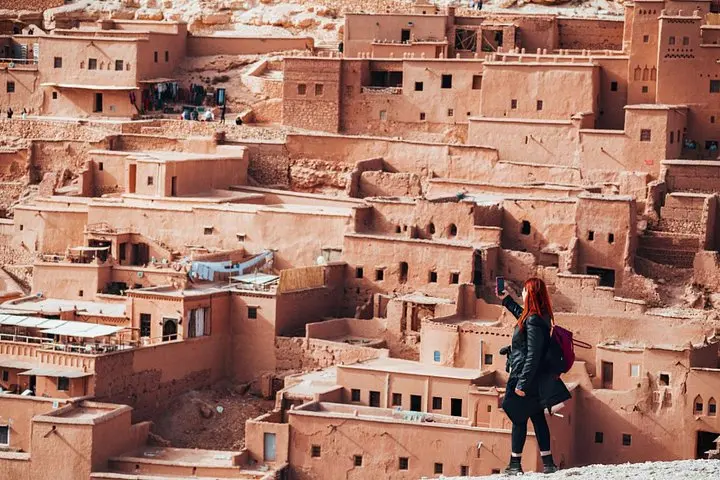
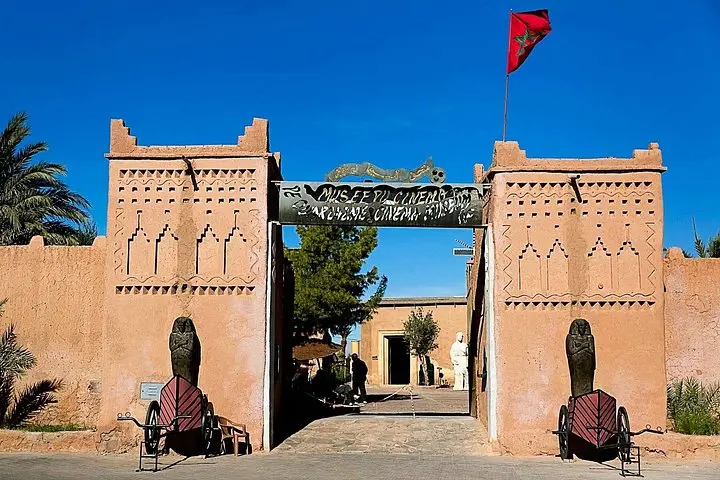
You leave Marrakech before dawn and the city’s heat peels away as the road climbs into the High Atlas. The asphalt winds up to Tizi n’Tichka—the pass itself seems to push the mountains into view—where stony ridgelines and terraced fields give way to broad, wind-scoured valleys. By midmorning the earthen towers of Aït Ben Haddou rise out of the plain, their clay walls catching a sharp light that made this place irresistible to filmmakers.
You leave Marrakech before dawn and the city’s heat peels away as the road climbs into the High Atlas. The asphalt winds up to Tizi n’Tichka—the pass itself seems to push the mountains into view—where stony ridgelines and terraced fields give way to broad, wind-scoured valleys. By midmorning the earthen towers of Aït Ben Haddou rise out of the plain, their clay walls catching a sharp light that made this place irresistible to filmmakers.
This route follows old caravan corridors between Marrakech and the Sahara; kasbahs like Taourirt and the ksar at Aït Ben Haddou grew where trade and strategic lines met. Geologically the High Atlas is young and uplifted, with folded limestone and volcanic outcrops cleaving into steep passes and deep wadis. Culturally you’ll pass small Berber villages where mud-brick architecture and rooftop storage remain practical responses to a dry, seasonal climate.
Expect a long but straightforward day: 10–12 hours round-trip, with several hours spent driving and roughly 1–2 hours exploring Aït Ben Haddou. The Tizi n’Tichka tops out near 2,260 m, so temperature and wind can change fast. Sturdy shoes are useful for uneven alleyways; carry water, sun protection and local currency for small purchases. Photography is easy but be respectful at private homes and ask before photographing people. The tour combines cinematic highlights, compact cultural stops and a high-altitude mountain drive—an efficient, cinematic introduction to southern Morocco with practical trade-route context and exposure to highland weather and terrain.